Art Institute of Chicago
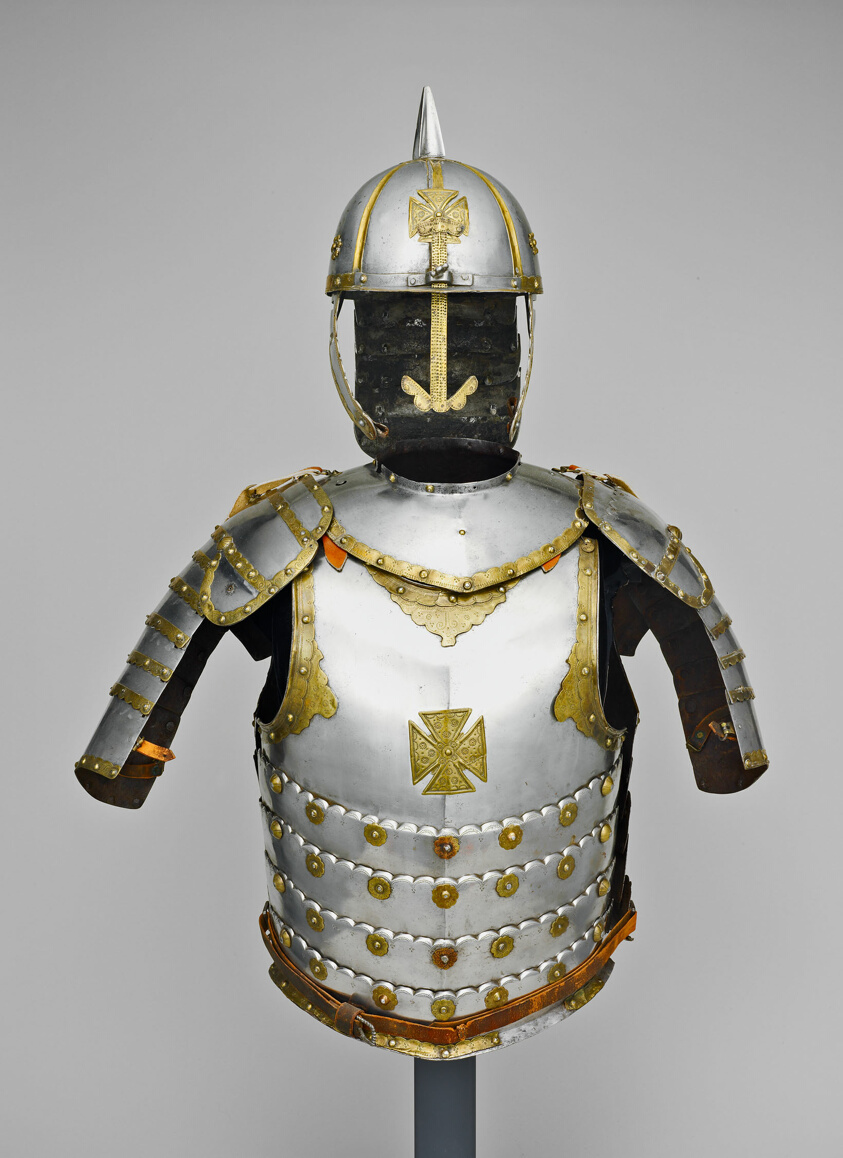
Hussar's Armor
PolishLinkedCulture matchlcp-75b08a18909c
- Date
- 1675/1700
- Medium
- Steel, brass, and leather
- Culture
- Poland
- Department
- Applied Arts of Europe
- Institution
- Art Institute of Chicago
- Object ID
- 106282
From the Art Institute of Chicago record
For better mobility, some light cavalrymen, such as the legendary Polish hussars, wore half armor. The hussars, an elite branch of the Polish army, went into battle in glittering armor on magnificent horses, seldom losing a battle though they were many times outnumbered by the enemy. Recruited from among the wealthiest of Poland’s nobility, the hussars were accomplished horsemen, famous for the huge "wings" worn on their backs or attached to their saddles. These wings were made of wooden wing-shaped frames with eagle feathers inserted into the back rims. The thunderous noise made by the flapping of these extra appendages during a charge was meant to frighten the enemy horses. Known as "winged horsemen," the colorfully costumed hussars also wore leopard or similar animal skins in the style of cloaks over the pauldrons (shoulder pieces) of their armor.
The authoritative record is held by Art Institute of Chicago. LinkedCulture surfaces this object and its connections; it does not alter institutional metadata.
Get printable QR codesHide QR codes
Open QR codes for this object page and the museum record. They stay collapsed until needed.
Provenance & credit
As published by the source institution. Coverage varies — not every institution's open-data feed includes ownership history.
- Credit line
- George F. Harding Collection
- Provenance
- Prince Albrecht Radziwill, Nieswiez, Poland, by 1929. Sold Hal Furmage, London, July 18, 1929. George F. Harding.
Linked open data
Authority identifiers that link this record into the wider web of cultural data — stable references you can follow to the source.
- Object type
- AAT300209266
Part of a LinkedCulture topic
 European Renaissance Armor Components
These objects are all pieces of defensive armor and military equipment from 15th-17th century Europe, primarily from major armoring centers like Italy, Germany, and France.
500 objects from 4 institutions
Related across collections
Semantically similar works from Art Institute of Chicago and other institutions.