Art Institute of Chicago
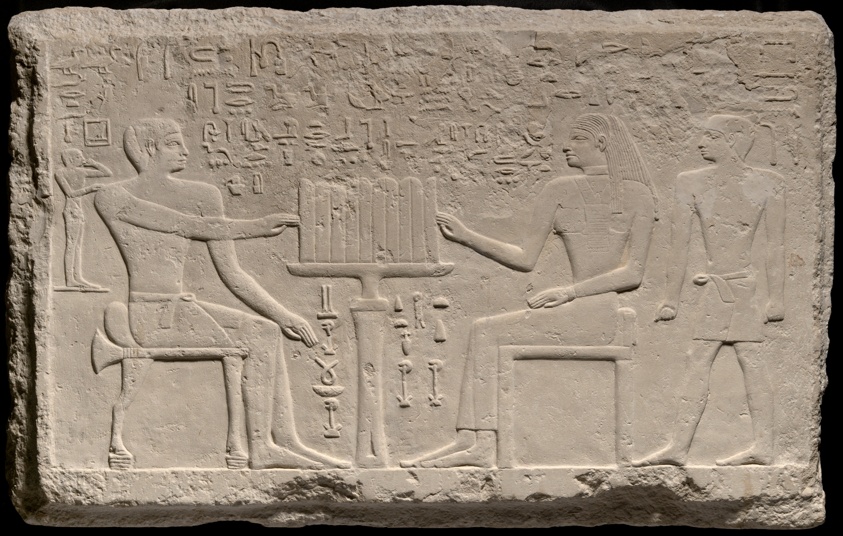
Stela of Tjenti and Nefret
Egyptian; probably tomb G 3035, Giza, EgyptLinkedCulture matchlcp-f769eb88f236
- Date
- Old Kingdom, Dynasty 4, about 2540 BCE
- Medium
- Limestone
- Culture
- Egypt
- Department
- Arts of Africa
- Institution
- Art Institute of Chicago
- Object ID
- 121737
From the Art Institute of Chicago record
Seated on a cushioned chair, an official named Tjenti extends his hand toward a table covered in tall loaves of bread. His wife, Nefret, strikes a similar pose opposite him. Scenes depicting families around a table laden with food for the afterlife were a standard decoration in ancient Egyptian tombs for generations. Displayed in chapels where descendants gathered to remember the dead, these images were eternal family portraits, ensuring an afterlife populated with loved ones. Here, Tjenti and Nefret are shown with their son Tjenti (standing on the right) and granddaughter Nefer-Hathor, who holds her index finger to her lips in a gesture symbolic of childhood. Following Egyptian artistic conventions, the figures are represented at different scales that denote their status within the family.
The authoritative record is held by Art Institute of Chicago. LinkedCulture surfaces this object and its connections; it does not alter institutional metadata.
Get printable QR codesHide QR codes
Open QR codes for this object page and the museum record. They stay collapsed until needed.
Provenance & credit
As published by the source institution. Coverage varies — not every institution's open-data feed includes ownership history.
- Credit line
- Museum Purchase Fund
- Provenance
- Maurice Nahman (1868-1948), Cairo; sold to the Art Institute of Chicago through James Henry Breasted as agent, 1919.
Linked open data
Authority identifiers that link this record into the wider web of cultural data — stable references you can follow to the source.
- Object type
- AAT300190691
Part of a LinkedCulture topic
 Ancient Egyptian Personal Objects
These objects are cosmetic implements and grooming tools from ancient Egypt, including mirrors, palettes for grinding pigments, and decorative knives, representing daily life and personal adornment practices.
476 objects from 5 institutions
Related across collections
Semantically similar works from Art Institute of Chicago and other institutions.