Art Institute of Chicago
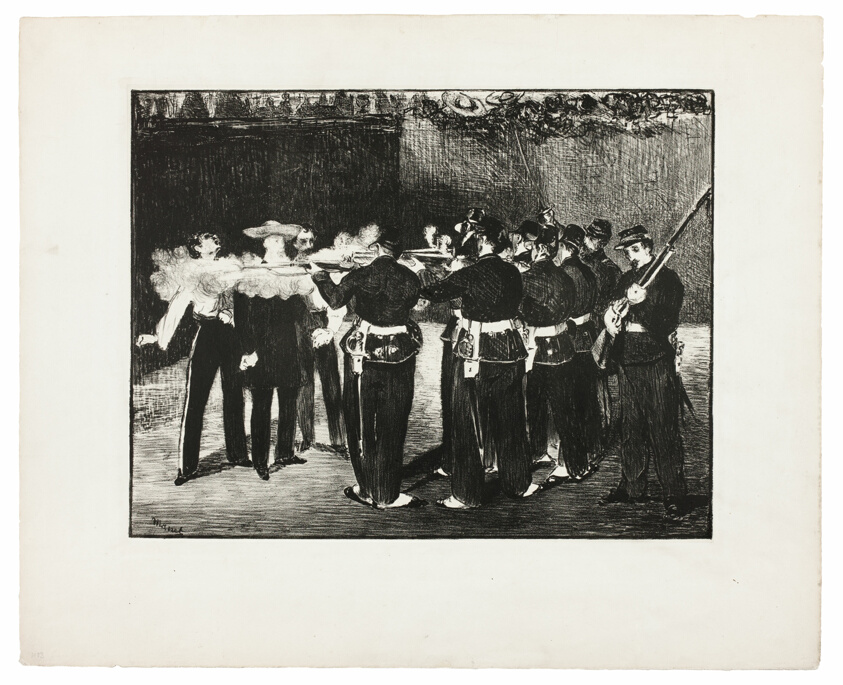
The Execution of Maximilian
Édouard ManetLinkedCulture matchlcp-1088101e6ec3
- Date
- 1867–68
- Medium
- Lithograph in black, with scraping, on ivory chine laid down on ivory wove paper
- Culture
- France
- Department
- Prints and Drawings
- Institution
- Art Institute of Chicago
- Object ID
- 13563
From the Art Institute of Chicago record
The young Austrian-born Archduke Ferdinand Maximilian Joseph was controversially installed as Emperor Maximilian I of Mexico in 1864 in an attempt to create a European-style monarchy there, backed by Napoleon III of France and a cohort of monarchists. Seen as part of a European imperialist campaign, Maximilian’s rule was considered illegitimate by those who opposed the French occupation of Mexico. This work interprets the young ruler’s execution in Querétero, Mexico, on June 19, 1867, alongside generals Miguel Miramón (left) and Tomás Mejía (right). Édouard Manet’s composition was inspired by not only history painting and the iconography of Francisco de Goya but also contemporary journalism and the budding field of newspaper photography. One controversial aspect of this print is the presence of French troops in the firing squad rather than those of the Mexican Republic. The lithograph was censored by the French government and was not publicly printed until after Manet’s death.
The authoritative record is held by Art Institute of Chicago. LinkedCulture surfaces this object and its connections; it does not alter institutional metadata.
Get printable QR codesHide QR codes
Open QR codes for this object page and the museum record. They stay collapsed until needed.
Provenance & credit
As published by the source institution. Coverage varies — not every institution's open-data feed includes ownership history.
- Credit line
- William McCallin McKee Memorial Endowment
Linked open data
Authority identifiers that link this record into the wider web of cultural data — stable references you can follow to the source.
- Object type
- AAT300041273
Related across collections
Semantically similar works from Art Institute of Chicago and other institutions.