Art Institute of Chicago
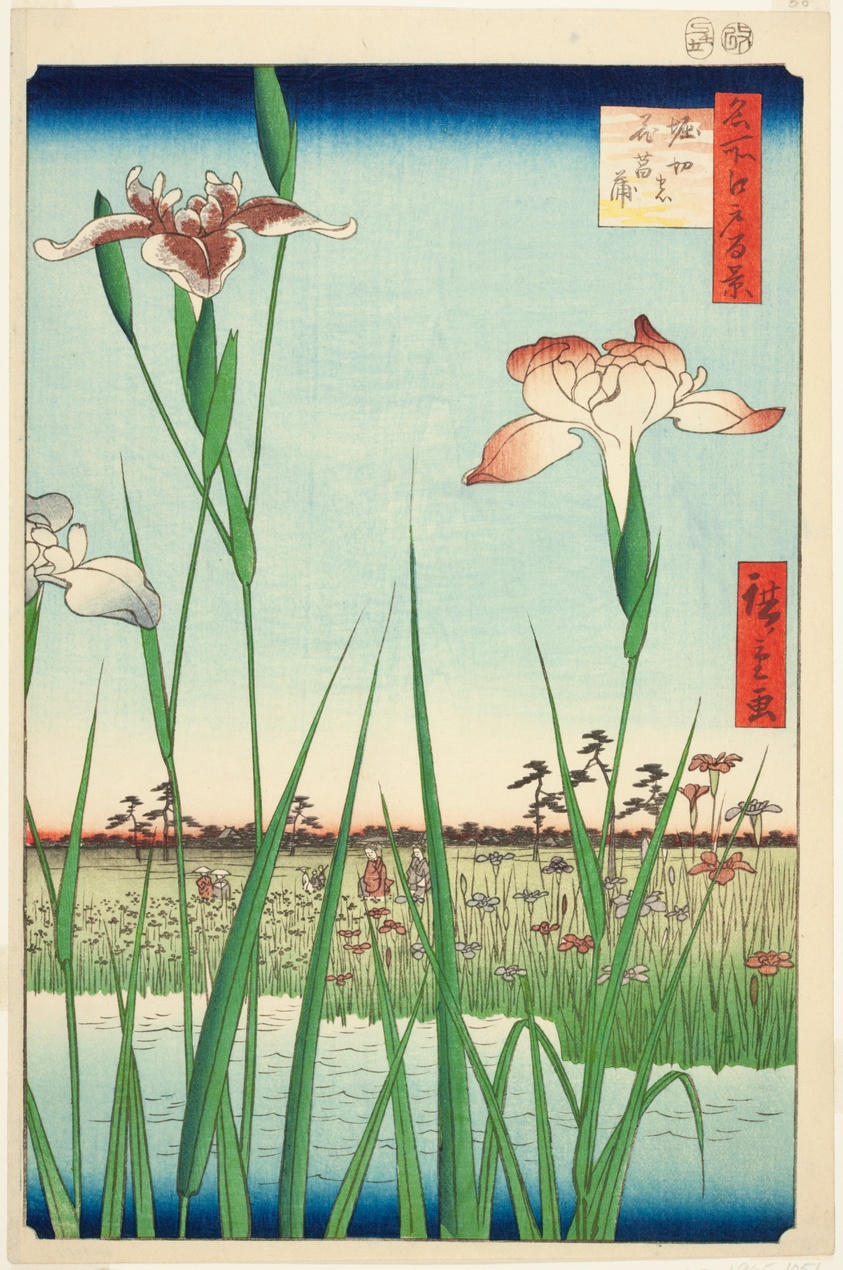
Irises at Horikiri (Horikiri no hanashobu), from the series "One Hundred Famous Views of Edo (Meisho Edo hyakkei)"
Utagawa Hiroshige 歌川 広重LinkedCulture matchlcp-732c025793de
- Date
- 1857
- Medium
- Color woodblock print; oban
- Culture
- Japan
- Department
- Arts of Asia
- Institution
- Art Institute of Chicago
- Object ID
- 150302
From the Art Institute of Chicago record
The suburb of Horikiri was famous for its marshy land and flower cultivation, and the hanashōbu iris seen here was its most well-known product. Hanashōbu irises were popular not only in Edo (now Tokyo) but also in the West: German botanist and physician Philipp von Siebold brought them to Europe in the 1850s. Popular images like this one made the flower a symbol of Japan. The printer used glorious purples and delicate gradation to depict the flowers in this print, considered an iconic representation of nature in Japanese art. This version is a well-preserved first edition of the design.
The authoritative record is held by Art Institute of Chicago. LinkedCulture surfaces this object and its connections; it does not alter institutional metadata.
Get printable QR codesHide QR codes
Open QR codes for this object page and the museum record. They stay collapsed until needed.
Provenance & credit
As published by the source institution. Coverage varies — not every institution's open-data feed includes ownership history.
- Credit line
- Gift of Mr. and Mrs. Harold G. Henderson
- Provenance
- Harold Gould Henderson (1889–1974) and Mary A. Henderson (1905–1998), New York; given to the Art Institute of Chicago, 1965.
Linked open data
Authority identifiers that link this record into the wider web of cultural data — stable references you can follow to the source.
- Object type
- AAT300041273
Related across collections
Semantically similar works from Art Institute of Chicago and other institutions.