Art Institute of Chicago
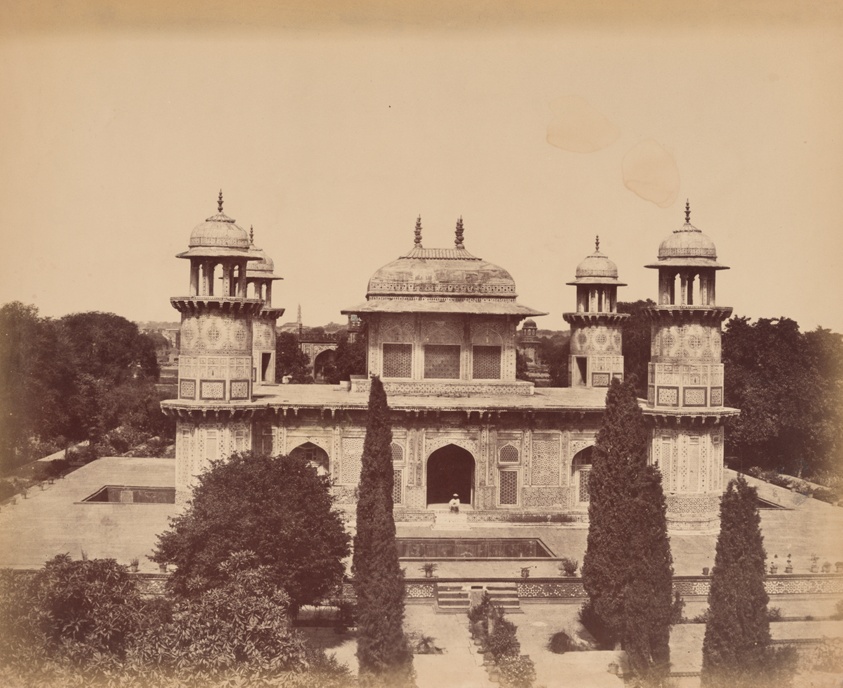
The Tomb of Itimad-ud-Daulah
Dr. John MurrayLinkedCulture matchlcp-41ab8bfa347d
- Date
- c. 1858-62
- Medium
- Albumen print
- Culture
- Scotland
- Department
- Photography and Media
- Institution
- Art Institute of Chicago
- Object ID
- 156715
From the Art Institute of Chicago record
Trained as a doctor, John Murray took up photography while in the medical service of the army of the East India Company. He was stationed near the Taj Mahal, in Agra, India, where he became interested in Mughal architecture and began documenting monuments in the area; in 1857 he exhibited 30 of these views in London. Murray employed a large–format camera that accommodated the size of the waxed–paper negative seen here. With less sensitive photographic emulsions, however, exposing for the building could result in an unsightly, blotchy sky. Murray and others solved this by blacking out the negative’ s sky with India ink, resulting in a crisp white in the final print. The architecture of the site depicted here, a mausoleum built between 1622 and 1628, is often regarded as anticipating the Taj Mahal, constructed some 20 years later.
The authoritative record is held by Art Institute of Chicago. LinkedCulture surfaces this object and its connections; it does not alter institutional metadata.
Get printable QR codesHide QR codes
Open QR codes for this object page and the museum record. They stay collapsed until needed.
Provenance & credit
As published by the source institution. Coverage varies — not every institution's open-data feed includes ownership history.
- Credit line
- Gift of Robert Hershkowitz and Charles Isaacs
Linked open data
Authority identifiers that link this record into the wider web of cultural data — stable references you can follow to the source.
- Object type
- AAT300046300
Related across collections
Semantically similar works from Art Institute of Chicago and other institutions.