Art Institute of Chicago
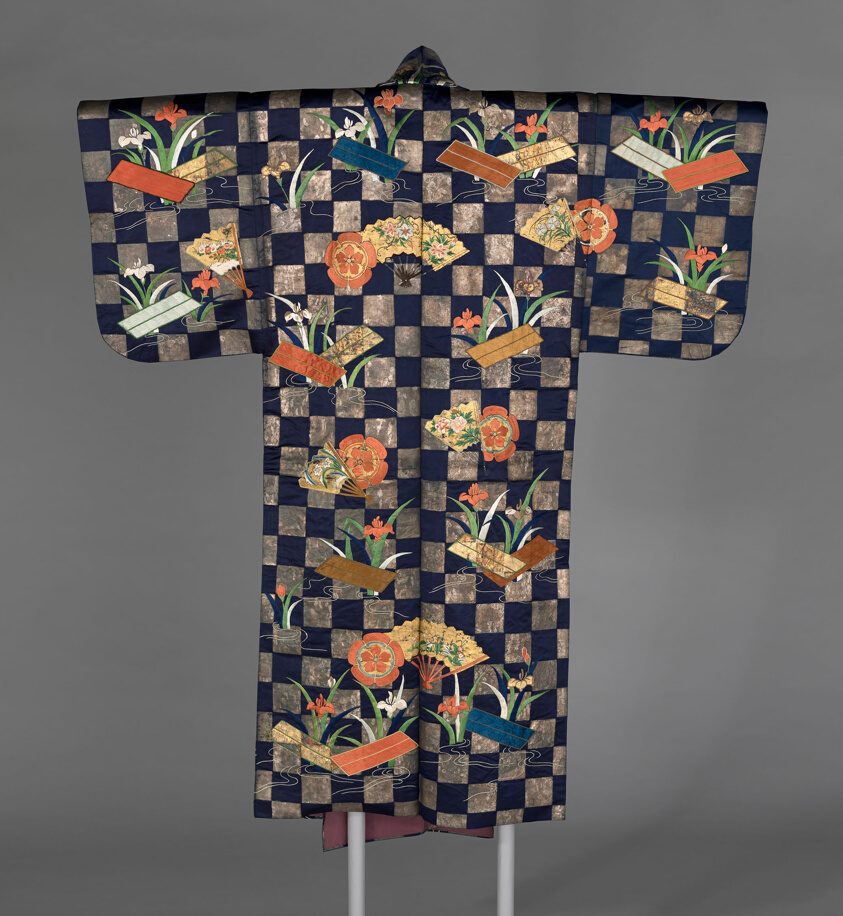
Nuihaku (Noh Costume)
JapanLinkedCulture matchlcp-59ff16a8c9fa
- Date
- 18th century , Edo period (1615–1868) (additional patterning added early 19th century)
- Medium
- Silk, warp-float faced 4:1 satin weave; patterned with impressed gold and silver leaf; embroidered with silk in satin, single satin, and stem stitches; laid work and couching; lined with silk, plain weave
- Culture
- Japan
- Department
- Textiles
- Institution
- Art Institute of Chicago
- Object ID
- 20620
From the Art Institute of Chicago record
The pattern on this robe for the Nō theater refers to the well-known Tales of Ise , which describes the travels of the famous courtier poet Ariwara no Narihira. One episode of the stories concerns Yatsuhashi (Eight-Planked Bridge). Here, the robe's pattern features the planks of the bridge that are floating in space, disconnected from one another with multicolored iries, and the water currents were added in the 19th century. When the robe was first made, the pattern had no reference to Tales of Ise .
The authoritative record is held by Art Institute of Chicago. LinkedCulture surfaces this object and its connections; it does not alter institutional metadata.
Get printable QR codesHide QR codes
Open QR codes for this object page and the museum record. They stay collapsed until needed.
Provenance & credit
As published by the source institution. Coverage varies — not every institution's open-data feed includes ownership history.
- Credit line
- Samuel M. Nickerson Fund
Linked open data
Authority identifiers that link this record into the wider web of cultural data — stable references you can follow to the source.
- Object type
- AAT300014063
Part of a LinkedCulture topic
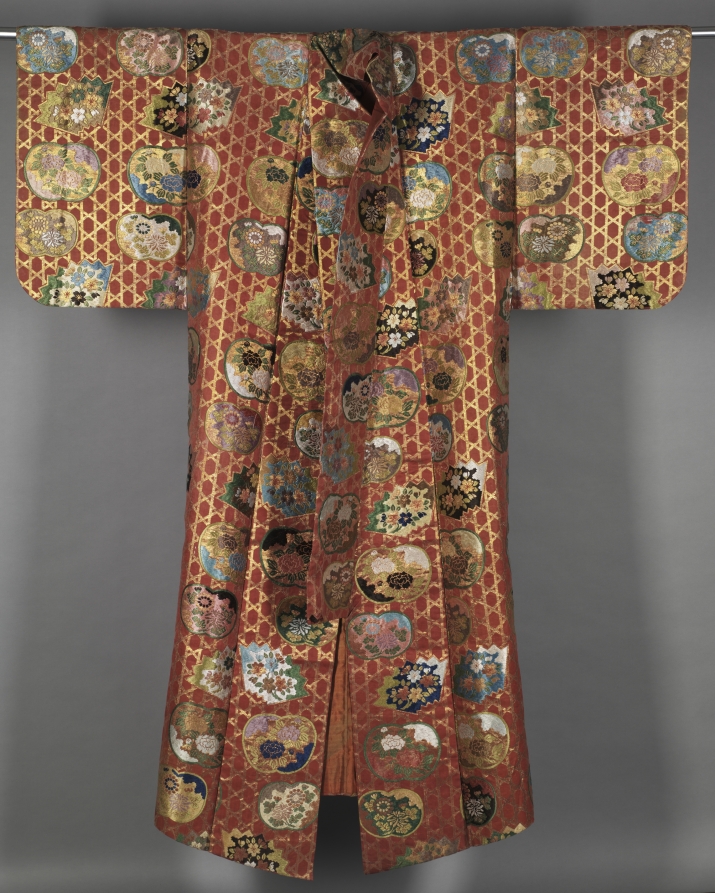 Japanese Noh Theater Costumes
These objects are all elaborate silk costumes (including nuihaku, karaori, kariginu, and other types) used in traditional Japanese Noh theater performances, primarily from the Edo period.
22 objects from 3 institutions
Related across collections
Semantically similar works from Art Institute of Chicago and other institutions.