Art Institute of Chicago
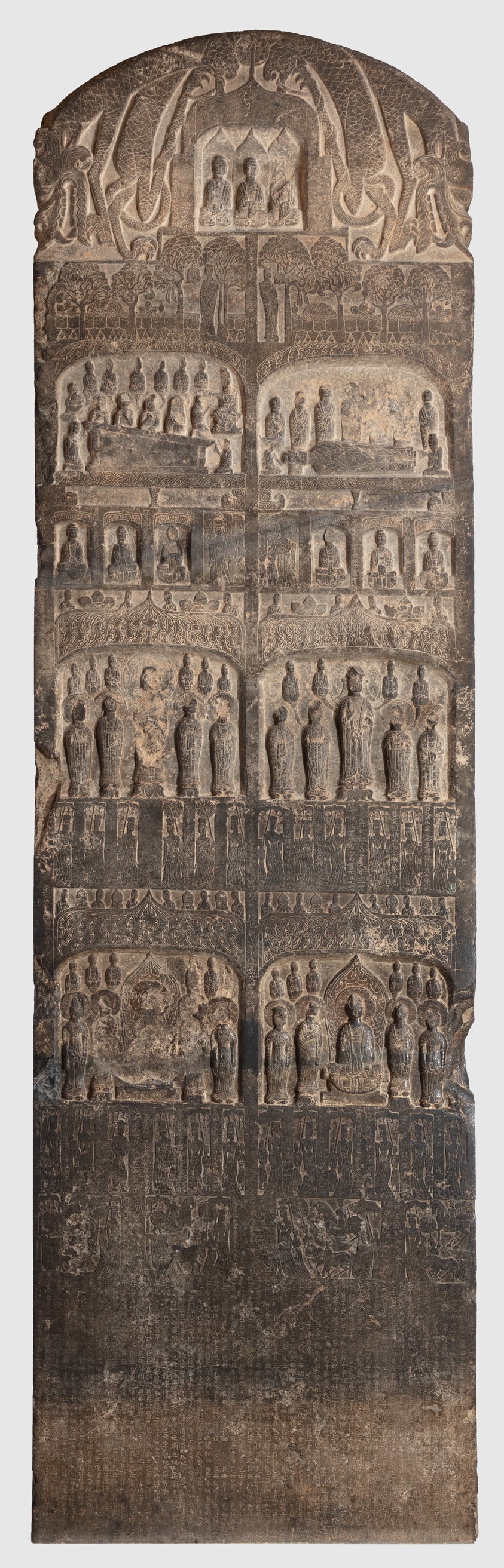
Buddhist Votive Stele
ChinaLinkedCulture matchlcp-777a05c2acea
- Date
- Western Wei dynasty (A.D. 535–557), dated A.D. 551
- Medium
- Stone
- Culture
- China
- Department
- Arts of Asia
- Institution
- Art Institute of Chicago
- Object ID
- 29149
From the Art Institute of Chicago record
Buddhist stone tablets known as votive steles were commissioned by pious individuals and families, and erected in temple courtyards and other public spaces. The horizontal registers on this stele illustrate scenes from the life of the Buddha and from sacred texts. The upper pair of niches on this side depicts the death of the Buddha (right) and preparations for his cremation (left). On the opposite side, the primary scene represents the Buddha preaching the Lotus Sutra , a major scripture transmitted from India. The niches above show the Buddha flanked by monks and bodhisattvas (enlightened beings). Surrounding carvings portray ascetics, guardians, protective lions, heavenly musicians, and priests. Inscribed around the lower portion are the names of donors who commissioned this stele to commemorate their ancestors. The most important of these donors appear as standardized figures with parasols held aloft by their attendants. By commissioning such tablets, pious devotees hoped to gain spiritual benefits for themselves and their families.
The authoritative record is held by Art Institute of Chicago. LinkedCulture surfaces this object and its connections; it does not alter institutional metadata.
Get printable QR codesHide QR codes
Open QR codes for this object page and the museum record. They stay collapsed until needed.
Provenance & credit
As published by the source institution. Coverage varies — not every institution's open-data feed includes ownership history.
- Credit line
- Gift of The Orientals
Linked open data
Authority identifiers that link this record into the wider web of cultural data — stable references you can follow to the source.
- Object type
- AAT300312158
Related across collections
Semantically similar works from Art Institute of Chicago and other institutions.