Art Institute of Chicago
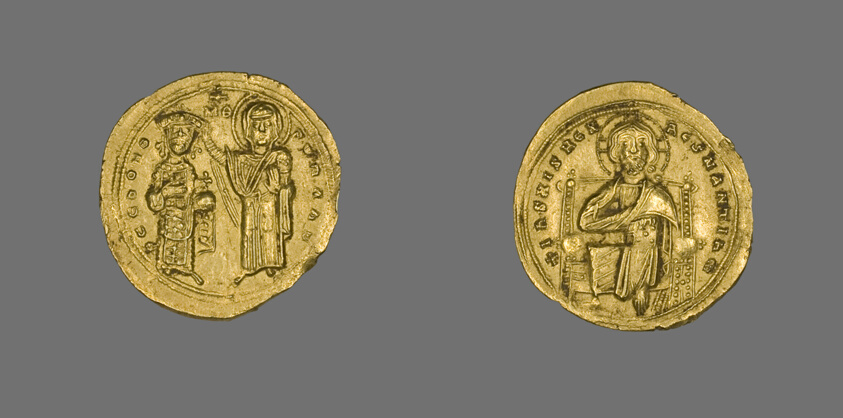
Histamenon (Coin) of Romanus III Argyrus with Christ Enthroned
Byzantine; minted in Constantinople (now Istanbul, Turkey)LinkedCulture matchlcp-7c5dfd394f33
- Date
- 1028-34
- Medium
- Gold
- Culture
- Istanbul
- Department
- Arts of Greece, Rome, and Byzantium
- Institution
- Art Institute of Chicago
- Object ID
- 36660
From the Art Institute of Chicago record
Portraits of important people appear on local currency all around the world. The same was true in ancient Rome, which began producing its first coinage in the late 4th century BC. Early coins depicted the heads of gods and goddesses on the front side, often in profile, while the back depicted animals, natural resources, symbols, and references to historical events. It was not until 44 BC that the portrait of a living person—Julius Caesar—appeared on coins. Thereafter, profile portraits of rulers or other members of the imperial family became the standard subject on coins throughout the Roman Empire. Inscriptions on coins help identify the ruler. While the front side depicted the sovereign’s portrait, the back was often used to communicate the ruler’s accomplishments or aspirations. Until Late Antiquity, portraits usually appeared in profile. The tiny images were carved by engravers into bronze dies, with one for the front and another for the back. The coins were then struck, one by one, in a process similar to how coins are created today. Coins were the ideal way for Byzantine rulers to rapidly circulate their images throughout the empire and beyond, since they were used to pay for imported merchandise and foreign mercenaries. They could also be employed as powerful vehicles for propaganda, promoting messages of dynastic legitimacy and the divine source of the emperor’s right to rule. After Christianity became the official religion of the Roman Empire, the Byzantine emperors adopted Christian themes and symbols, most notably the cross, to stand for both the religion and the political state. The previously ubiquitous profile portrait head was replaced by frontal or full-body depictions. Christ dominated the iconography, and Greek titles and phrases came to replace the Latin ones. Romanos III Argyros (reigned 1028–34) was marked for succession to the throne by his father-in-law, Constantine VIII, whose reign lasted only three years. Romanos managed a six-year reign that was riddled with ill-conceived and poorly executed policies, including a disastrous attempt to reform taxation that left the empire’s finances in disarray and drove the less fortunate into enforced servitude. In an effort to halt the growing threat posed by Arabs along the eastern frontier, Romanos personally led the army to confront them, only to be thoroughly routed in a surprise attack. Later conquests and victories did little to improve his reputation, and he died, possibly at the hands or order of his entirely disillusioned wife, Zoe. On the front of this histamenon, the enthroned and haloed Jesus holds the Gospel book in his right hand. The inscription reads “Jesus Christ, King of Kings.” On the reverse, the Virgin Mary crowns the richly bedecked Romanos, who holds a globus cruciger , indicating that the emperor wields earthly power on behalf of the Christian God.
The authoritative record is held by Art Institute of Chicago. LinkedCulture surfaces this object and its connections; it does not alter institutional metadata.
Get printable QR codesHide QR codes
Open QR codes for this object page and the museum record. They stay collapsed until needed.
Provenance & credit
As published by the source institution. Coverage varies — not every institution's open-data feed includes ownership history.
- Credit line
- Gift of Emily Crane Chadbourne
- Provenance
- Emily Crane Chadbourne (1871- 1964), Paris, London, and Chicago; given to the Art Institute of Chicago, 1940.
Linked open data
Authority identifiers that link this record into the wider web of cultural data — stable references you can follow to the source.
- Object type
- AAT300037334
Related across collections
Semantically similar works from Art Institute of Chicago and other institutions.