Art Institute of Chicago
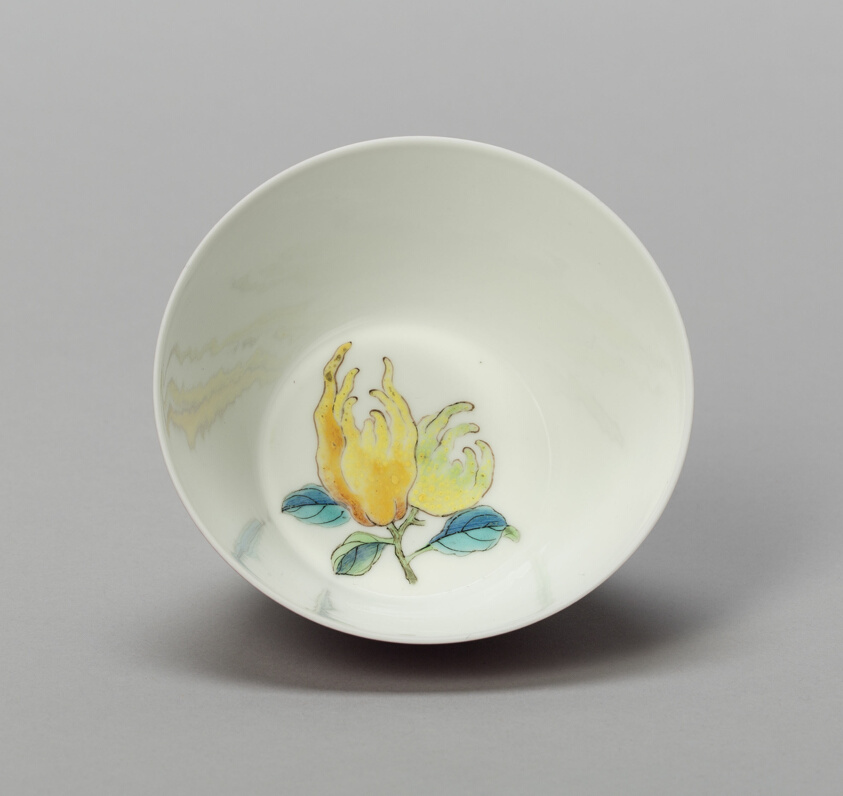
Cup with Buddha’s-Hand Citron
ChinaLinkedCulture matchlcp-777a05c2acea
- Date
- Qing dynasty (1644–1911), Kangxi reign mark and period (1662–1722)
- Medium
- Porcelain painted in overglaze enamels
- Culture
- China
- Department
- Arts of Asia
- Institution
- Art Institute of Chicago
- Object ID
- 42367
From the Art Institute of Chicago record
The delicately painted fruit in soft pastel hues enhances the clear-glazed interior of this crimson-sheathed cup. The subtle color palette reflects the technical advancements in porcelain enameling towards the end of Kangxi’s reign. Under the emperor’s patronage, potters successfully introduced a white enamel with a base of lead arsenic. This innovation serves to opacify the colors and allows for finer gradations. This cup features the motif of the Buddha’s Hand (foshou), a nonedible yet fragrant citron characterized by its long “fingers.” The name of this fruit approximates the sounds of the Chinese words for happiness (fu) and longevity (shou). The cup is part of a matching set that features various auspicious motifs.
The authoritative record is held by Art Institute of Chicago. LinkedCulture surfaces this object and its connections; it does not alter institutional metadata.
Get printable QR codesHide QR codes
Open QR codes for this object page and the museum record. They stay collapsed until needed.
Provenance & credit
As published by the source institution. Coverage varies — not every institution's open-data feed includes ownership history.
- Credit line
- Bequest of Henry C. Schwab
- Provenance
- Henry Charles Schwab (1867-1941), Chicago; bequeathed to the Art Institute of Chicago, 1941.
Linked open data
Authority identifiers that link this record into the wider web of cultural data — stable references you can follow to the source.
- Object type
- AAT300193015
Related across collections
Semantically similar works from Art Institute of Chicago and other institutions.