Art Institute of Chicago
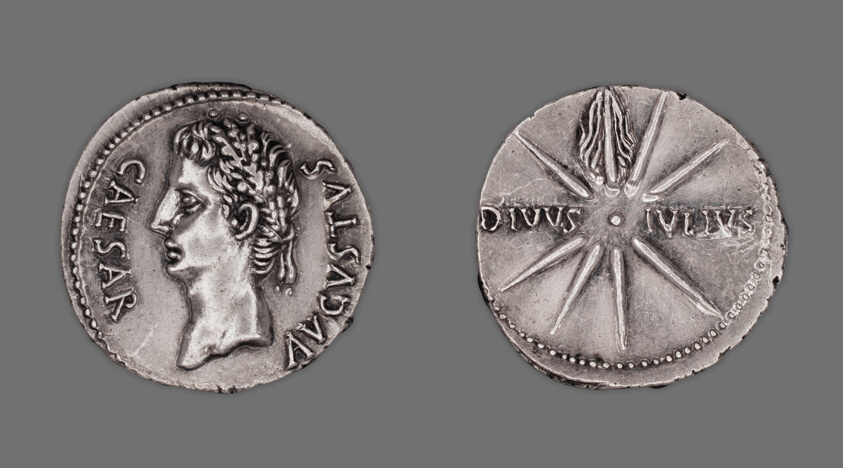
Denarius (Coin) Portraying Emperor Augustus
Roman; minted in Spain, possibly Colonia Caesaraugusta (Zaragoza) or Colonia Patricia (Cordoba)LinkedCulture matchlcp-57bf16104c0e
- Date
- 19-18 BCE, issued by Augustus
- Medium
- Silver
- Culture
- Spain
- Department
- Arts of Greece, Rome, and Byzantium
- Institution
- Art Institute of Chicago
- Object ID
- 5600
From the Art Institute of Chicago record
Portraits of important people appear on local currency all around the world. The same was true in ancient Rome, which began producing its first coinage in the late 4th century BCE. Early coins depicted the heads of gods and goddesses on the front side, often in profile, while the back depicted animals, natural resources, symbols, and references to historical events. It was not until 44 BCE that the portrait of a living person—Julius Caesar—appeared on coins. Thereafter, profile portraits of rulers or other members of the imperial family became the standard subject on coins throughout the Roman Empire. Inscriptions on coins help identify the ruler. While the front side depicted the sovereign’s portrait, the back was often used to communicate the ruler’s accomplishments or aspirations. Until Late Antiquity, portraits usually appeared in profile. The tiny images were carved by engravers into bronze dies, with one for the front and another for the back. The coins were then struck, one by one, in a process similar to how coins are created today. The front (obverse) of this coin portrays the head of Roman Emperor Augustus facing left, with a civic oak crown. The back (reverse) depicts a comet. Early imperial coin portraits included individualized features that identified each ruler. Augustus (reigned 27 BC–AD 14), was the first Roman emperor and dictated that he retain his youthful appearance in his portraits throughout his lifetime.
The authoritative record is held by Art Institute of Chicago. LinkedCulture surfaces this object and its connections; it does not alter institutional metadata.
Get printable QR codesHide QR codes
Open QR codes for this object page and the museum record. They stay collapsed until needed.
Provenance & credit
As published by the source institution. Coverage varies — not every institution's open-data feed includes ownership history.
- Credit line
- Gift of Martin A. Ryerson
- Provenance
- Martin A. Ryerson (1856-1932), Chicago; given to the Art Institute of Chicago, 1922.
Linked open data
Authority identifiers that link this record into the wider web of cultural data — stable references you can follow to the source.
- Object type
- AAT300037334
Related across collections
Semantically similar works from Art Institute of Chicago and other institutions.