Art Institute of Chicago
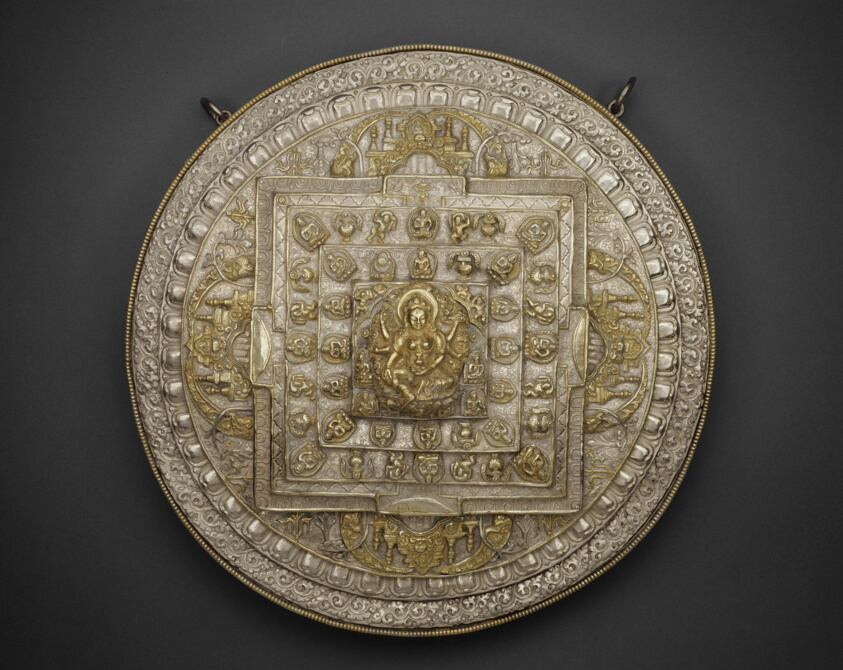
Tiered Offering Mandala of the Goddess of Wealth (Vasudhara)
NepalLinkedCulture matchlcp-b0908254126b
- Date
- 19th century
- Medium
- Silver repoussé and gilt copper
- Culture
- Nepal
- Department
- Arts of Asia
- Institution
- Art Institute of Chicago
- Object ID
- 58540
From the Art Institute of Chicago record
Vasudhara—the goddess from whom wealth ( vasu ), gems, abundance, and well-being flow ( dhara )—presides at the center of this multitiered mandala (a graphic symbol of the universe). When a deity appears at the center of a mandala, it serves as a reminder to the devotee of the god’s presence in the cosmos, as well as to the fact that the god is the cosmos. Here the concept is expressed by a mandala of three concentric outer circles rising to the space of the square. Identifiable by the pot of life-giving water in her lower-left hand and the gesture of boon granting ( varadamudra ) of her lower-right hand, Vasudhara also has traits that distinguish her as Nepalese: her six encircling arms and the graceful lalitasana pose, with one leg pendent and the other tucked beneath her. (In India and Tibet, she is often shown standing and with two arms.) The goddess’s complexion is depicted as golden in sculpture and yellow in painting, a symbol of her wealth-giving attributes. Vasudhara is especially popular with the Buddhist Newari people of the Kathmandu Valley in Nepal, who would probably have used an object such as this for rituals dedicated to the goddess in either a temple or the home.
The authoritative record is held by Art Institute of Chicago. LinkedCulture surfaces this object and its connections; it does not alter institutional metadata.
Get printable QR codesHide QR codes
Open QR codes for this object page and the museum record. They stay collapsed until needed.
Provenance & credit
As published by the source institution. Coverage varies — not every institution's open-data feed includes ownership history.
- Credit line
- Russell Tyson Fund
- Provenance
- Robert Stolper, London; sold to the Art Institute of Chicago, Nov. 27, 1979.
Linked open data
Authority identifiers that link this record into the wider web of cultural data — stable references you can follow to the source.
- Object type
- AAT300312158
Related across collections
Semantically similar works from Art Institute of Chicago and other institutions.
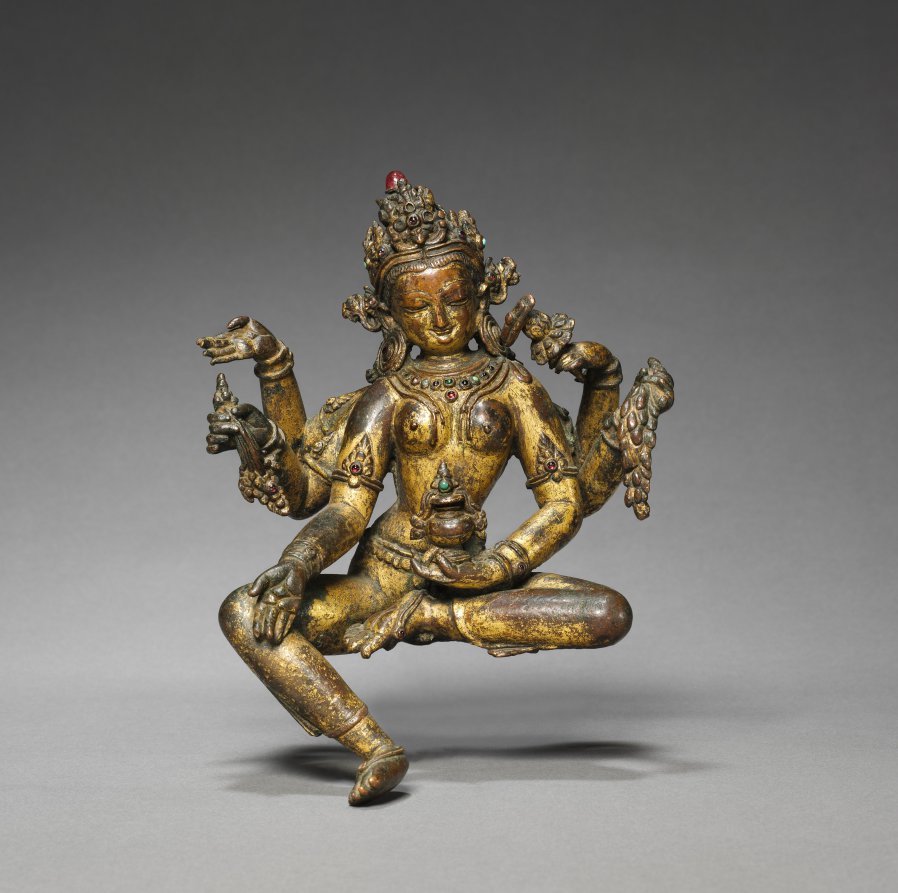
Vasudhara, Goddess of Abundance
Cleveland Museum of Art
#125561
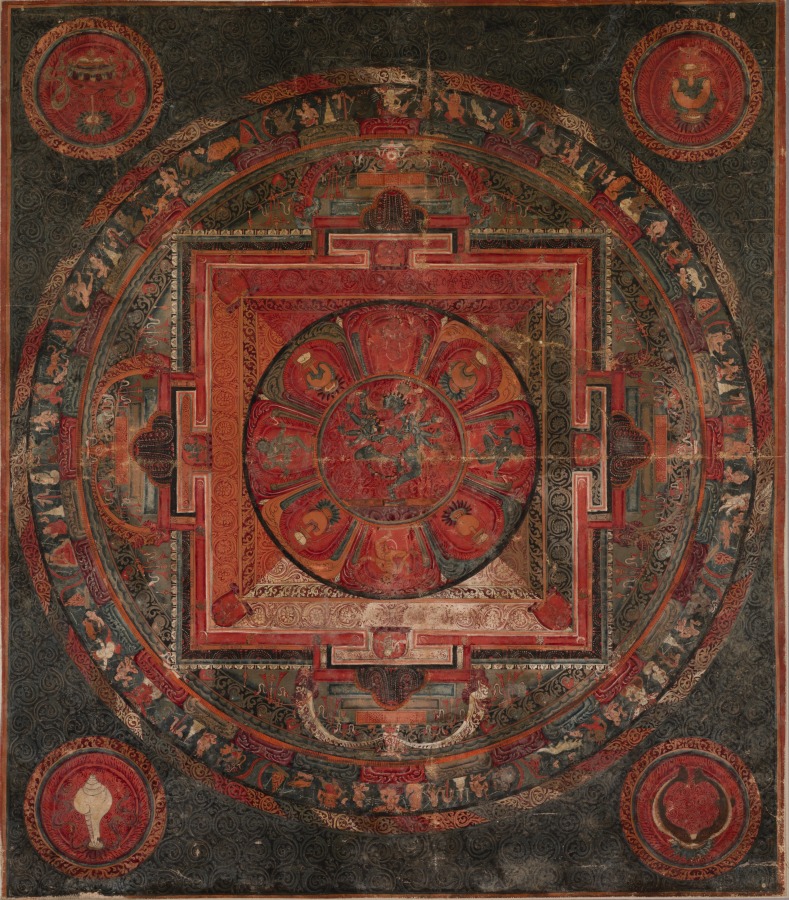
Mandala of Chakrasamvara and Vajravarahi
Cleveland Museum of Art
#136335
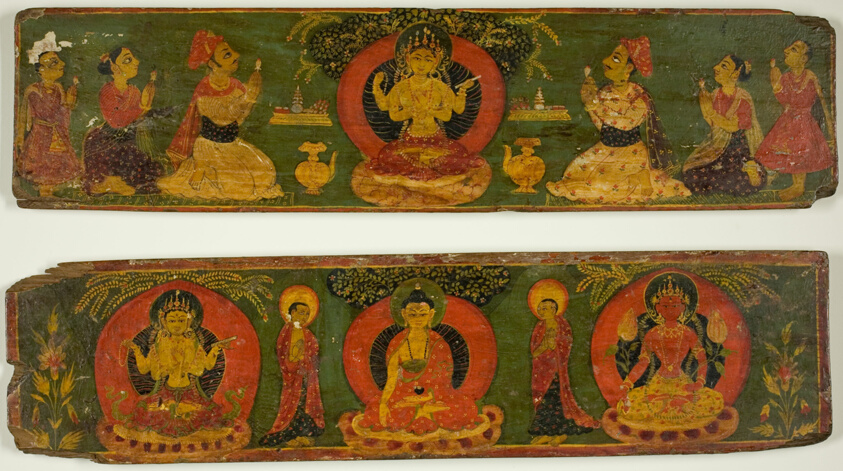
One of a Pair of Manuscript Covers from the Perfection of Wisdom Sutra (Ashtasahasrika Prajnaparamita Sutra)
Art Institute of Chicago
#184668
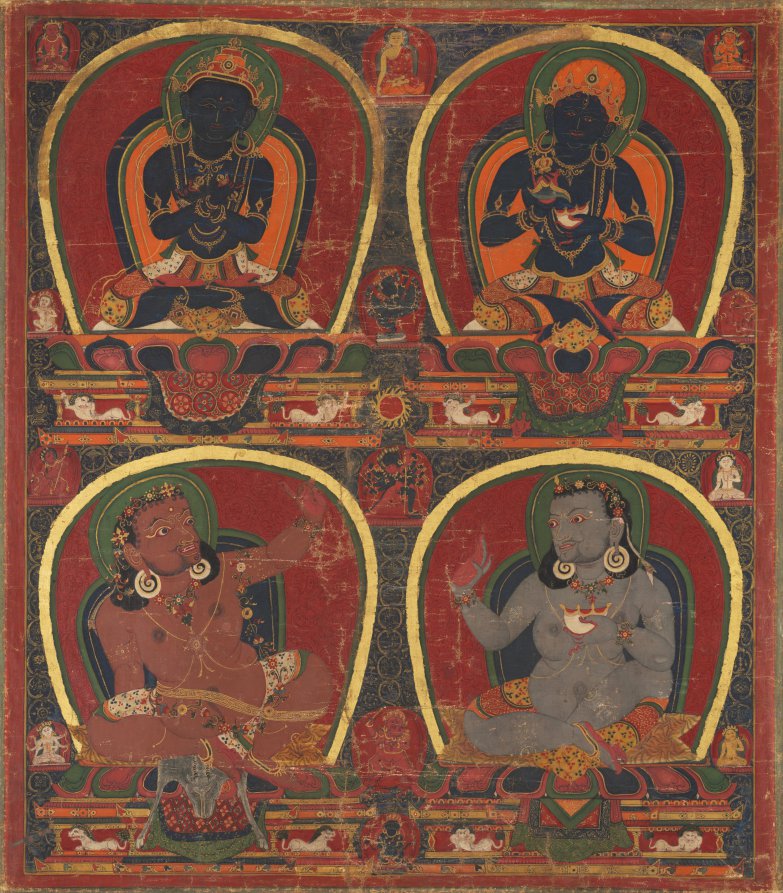
Vajradhara, Nairatmya, and mahasiddhas Virupa and Kanha
Cleveland Museum of Art
#136332

Ratnasambhava, Akshobhya, Vairochana with attendants, Amitabha, and Amoghasiddhi, Top cover, from a Manuscript of the Perfection of Wisdom in Eight Thousand Lines (Ashtasahasrika Prajnaparamita-sutra)
Cleveland Museum of Art
#539040

The Cosmic Form of Krishna
Minneapolis Institute of Art
#137909

Vishnu with Lakshmi and Sarasvati
Minneapolis Institute of Art
#4029

Prajnaparamita flanked by two female figures, folio 1 (verso), from a Manuscript of the Perfection of Wisdom in Eight Thousand Lines (Ashtasahasrika Prajnaparamita-sutra)
Cleveland Museum of Art
#117673
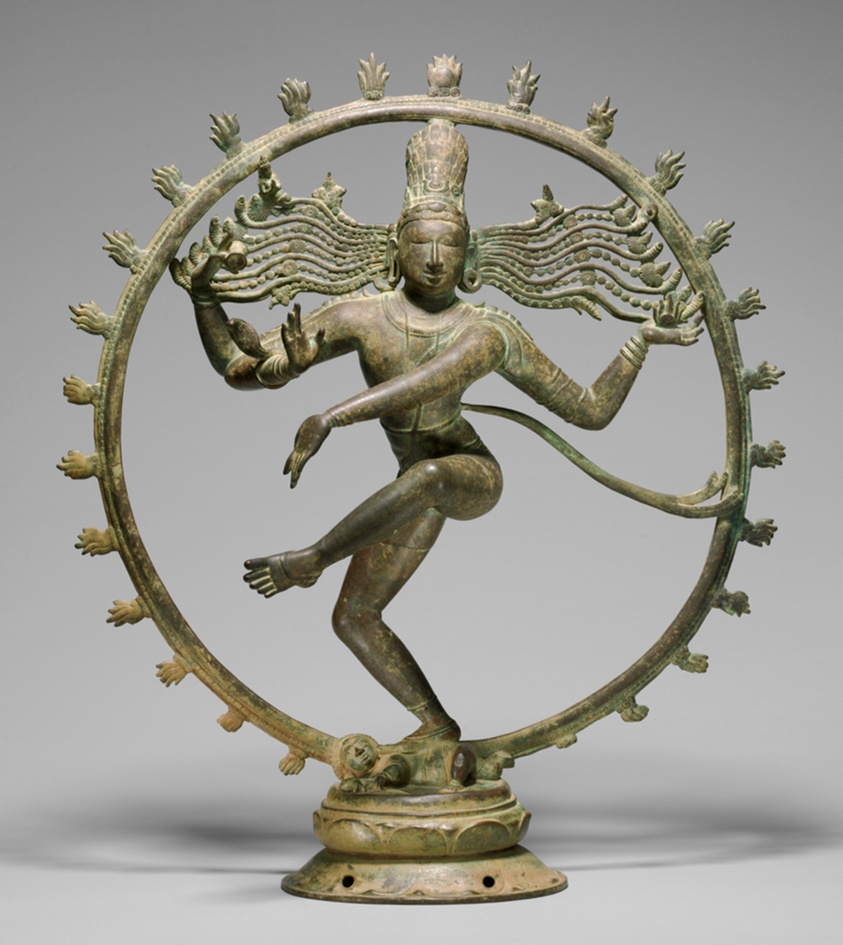
Shiva as Lord of the Dance (Nataraja)
Art Institute of Chicago
#24548
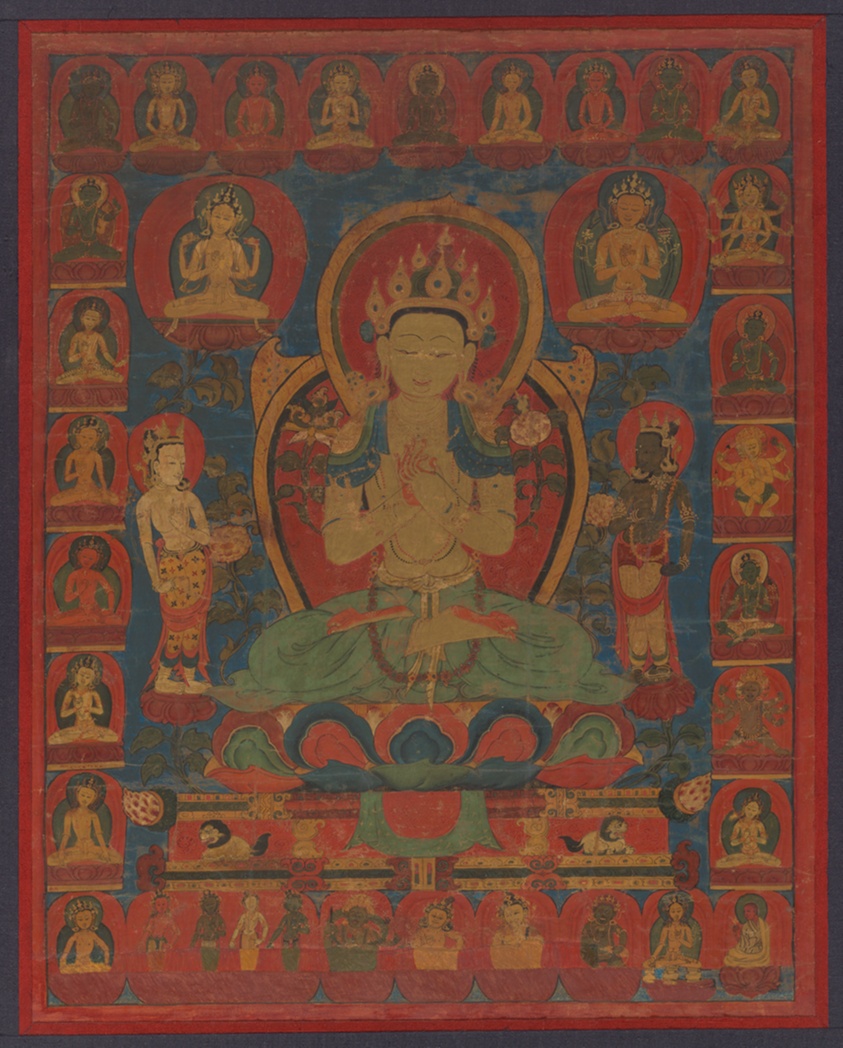
Painted Banner (Thangka) of Bodhisattva Maitreya Surrounded by his Retinue
Art Institute of Chicago
#144918

Khorlo Demchog (Chakrasamvara) and Dorje Pakmo (Vajravarahi) Mandala
Minneapolis Institute of Art
#154
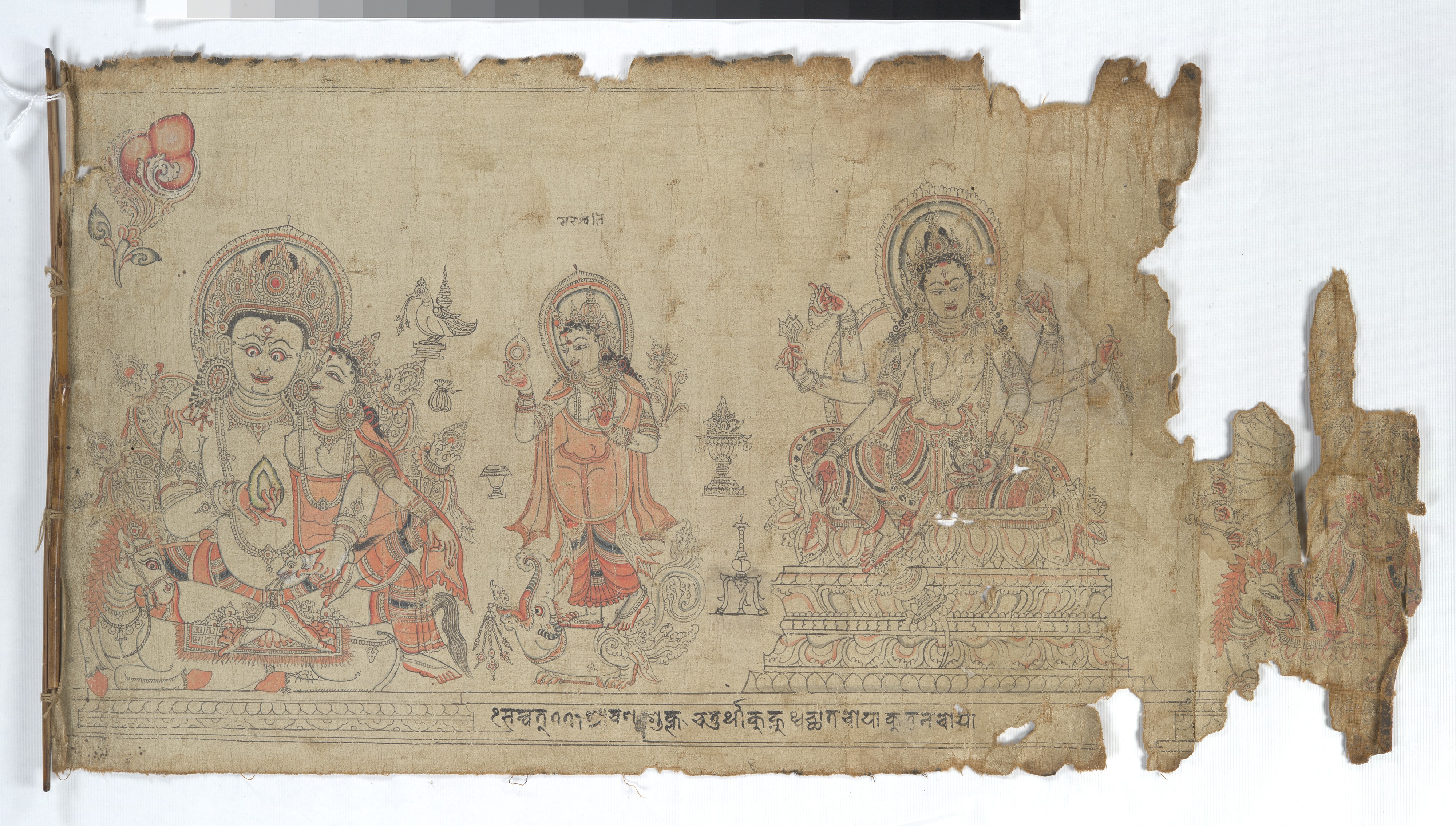
The Goddess Vasudhara Flanked by Kubera and a Fragmentary Durga
The Metropolitan Museum of Art
#72618