Cleveland Museum of Art
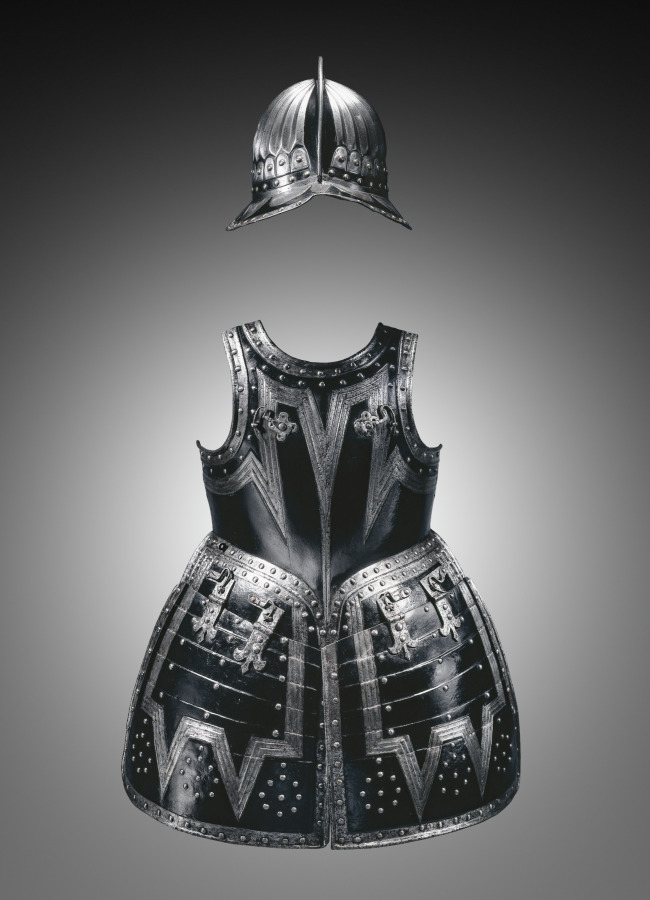
Pikeman’s Armor
- Date
- c. 1620–30
- Medium
- steel with brass rivets and black paint
- Culture
- Netherlands, Dutch or Flemish, 17th century
- Department
- Medieval Art
- Institution
- Cleveland Museum of Art
- Object ID
- 104704
From the Cleveland Museum of Art record
Pikemen formed the backbone of infantry tactics through the end of the English Civil Wars (1642–51). Since muskets alone were ineffective against cavalry charges, companies of pikemen, armed with pikes, or spears, of 12 to 16 feet in length, were deployed in defensive formations to protect the musketeers, who wore no armor. A pikeman was usually equipped with a breastplate and backplate, hinged tassets reaching to mid-thigh, and sometimes a gorget, or neck piece, worn over a heavy buffcoat. High boots replaced leg armor. A brimmed, high-combed helmet known as a "pot" protected the head. Pikeman's armor withstood hard service. It was colored and treated (though the black paint seen here is modern) to control rusting and to add decorative interest. With its chevron decoration, this armor is slightly more decorative than most pikeman, suggesting that an officer could have owned it.
The authoritative record is held by Cleveland Museum of Art. LinkedCulture surfaces this object and its connections; it does not alter institutional metadata.
Get printable QR codesHide QR codes
Open QR codes for this object page and the museum record. They stay collapsed until needed.
Provenance & credit
As published by the source institution. Coverage varies — not every institution's open-data feed includes ownership history.
- Credit line
- Gift of Mr. and Mrs. John L. Severance
- Provenance
- Bashford Dean (1867-1928), New York, NY | 1923: [Sale: The American Art Galleries, New York, NY, sale 23-24, November 1923, lots 227c, 227i]. | 1923-: The Cleveland Museum of Art, Cleveland, OH
Part of a LinkedCulture topic
 European Renaissance Armor Components
These objects are all pieces of defensive armor and military equipment from 15th-17th century Europe, primarily from major armoring centers like Italy, Germany, and France.
500 objects from 4 institutions
Related across collections
Semantically similar works from Cleveland Museum of Art and other institutions.