Cleveland Museum of Art
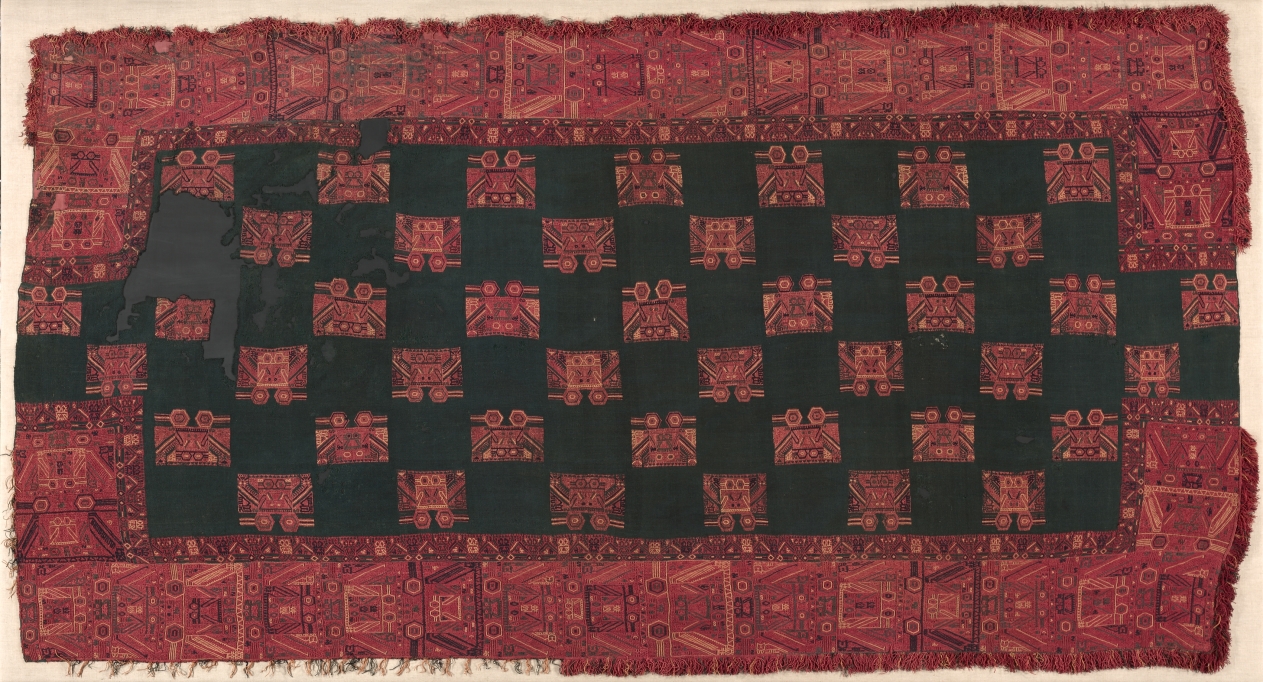
Mantle
- Date
- c. 300 BCE–200 CE
- Medium
- camelid fiber: plain weave with embroidery
- Culture
- Peru, South Coast, Paracas (Cavernas) style
- Department
- Textiles
- Institution
- Cleveland Museum of Art
- Object ID
- 124739
From the Cleveland Museum of Art record
Buried in shaft-tombs, or rectangular sunken chambers, the Paracas dead were wrapped in layers of cloth and accompanied by pottery, food, and other offerings. The dry environment of the Paracas Peninsula helped preserve many of these textiles, including richly ornamented garments buried with important individuals. This mantle, probably worn like a cloak, relates closely to the tunic (CMA 1946.227) and long headband (CMA 1946.228) due to their shared imagery. Its double-headed bird motifs— embroidered in vivid red, blue, yellow, and green yarns—likely had symbolic significance, although the specific meaning remains unknown. The profusion and decoration of textiles in Paracas burials shows the value placed on cloth.
The authoritative record is held by Cleveland Museum of Art. LinkedCulture surfaces this object and its connections; it does not alter institutional metadata.
Get printable QR codesHide QR codes
Open QR codes for this object page and the museum record. They stay collapsed until needed.
Provenance & credit
As published by the source institution. Coverage varies — not every institution's open-data feed includes ownership history.
- Credit line
- The Norweb Collection
- Provenance
- ?-1946: Emery May Holden Norweb [1895-1984] and Raymond Henry Norweb [1894-1983], Cleveland OH, 1946, given to the Cleveland Museum of Art | 1946: The Cleveland Museum of Art
Related across collections
Semantically similar works from Cleveland Museum of Art and other institutions.