Cleveland Museum of Art
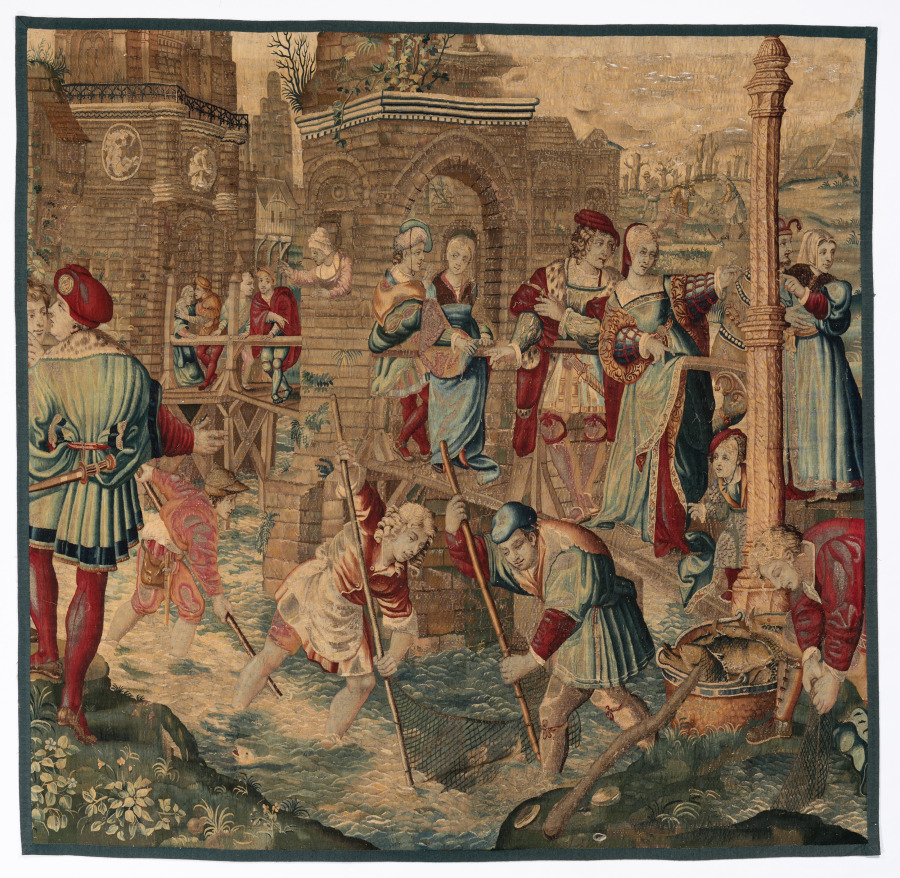
Four Seasons
Gobelins ManufactoryLinkedCulture matchlcp-55a1469dbe13
- Date
- designed c. 1535, woven mid- to late 1600s
- Medium
- Wool, silk, and gold filé; tapestry weave
- Culture
- France
- Department
- Textiles
- Institution
- Cleveland Museum of Art
- Object ID
- 130165
From the Cleveland Museum of Art record
Each of these tapestries depict rustic activities appropriate to the season: fishing and gardening for spring, harvesting of grain in summer, wine making for autumn, and ice skating for winter. As tapestries fell out of vogue in the 1700s and 1800s many were burned so their metal threads could be harvested to mint new coins. Before coming to the Cleveland Museum of Art, these tapestries hung in the family home of Frank H. Ginn and Cornelia Root Ginn in Gates Mills, Ohio. Their children donated the tapestries to the museum in 1952. At the time of the Four Seasons 's production, weavers at the Gobelins Manufactory in Paris were paid on a wage-scale based on the difficulty of the weaving; those who wove heads and flesh tones were paid the most.
The authoritative record is held by Cleveland Museum of Art. LinkedCulture surfaces this object and its connections; it does not alter institutional metadata.
Get printable QR codesHide QR codes
Open QR codes for this object page and the museum record. They stay collapsed until needed.
Provenance & credit
As published by the source institution. Coverage varies — not every institution's open-data feed includes ownership history.
- Credit line
- Gift of Francis Ginn, Marian Ginn Jones, Barbara Ginn Griesinger, and Alexander Ginn in memory of Frank Hadley Ginn and Cornelia Root Ginn
- Provenance
- Balloch Castle, Scotland. | January 27-Febuary 3, 1923: Henry Symons Sale: Anderson Galleries, New York, January 27-Febuary 3, 1923 | 1923-1952: Frank Hadley Ginn (1868-1938) and Cornelia Winifred Root Ginn (1877-1937), Cleveland, OH | 1952-: The Cleveland Museum of Art, Cleveland, OH
Part of a LinkedCulture topic
 18th-Century French Decorative Arts
These objects represent the luxury decorative traditions of 18th-century France, unified by their use of refined materials (tapestry weave, Savonnerie knotted pile, carved wood), classical themes (Ovid's Metamorphoses, S
48 objects from 5 institutions
Related across collections
Semantically similar works from Cleveland Museum of Art and other institutions.