Cleveland Museum of Art
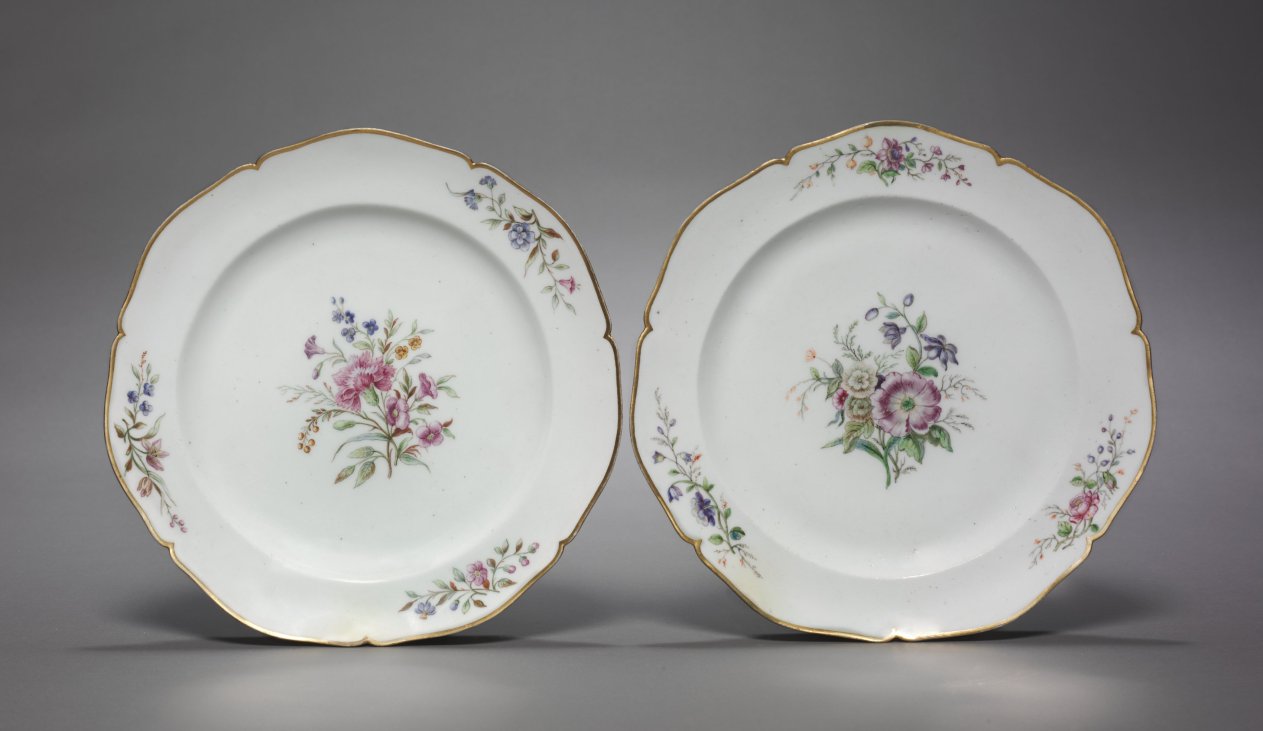
Pair of Plates (Assiettes)
Vincennes Porcelain FactoryLinkedCulture matchlcp-7a4d6efb7317
- Date
- c. 1748–51
- Medium
- Soft-paste porcelain with enamel and gilt decoration
- Culture
- France, Vincennes
- Department
- Decorative Art and Design
- Institution
- Cleveland Museum of Art
- Object ID
- 137099
From the Cleveland Museum of Art record
Known as “German flowers,” naturalistic floral compositions painted on Meissen factory porcelain in the 1740s influenced the paintings of French and English porcelain factories. At the Vincennes factory in the 1750s, botanically accurate flower paintings were regularly represented. The flowers seen here take inspiration from Meissen, while at the same time representing an early attempt at a distinctly French style of porcelain painting that emphasized bright, clear colors. Though the Vincennes porcelain factory had a royal privilege for gilding as early as 1745, it was not until 1748 that they were able to put this process into practice when they bought the secret to its production from Benedictine monk, Hippolyte Lefleure.
The authoritative record is held by Cleveland Museum of Art. LinkedCulture surfaces this object and its connections; it does not alter institutional metadata.
Get printable QR codesHide QR codes
Open QR codes for this object page and the museum record. They stay collapsed until needed.
Provenance & credit
As published by the source institution. Coverage varies — not every institution's open-data feed includes ownership history.
- Credit line
- The Norweb Collection
- Provenance
- R. Henry Norweb, Cleveland, Ohio.
Part of a LinkedCulture topic
 18th Century Porcelain Figurines
These objects are decorative ceramic figures and figure groups made from soft-paste or hard-paste porcelain during the 18th century, produced by major European porcelain factories including Meissen, Sèvres, Derby, Chelse
413 objects from 4 institutions
Related across collections
Semantically similar works from Cleveland Museum of Art and other institutions.