Cleveland Museum of Art
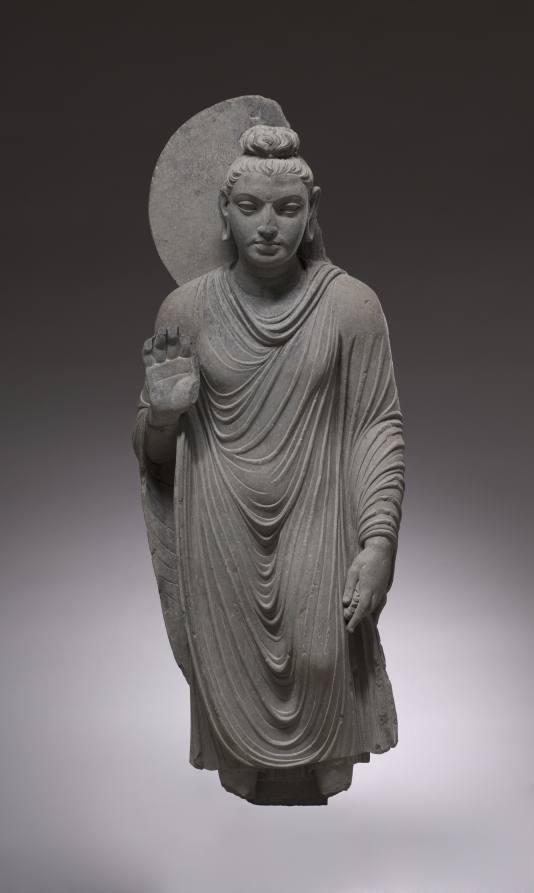
Standing Buddha
- Date
- 150–200 CE
- Medium
- schist
- Culture
- Pakistan, Gandhara, Kushan period
- Department
- Indian and Southeast Asian Art
- Institution
- Cleveland Museum of Art
- Object ID
- 147010
From the Cleveland Museum of Art record
Combining elements from both the Mediterranean and South Asian worlds, the artists of Gandhara created a new vision of the Buddha during the period of high contact between the two regions from the 100s to 200s AD. They were among the first to show the Buddha with a placid expression, thick wavy hair, and clothed in a heavy, toga-like monk’s robe. The cavity at the top of the head may have once held a portion of the Buddha's relics.
The authoritative record is held by Cleveland Museum of Art. LinkedCulture surfaces this object and its connections; it does not alter institutional metadata.
Get printable QR codesHide QR codes
Open QR codes for this object page and the museum record. They stay collapsed until needed.
Provenance & credit
As published by the source institution. Coverage varies — not every institution's open-data feed includes ownership history.
- Credit line
- Gift of Morris and Eleanor Everett in memory of Flora Morris Everett
- Provenance
- ?–1972: (B. J. Lester-Smith, Vienna, Austria, sold to the Cleveland Museum of Art) | 1972–: The Cleveland Museum of Art, Cleveland, OH
Related across collections
Semantically similar works from Cleveland Museum of Art and other institutions.