Cleveland Museum of Art
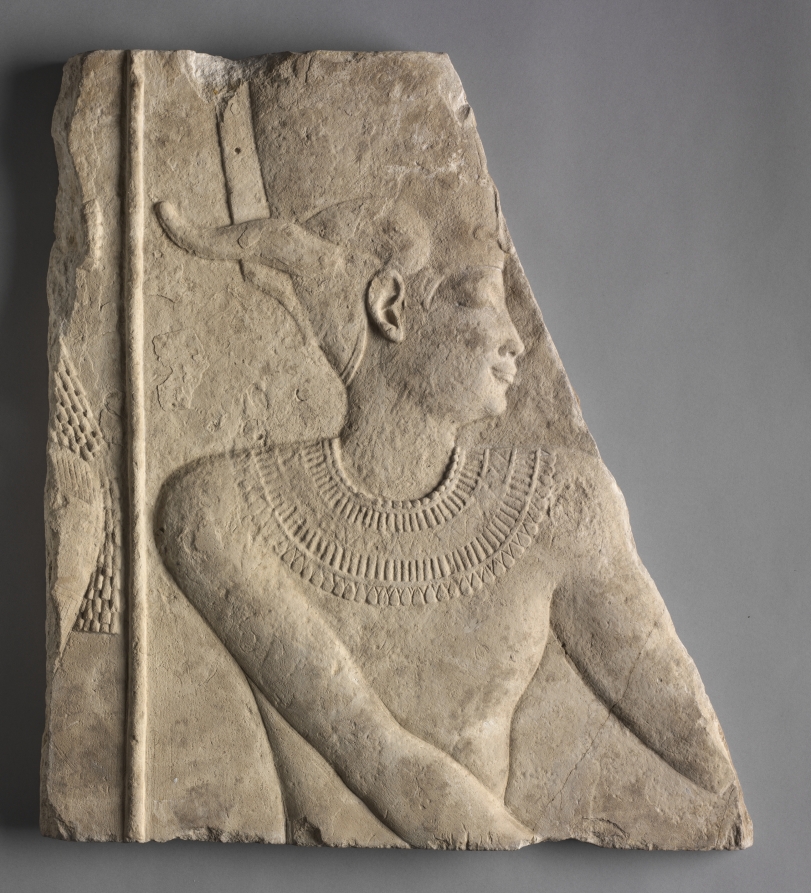
Temple Relief of a Deity
- Date
- 360–246 BCE
- Medium
- limestone
- Culture
- Egypt, Late period (715–332 BCE), Dynasty 30–Greco-Roman period (332 BCE–395 CE), Ptolemaic dynasty (305–30 BCE)
- Department
- Egyptian and Ancient Near Eastern Art
- Institution
- Cleveland Museum of Art
- Object ID
- 147014
From the Cleveland Museum of Art record
The almond-shaped eye, snub nose, full cheeks, smiling mouth, and ball.shaped chin are characteristic of Dynasty 30 and the early Ptolemaic Dynasty, when a bolder, fleshier, more three-dimensional style of modeling was introduced. A favorite form of temple decoration during this period was a row of seated deities. This figure was the last in a row of gods facing right, for directly behind him is a dividing line and the slight remains of the vulture headdress, wig, and shoulder of a seated goddess, evidently the last in a row facing the opposite direction. At either end of the complete scene was probably a standing figure of the king presenting offerings.
The authoritative record is held by Cleveland Museum of Art. LinkedCulture surfaces this object and its connections; it does not alter institutional metadata.
Get printable QR codesHide QR codes
Open QR codes for this object page and the museum record. They stay collapsed until needed.
Provenance & credit
As published by the source institution. Coverage varies — not every institution's open-data feed includes ownership history.
- Credit line
- John L. Severance Fund
- Provenance
- Provenance unknown but probably the Delta. Purchased from Mr. and Mrs. Paul Mallon and Milton Girod.
Part of a LinkedCulture topic
 Ancient Egyptian Personal Objects
These objects are cosmetic implements and grooming tools from ancient Egypt, including mirrors, palettes for grinding pigments, and decorative knives, representing daily life and personal adornment practices.
476 objects from 5 institutions
Related across collections
Semantically similar works from Cleveland Museum of Art and other institutions.