Cleveland Museum of Art
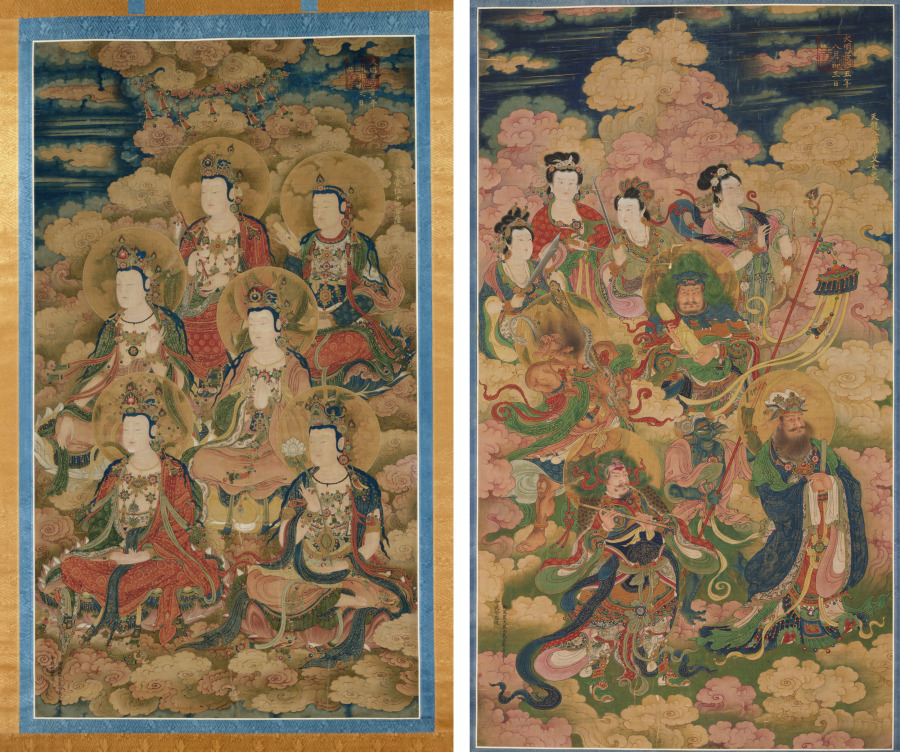
The Bodhisattvas of the Ten Stages in Attaining the Most Perfect Knowledge; The Eight Hosts of Deva, Naga, and Yakshi
- Date
- 1454
- Medium
- Pair of hanging scrolls; ink and color on silk
- Culture
- China, Ming dynasty (1368–1644)
- Department
- Chinese Art
- Institution
- Cleveland Museum of Art
- Object ID
- 147571
From the Cleveland Museum of Art record
The grandest of the Buddhist mortuary rites is the Water-Land ( shuilu ) ritual. This esoteric ceremony is conducted for the salvation of “all souls of the dead on land and sea.” The ostentatious ritual was performed for imperial ancestors and high officials from the Song (960–1279) to the Ming dynasties and drew large crowds. On the second day of the weeklong ceremony, paintings are hung in the inner altar. These two scrolls belong to a set of 36 Water-Land ritual paintings that are the finest works of their types known from the Ming period. With their bright, opaque color and fine-line gilt decoration intact and unfaded, both paintings share a remarkable state of preservation. In the upper right corner of each painting is an imperial seal and an inscription in gold reading: Donated on the third day of the eighth month in the fifth year of the Jingtai reign (1454) of the Great Ming . Written in ink in the lower left corner is the record that they were made on imperial order, probably to present them to the Da Longfu monastery in Beijing. One scroll represents the Eight Hosts of Celestial Nagas and Yakshis as described in the Lotus Sutra . The other represents Bodhisattvas of the Ten Stages of Enlightenment undergoing the final processes toward Buddhahood. The sinuous curves of scarf and drapery, the layering of garments, and the minute detail all reflect the opulent visual atmosphere that surrounded the Ming worshipper in temples and spirit halls throughout the country.
The authoritative record is held by Cleveland Museum of Art. LinkedCulture surfaces this object and its connections; it does not alter institutional metadata.
Get printable QR codesHide QR codes
Open QR codes for this object page and the museum record. They stay collapsed until needed.
Provenance & credit
As published by the source institution. Coverage varies — not every institution's open-data feed includes ownership history.
- Credit line
- John L. Severance Fund
- Provenance
- 1450-56: Ming imperial collection [Jingtai era, 1450–1456] | ?-1973: (Shunichi Yabumoto Co., Ltd., Tokyo, Japan, sold to the Cleveland Museum of Art) | 1973-: The Cleveland Museum of Art, Cleveland, OH
Part of a LinkedCulture topic
 Buddhist and Hindu Iconography
These objects are connected by their representation of sacred figures and deities from Buddhist and Hindu religious traditions across Asian cultures, including sculptures, paintings, and ritual objects depicting buddhas,
183 objects from 5 institutions
Related across collections
Semantically similar works from Cleveland Museum of Art and other institutions.