Cleveland Museum of Art
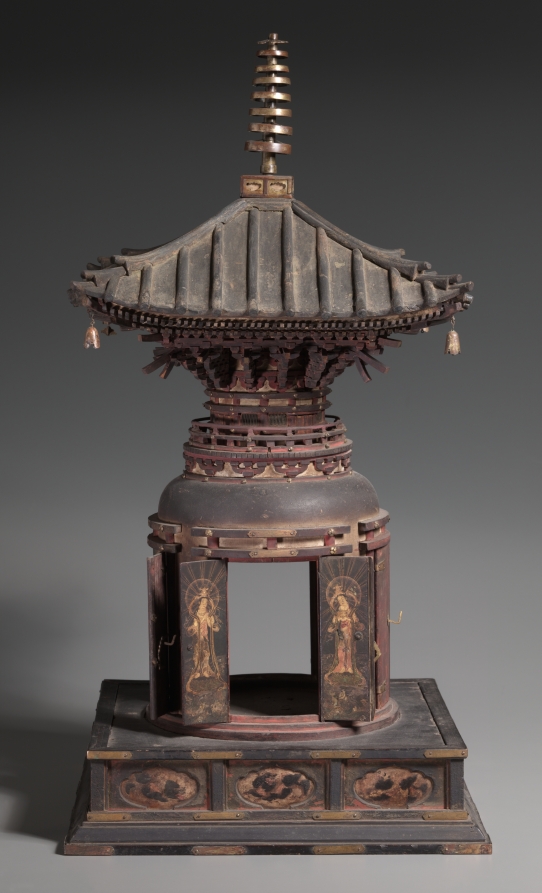
Many-Jeweled Stupa Reliquary (Tahōtō shari yōki)
- Date
- early to mid-1300s
- Medium
- wood and metal
- Culture
- Japan, Kamakura period (1185–1333)
- Department
- Japanese Art
- Institution
- Cleveland Museum of Art
- Object ID
- 151052
From the Cleveland Museum of Art record
Earthen mounds that marked the sites of interred relics in ancient India are called stupas. As Buddhism traveled through East Asia, the mounds took on the form of towers called “pagodas” by Westerners. This miniature tower, painted with Buddhist deities on the interiors of the doors on each side, likely once held items considered to be sacred relics. The deities on the doors have been tentatively identified as the four bodhisattvas of the sacred text the Lotus Sutra, and two Guardian Kings known as Niō.
The authoritative record is held by Cleveland Museum of Art. LinkedCulture surfaces this object and its connections; it does not alter institutional metadata.
Get printable QR codesHide QR codes
Open QR codes for this object page and the museum record. They stay collapsed until needed.
Provenance & credit
As published by the source institution. Coverage varies — not every institution's open-data feed includes ownership history.
- Credit line
- John L. Severance Fund
- Provenance
- ?–1982: (Setsu Gatodo Company, Ltd., Tokyo, Japan, sold to the Cleveland Museum of Art) | 1982–: The Cleveland Museum of Art, Cleveland, OH
Related across collections
Semantically similar works from Cleveland Museum of Art and other institutions.