Cleveland Museum of Art
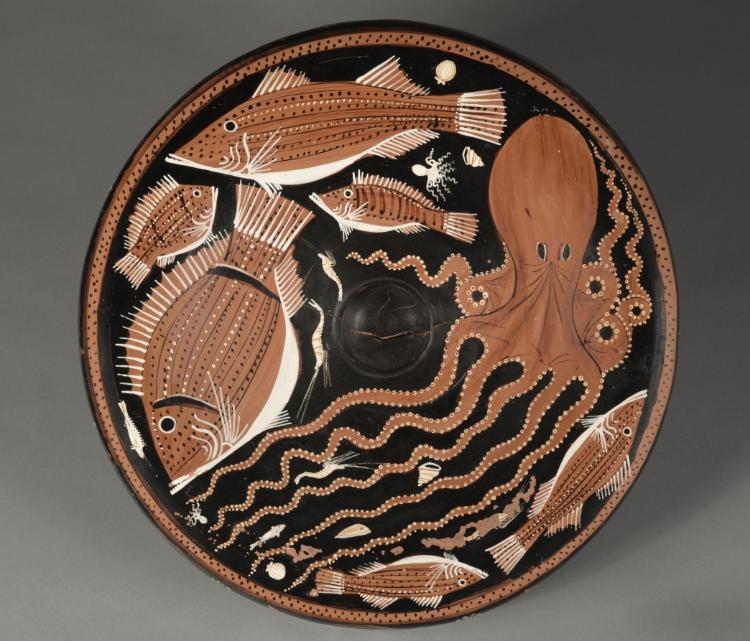
Red-Figure Fish Plate: Octopi, Mullet, Bream, Shellfish
Asteas/Python WorkshopLinkedCulture matchlcp-5607ad214bfe
- Date
- c. 340–330 BCE
- Medium
- ceramic
- Culture
- South Italian, Paestan
- Department
- Greek and Roman Art
- Institution
- Cleveland Museum of Art
- Object ID
- 152699
From the Cleveland Museum of Art record
Although first developed in Athens, red-figure fish plates became especially popular in South Italy and Sicily in the 300s BC. All feature a short foot and a small central depression, but those produced in the workshop of Asteas and Python, like this one, are the largest and most ornate. Archaeologists have closely studied the fish and other sea creatures represented, identifying many of them with species still found (and eaten) in the Mediterranean; included here are octopi, mullet, bream, and various shellfish. Perfect for serving seafood, this plate features images of sea creatures and a central well for dipping or collecting juices.
The authoritative record is held by Cleveland Museum of Art. LinkedCulture surfaces this object and its connections; it does not alter institutional metadata.
Get printable QR codesHide QR codes
Open QR codes for this object page and the museum record. They stay collapsed until needed.
Provenance & credit
As published by the source institution. Coverage varies — not every institution's open-data feed includes ownership history.
- Credit line
- Leonard C. Hanna Jr. Fund
- Provenance
- Poutrales family, Portugal (arrived Portugal from Germany and Austria late 19th Century) | ?-1985: Thomas Howard-Sneyd, Ltd., London, sold to the Cleveland Museum of Art | 1985-: The Cleveland Museum of Art, Cleveland, OH
Related across collections
Semantically similar works from Cleveland Museum of Art and other institutions.