Cleveland Museum of Art
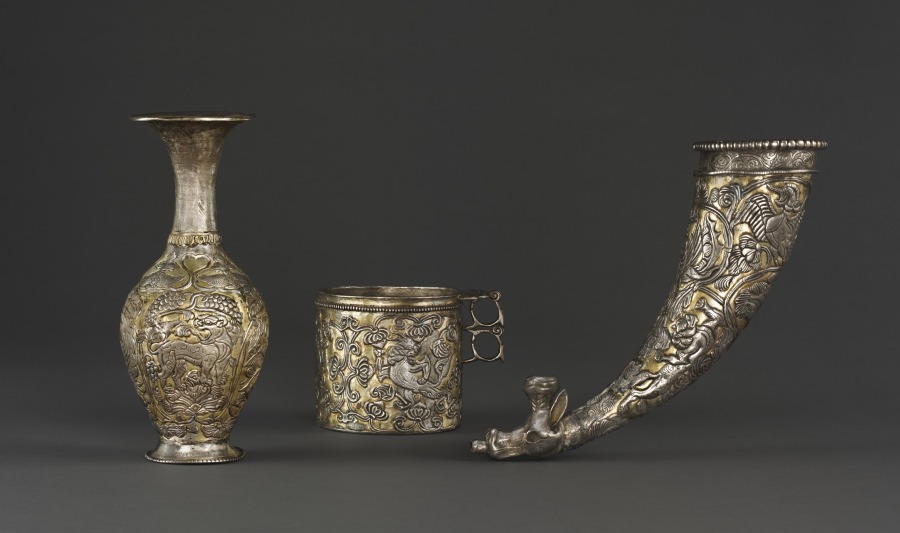
Silver Vessels
- Date
- c. late 600s–early 700s
- Medium
- Silver with gilded foil
- Culture
- Central Asia (Sogdiana) or Tibet
- Department
- Indian and Southeast Asian Art
- Institution
- Cleveland Museum of Art
- Object ID
- 154255
From the Cleveland Museum of Art record
These vessels attest to the international climate that pervaded the regions of China, Tibet, and Central Asia during the time of the expansionist Tang dynasty (618–907). They are ornamented predominantly with Central Asian elements, including grape vines, beaded borders, heart-shaped motifs, and real and fantastic creatures. Stylistically, the Tibetan objects resemble the metalwork of Sogdian craftspeople, who came from the regions of modern-day Uzbekistan and Tajikistan and settled across Asia. These artists are known to have specialized in the technique of offsetting the silver repoussé design with gilded foil, using heat and pressure to adhere the foil to the silver surface of the vessel. These banquet items may have been made specifically to be buried alongside a deceased person for use in the afterlife.
The authoritative record is held by Cleveland Museum of Art. LinkedCulture surfaces this object and its connections; it does not alter institutional metadata.
Get printable QR codesHide QR codes
Open QR codes for this object page and the museum record. They stay collapsed until needed.
Provenance & credit
As published by the source institution. Coverage varies — not every institution's open-data feed includes ownership history.
- Credit line
- Purchase from the J. H. Wade Fund
- Provenance
- ?–1988: (David Tremayne, Ltd., London, United Kingdom, sold to the Cleveland Museum of Art) | 1988–: The Cleveland Museum of Art, Cleveland, OH
Related across collections
Semantically similar works from Cleveland Museum of Art and other institutions.