Cleveland Museum of Art
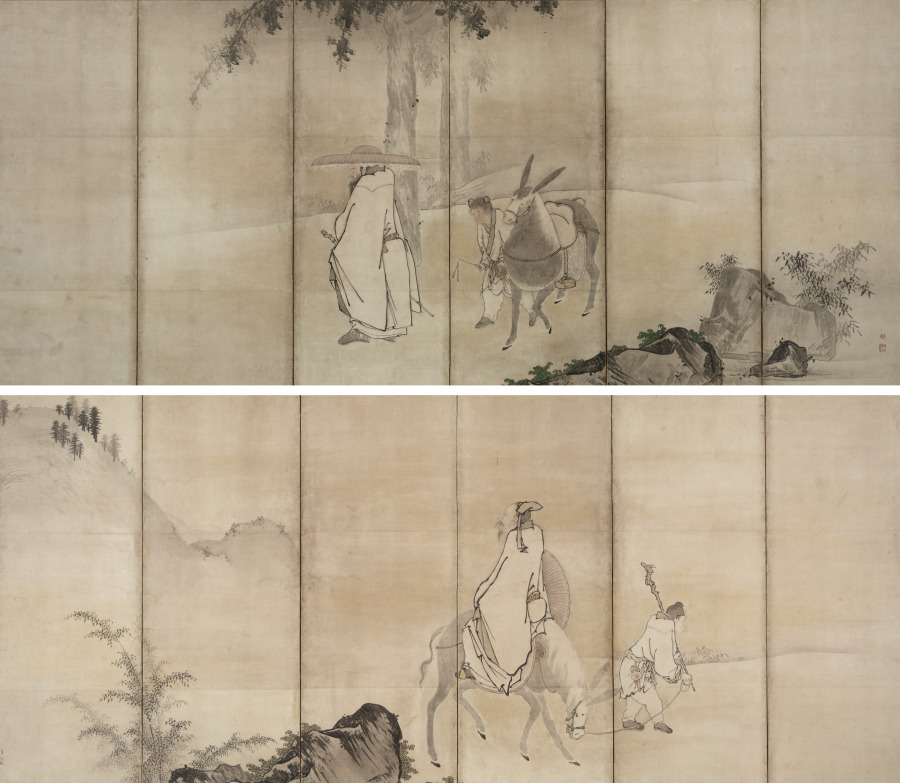
Su Shi (So Shoku) and Pan Lang (Han Rō)
Unkoku TōganLinkedCulture matchlcp-9fe502fcb02e
- Date
- early 1600s
- Medium
- pair of six-panel folding screens; ink, light color, and gold on paper
- Culture
- Japan, Momoyama period (1573–1615)
- Department
- Japanese Art
- Institution
- Cleveland Museum of Art
- Object ID
- 164624
From the Cleveland Museum of Art record
This pair of screens depicts episodes from the stories of famed Song-dynasty poets Su Shi of the 1000s and Zhou-dynasty official Pan Lang of the 900s. Both men were banished by their rulers for their perceived missteps. Su Shi’s comments on a series of economic reforms were seen as criticism of the emperor. Pan Lang composed an ill-advised verse about one of the king’s horses. In the left screen Pan rides backward on his donkey as he returns from exile so that he may have a last look at his now beloved Mount Hua. Su Shi, in the right screen, is shown embarking on his journey into exile. The artist of these screens, Unkoku Tōgan, was the founder of the Unkoku school of painting, which emulated the style of renowned ink painter Sesshū Tōyō (1420–1506). Tōgan was the official painter of the Mori family of what is now Yamaguchi prefecture in the south of Japan.
The authoritative record is held by Cleveland Museum of Art. LinkedCulture surfaces this object and its connections; it does not alter institutional metadata.
Get printable QR codesHide QR codes
Open QR codes for this object page and the museum record. They stay collapsed until needed.
Provenance & credit
As published by the source institution. Coverage varies — not every institution's open-data feed includes ownership history.
- Credit line
- John L. Severance Fund
- Provenance
- Mr. Shinkichiro Ishimitsu, Hagi City, Yamaguchi Prefecture; Mr. Mitsuru Tajima
Related across collections
Semantically similar works from Cleveland Museum of Art and other institutions.