Cleveland Museum of Art
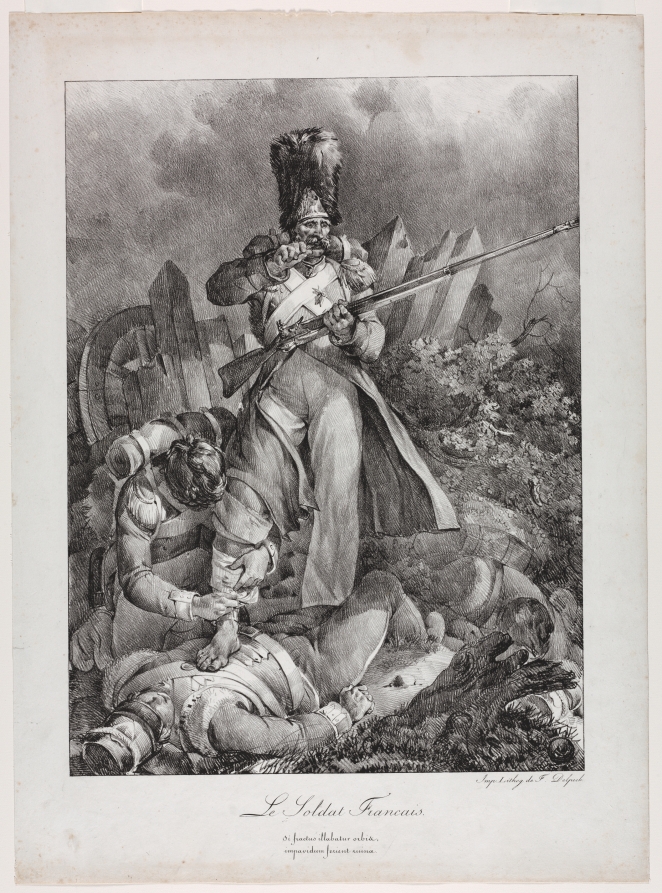
The French Soldier (Le Soldat français)
Nicolas Toussaint CharletLinkedCulture matchlcp-55d39b3ec770
- Date
- 1818
- Medium
- lithograph
- Culture
- France, 19th century
- Department
- Prints
- Institution
- Cleveland Museum of Art
- Object ID
- 167933
From the Cleveland Museum of Art record
Lithography was invented in 1798 by the German Aloys Senefelder. Although the technique was introduced in France in 1801, it was predominantly used for commercial ventures until 1815 when lithographic workshops—like that of François Delpech, who printed The French Soldier —were established in Paris. In 1814 Napoleon Bonaparte abdicated the throne and was banished to the island of Elba before being permanently exiled on Saint Helena. With the ensuing void in leadership, an idealized version of the Napoleonic era developed and Charlet was one of many artists who used art to glorify the French military. The French soldier depicted here, victorious against the prone Englishman, reloads his rifle and, although wounded, courageously continues to fight. The couplet from Horace beneath the scene comments that nothing can shatter the steadfastness of an honorable man.
The authoritative record is held by Cleveland Museum of Art. LinkedCulture surfaces this object and its connections; it does not alter institutional metadata.
Get printable QR codesHide QR codes
Open QR codes for this object page and the museum record. They stay collapsed until needed.
Provenance & credit
As published by the source institution. Coverage varies — not every institution's open-data feed includes ownership history.
- Credit line
- Gift of John Bonebrake
Related across collections
Semantically similar works from Cleveland Museum of Art and other institutions.