Cleveland Museum of Art
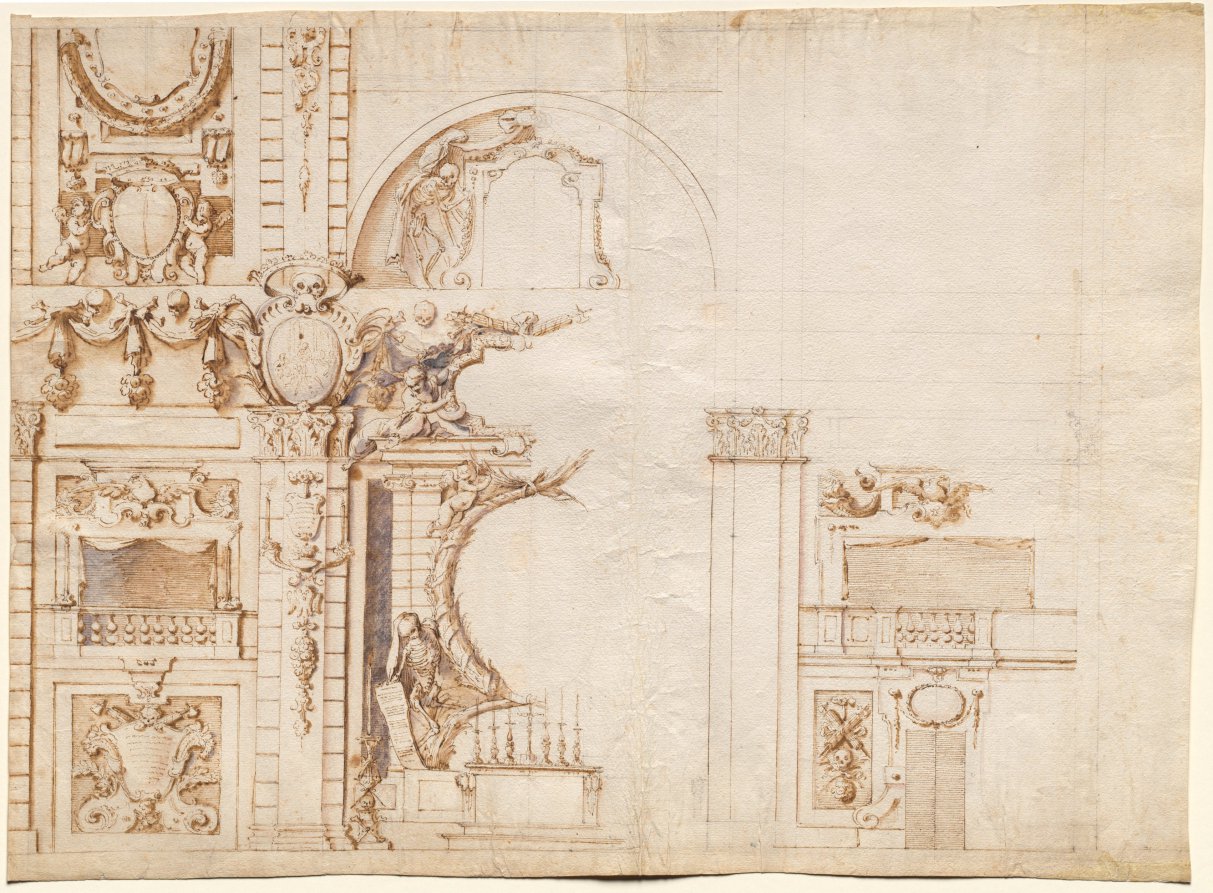
Study for the "Essequie" Conducted in San Lorenzo, Florence, in 1637 in Honour of Holy Roman Emperor Ferdinand II
Alfonso ParigiLinkedCulture matchlcp-32dda4f42e9f
- Date
- 1637
- Medium
- pen and brown ink and brown wash with graphite and accents of pink, purple-grey and deep blue-black wash
- Culture
- Italy, Florence
- Department
- Drawings
- Institution
- Cleveland Museum of Art
- Object ID
- 169319
From LinkedCulture
In 1637, the Medici transformed a Florentine church into a world of skulls, skeletons, and black draperies to honor a dead emperor. This pen and wash drawing by Alfonso Parigi, the official Medici court architect, maps out every detail of that spectacle, with skeletal figures slumping alongside cherubs, candelabras, and a bare dead tree. It matters because it shows how completely funerary ritual and theatrical performance had merged at the Medici court, turning grief itself into a grand, grotesque production.
Written by LinkedCulture for its video on this object. Machine-generated (claude-sonnet-4-6), not yet reviewed by a person. It is not part of the museum’s record.
From the Cleveland Museum of Art record
Alfonso Parigi was the official court architect for the Medici, taking over after the death of his father, the great engineer, architect, and designer Giulio Parigi. Testifying to the Medici's interest in cultivating a culture of the macabre, this sheet is an elaborate study for the essequie (funerary rites) for the Holy Roman Emperor Ferdinand II. Skulls and skeletons commingle with angels and garlands, and black draperies would have been hung to transform the church into a strange, macabre world. The Medici also commissioned artists and designers to create apparati , theatrical stage settings that were similarly elaborate, hell-like scenes. Designed only three years before the young Rosa would come to the court, this haunting sheet displays the grotesque artistic fantasia that was in vogue in Florence when Salvatore Rosa arrived.
The authoritative record is held by Cleveland Museum of Art. LinkedCulture surfaces this object and its connections; it does not alter institutional metadata.
Get printable QR codesHide QR codes
Open QR codes for this object page and the museum record. They stay collapsed until needed.
Provenance & credit
As published by the source institution. Coverage varies — not every institution's open-data feed includes ownership history.
- Credit line
- Norman O. Stone and Ella A. Stone Memorial Fund
- Provenance
- Sotheby's, London early 1990s; Rick Scorza
Related across collections
Semantically similar works from Cleveland Museum of Art and other institutions.