Cleveland Museum of Art
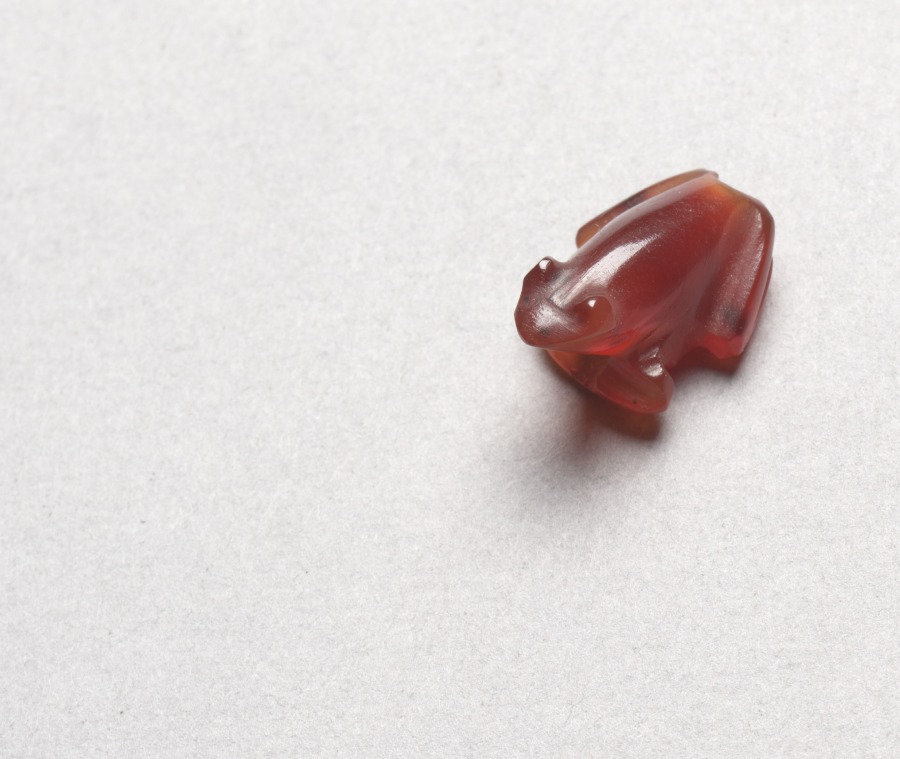
Frog Amulet
- Date
- c. 1540–1296 BCE
- Medium
- carnelian
- Culture
- Egypt, New Kingdom (1540–1069 BCE), Dynasty 18
- Department
- Egyptian and Ancient Near Eastern Art
- Institution
- Cleveland Museum of Art
- Object ID
- 93996
From the Cleveland Museum of Art record
The frog, because of its numerous offspring, was a symbol of fertility. In fact, the hieroglyphic sign for 100,000 was a tadpole. Frog amulets were very popular both in semiprecious stone and in faience, and were worn by women hoping for an easy delivery. Both sexes wore the frog in expectation of a successful rebirth in the afterlife.
The authoritative record is held by Cleveland Museum of Art. LinkedCulture surfaces this object and its connections; it does not alter institutional metadata.
Get printable QR codesHide QR codes
Open QR codes for this object page and the museum record. They stay collapsed until needed.
Provenance & credit
As published by the source institution. Coverage varies — not every institution's open-data feed includes ownership history.
- Credit line
- Gift of the John Huntington Art and Polytechnic Trust
- Provenance
- Purchased in Egypt by Lucy Olcott Perkins through Henry W. Kent
Related across collections
Semantically similar works from Cleveland Museum of Art and other institutions.