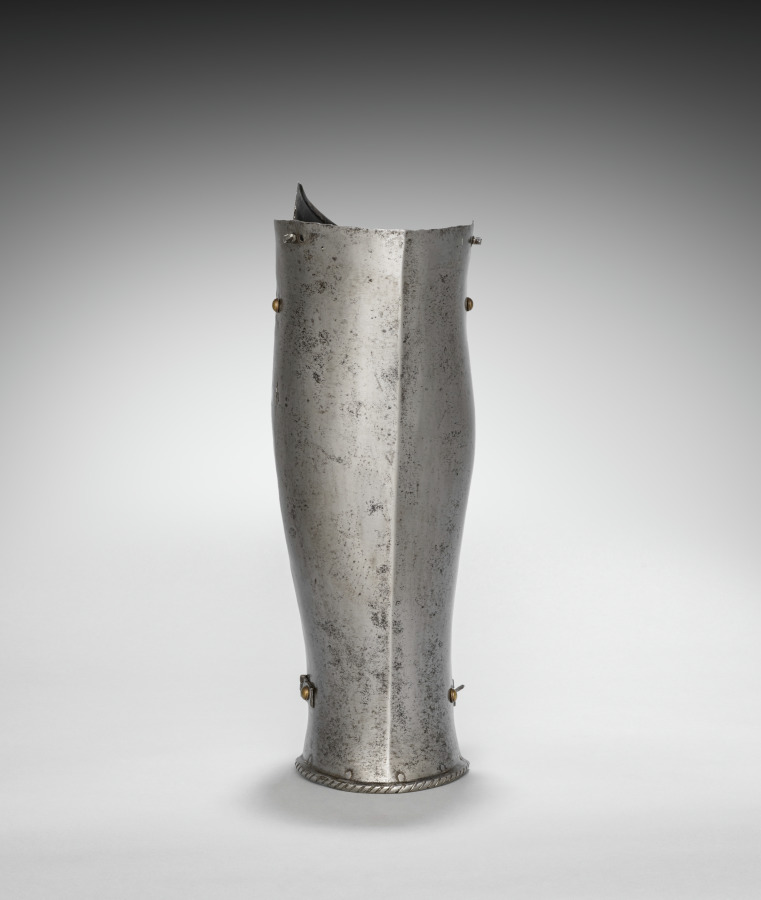
Cleveland Museum of Art
Proper Right Greave
- Date
- c. 1560–1580
- Medium
- steel, leather straps, brass rivets
- Culture
- South Germany, 16th century
- Department
- Medieval Art
- Institution
- Cleveland Museum of Art
- Object ID
- 95837
From the Cleveland Museum of Art record
This armor was developed for the joust-a sporting combat between two mounted contestants. Although all of the elements of this armor date from the same period, they are not all from the same suit. This armor is thus called "composed." It also shows the asymmetry of jousting armor. The participants rode along a wall-like barrier known as a "tilt" with their left sides facing one another. Consequently, armor on that side of the body had to be thicker. Note the large plate (grandguard) over the left shoulder for extra protection. Also, the breathing holes in the helmet were placed on the right side (farthest from an opponent's lance) to avoid injuries from splinters. The bracket attached to the right breastplate is called the lance-rest, a shock-absorbing support designed to accommodate the lance when "couched" under the right armpit.
The authoritative record is held by Cleveland Museum of Art. LinkedCulture surfaces this object and its connections; it does not alter institutional metadata.
Get printable QR codesHide QR codes
Open QR codes for this object page and the museum record. They stay collapsed until needed.
Provenance & credit
As published by the source institution. Coverage varies — not every institution's open-data feed includes ownership history.
- Credit line
- Gift of Mr. and Mrs. John L. Severance
- Provenance
- Frank Gair Macomber, Boston (cat 319)
Part of LinkedCulture topics
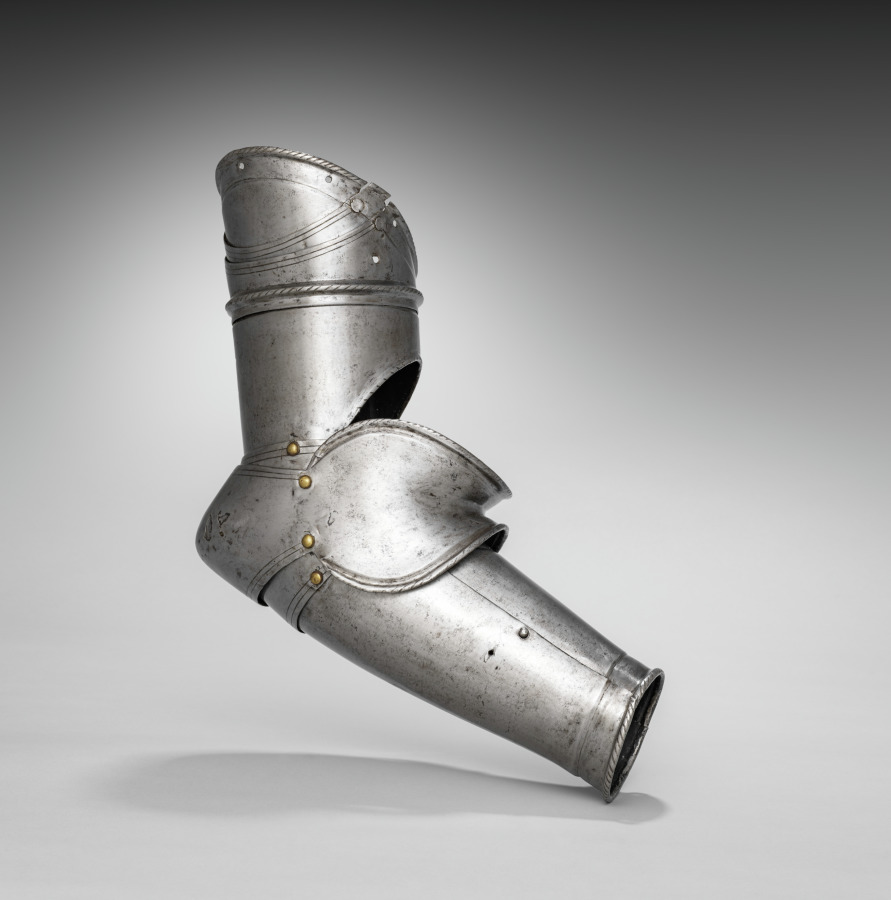 16th Century German Tournament Armor
These objects are components of German Renaissance jousting and tournament armor, specifically tilting suits and reinforcing pieces used in martial competitions during the 16th century.
20 objects from 2 institutions
 European Renaissance Armor Components
These objects are all pieces of defensive armor and military equipment from 15th-17th century Europe, primarily from major armoring centers like Italy, Germany, and France.
500 objects from 4 institutions
Related across collections
Semantically similar works from Cleveland Museum of Art and other institutions.