Cleveland Museum of Art
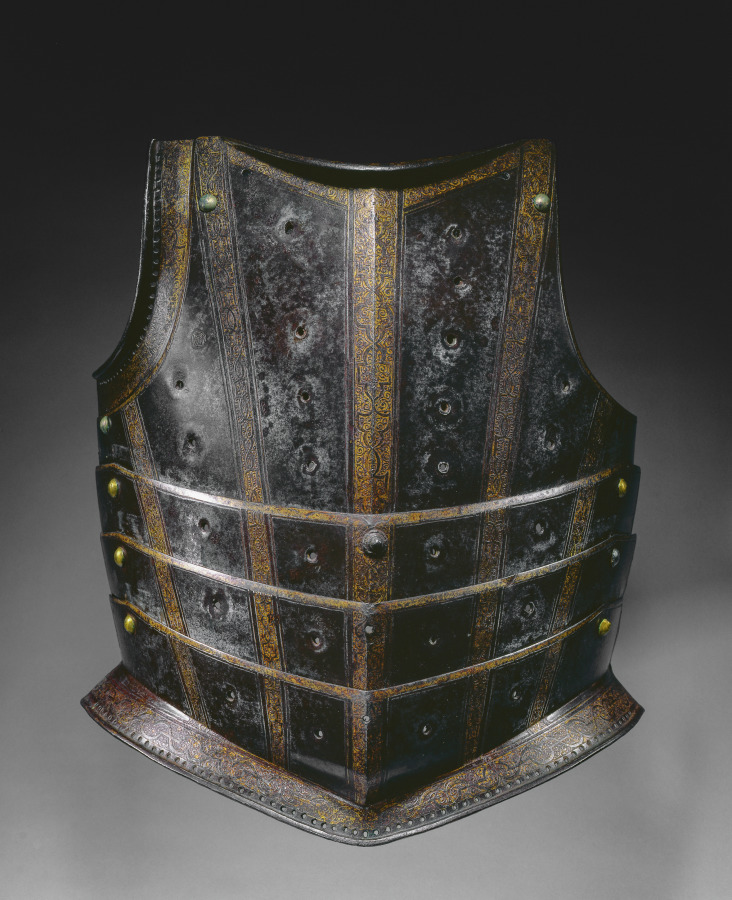
Breastplate from Hussar's Cuirass
- Date
- c. 1580
- Medium
- Steel (originally blued, now russet), etched and gilded strapwork bands;
- Culture
- Germany, Augsburg or Hungary, 16th century
- Department
- Medieval Art
- Institution
- Cleveland Museum of Art
- Object ID
- 95845
From the Cleveland Museum of Art record
This style of breastplate, with its numerous articulating lames, was probably used by a Hungarian hussar, a type of light cavalryman. The steel plates were originally blued-now turned russet-and etched and gilded with strapwork bands. The rows of vertical holes once provided gilt-brass settings for stones or glasspaste jewels. The effect would have suggested the semi-oriental costume and armor of the Near East favored by Polish and Hungarian armies of the late Renaissance. The breastplate’s contours, like the ridge down the center, were designed to deflect arrows and other projectiles.
The authoritative record is held by Cleveland Museum of Art. LinkedCulture surfaces this object and its connections; it does not alter institutional metadata.
Get printable QR codesHide QR codes
Open QR codes for this object page and the museum record. They stay collapsed until needed.
Provenance & credit
As published by the source institution. Coverage varies — not every institution's open-data feed includes ownership history.
- Credit line
- Gift of Mr. and Mrs. John L. Severance
- Provenance
- Constantinople Armory | Hagop Kevorkian (1872-1962), New York, NY | ?-1916: Frank Gair Macomber (1849-1941), Boston, MA, sold to the Cleveland Museum of Art | 1916-: The Cleveland Museum of Art, Cleveland, OH
Part of a LinkedCulture topic
 European Renaissance Armor Components
These objects are all pieces of defensive armor and military equipment from 15th-17th century Europe, primarily from major armoring centers like Italy, Germany, and France.
500 objects from 4 institutions
Related across collections
Semantically similar works from Cleveland Museum of Art and other institutions.