Cleveland Museum of Art
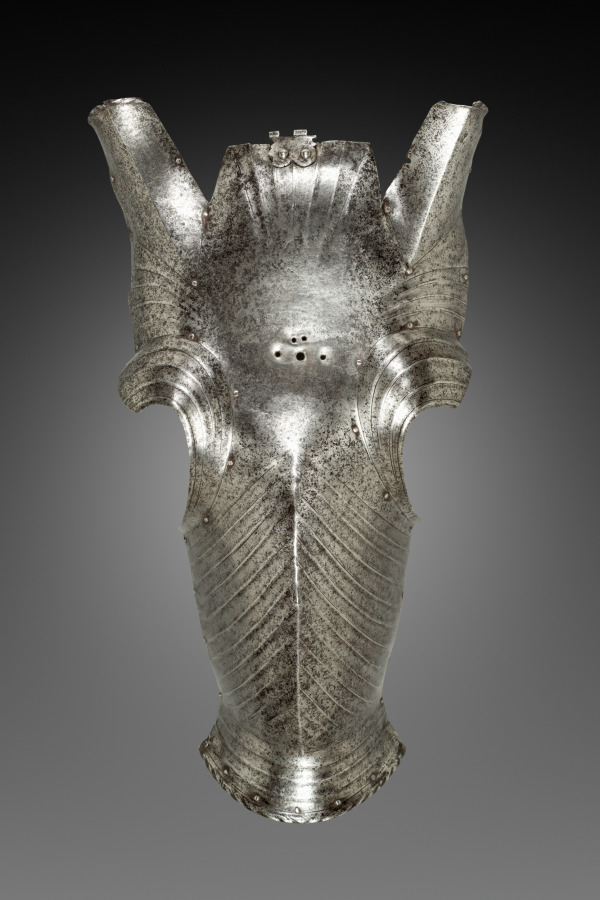
Chanfron in Maximilian Style
- Date
- c. 1510
- Medium
- steel
- Culture
- Germany, Nuremberg (?), early 16th Century
- Department
- Medieval Art
- Institution
- Cleveland Museum of Art
- Object ID
- 96102
From the Cleveland Museum of Art record
The chanfron was the primary element that protected and decorated a horse's forehead and face. It consisted of a plate of steel contoured to the horse's head from its ears to its nostrils. Normally, two holes were cut at each side of the forehead for the ears, and earpieces were sometimes riveted around their edges. This example, however, was forged in one piece. It belongs to the transitional period between the Gothic and the fluted armors introduced by Emperor Maximilian. The hinge at the top is for the attachment of the crest plate. Nuremberg was a chief armor production center and gained international renown; products from here were exported throughout Europe.
The authoritative record is held by Cleveland Museum of Art. LinkedCulture surfaces this object and its connections; it does not alter institutional metadata.
Get printable QR codesHide QR codes
Open QR codes for this object page and the museum record. They stay collapsed until needed.
Provenance & credit
As published by the source institution. Coverage varies — not every institution's open-data feed includes ownership history.
- Credit line
- Gift of Mr. and Mrs. John L. Severance
- Provenance
- Edwin J. Brett (1827-1895), London, England | ?-1916: Frank Gair Macomber; Boston, MA, sold to the Cleveland Museum of Art | 1916-: The Cleveland Museum of Art, Cleveland, OH
Part of a LinkedCulture topic
 European Renaissance Armor Components
These objects are all pieces of defensive armor and military equipment from 15th-17th century Europe, primarily from major armoring centers like Italy, Germany, and France.
500 objects from 4 institutions
Related across collections
Semantically similar works from Cleveland Museum of Art and other institutions.