Getty Museum
Rothschild Pentateuch
- Date
- 1296
- Medium
- Tempera colors, gold, and ink
- Culture
- French or German
- Department
- Manuscripts
- Institution
- Getty Museum
- Object ID
- 0b2d219a-f4ef-444f-b31c-d2bf0fe3b3b5
From the Getty Museum record
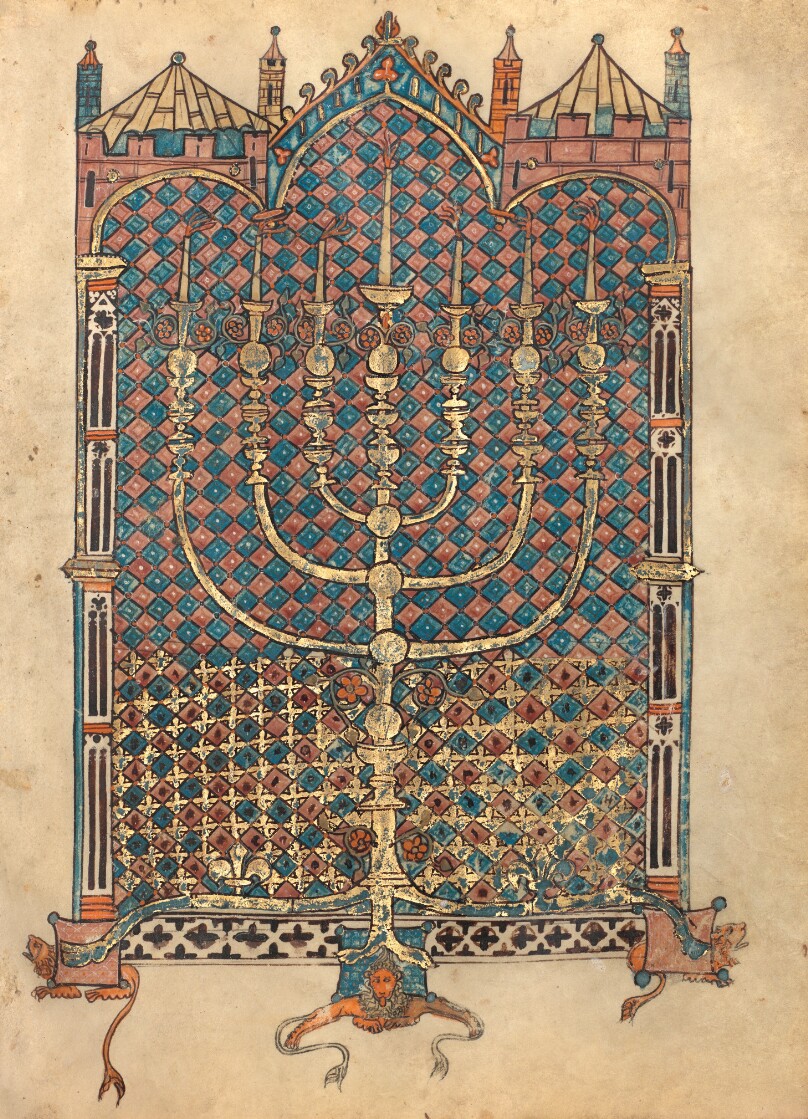
Teeming with hybrid figures, animal and humanoid, as well as spectacular displays of calligraphic virtuosity (known as micrography), the Rothschild Pentateuch's vibrant colors and gleaming gold distinguish it from the greater part of medieval Hebrew book production, which followed a largely textual tradition. Featuring hundreds of illuminated folios in its over 1000 pages, the Rothschild Pentateuch is one of the most elaborate illuminated Hebrew Bibles to survive from the Middle Ages. The manuscript contains the central sacred text of Judaism, the Pentateuch (the Torah in the strictest sense), which is comprised of the Five Books of Moses: Genesis, Exodus, Leviticus, Numbers, and Deuteronomy. Unusually for a medieval manuscript, there is a wealth of information regarding the circumstances surrounding its creation. There were two scribes who signed the manuscript, Elijah ben Meshullam (main text) and Elijah ben Jehiel (micrography). The name of the patron, Joseph ben Joseph Martel, is also mentioned as well as the date the writing of the manuscript was completed, June 17, 1296. Unfortunately, no further references to any of these individuals has been found in other signed manuscripts or historical records. The text contains features that indicate that Joseph ben Martel Joseph may have been an English émigré who had been expelled from England in 1290 to settle in the Ashkenazi Jewish community along the Rhine (now northern France and western Germany). The Rothschild Pentateuch's lavish illumination divides the text into sections to be read weekly so that the entire Torah would be read over the course of a year. The opening of each of the five books is celebrated with monumental Hebrew initials intertwined with lively marginal images of animals and plants, and in one case, a full-page image of a glowing Menorah. In a rare deviation from the rest of the manuscript's aniconic tradition, there is one illumination featuring human figures, added later. In the second half of the fifteenth century, by which time the manuscript had travelled to Italy, a folio was replaced with a new insertion. This folio can be identified as the work of one of the most celebrated Jewish scribe/artists known from the period: Joel ben Simeon. With its seemingly endless variety of illuminated motifs ranging from the imposing to the whimsical, the Rothschild Pentateuch is a prime example of the heights of originality and magnificence that Hebrew illumination could reach in the Middle Ages.
The authoritative record is held by Getty Museum. LinkedCulture surfaces this object and its connections; it does not alter institutional metadata.
Get printable QR codesHide QR codes
Open QR codes for this object page and the museum record. They stay collapsed until needed.
Related across collections
Semantically similar works from Getty Museum and other institutions.