Getty Museum
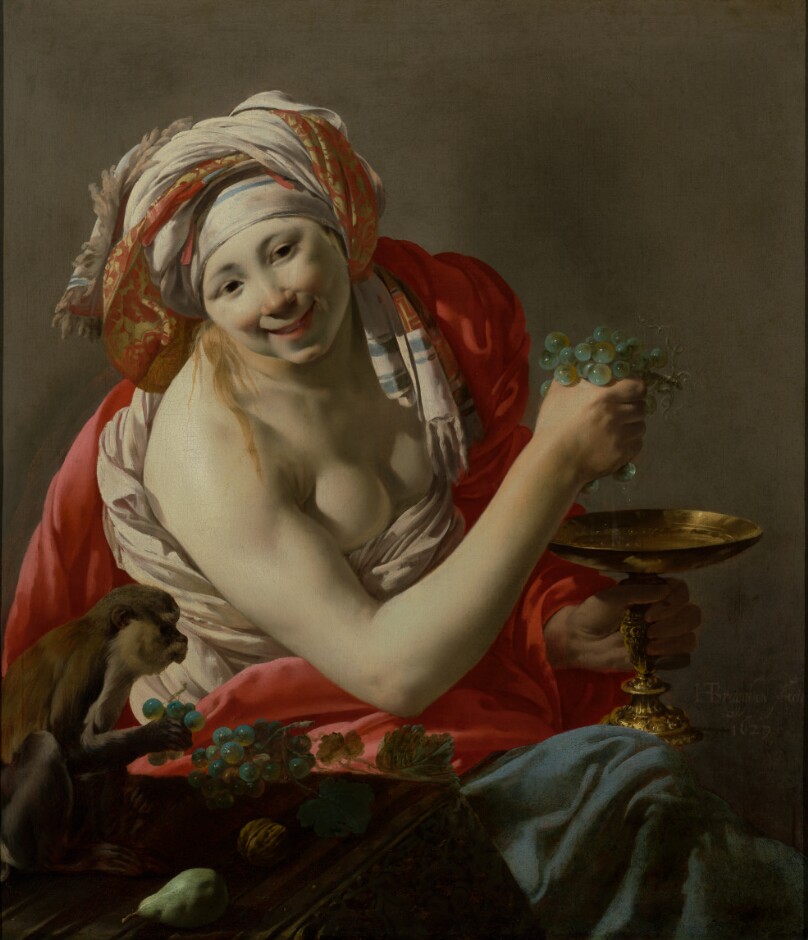
Bacchante with an Ape
Creator
Hendrick ter BrugghenDutch Artist · 1588–1629
All works by this person →Hendrick Ter Brugghen began to study painting at the age of thirteen, possibly in the studio of Abraham Bloemart. On a visit to Rome, he encountered and was strongly influenced by the paintings of Caravaggio. After returning to Utrecht, Ter Brugghen painted in the studio of Gerrit van Honthorst. Honthorst and Ter Brugghen and their followers became known as the *Caravaggisti* because they adopted
More on Getty ULAN- Date
- 1627
- Medium
- Oil on canvas
- Culture
- Dutch
- Department
- Paintings
- Institution
- Getty Museum
- Object ID
- 0de29d29-2df6-45fe-9d84-3b10a343dd36
From the Getty Museum record
A bacchante, follower of Bacchus, the god of wine, leans forward and grins at the viewer while squeezing a bunch of grapes into a golden drinking vessel. Her posture, exposed breasts, flushed cheeks, and inviting smile allude to her drunken state. There is something disturbing, however, in the way she provocatively confronts the viewer, leaning into the spectator's space and smiling broadly. In the lower left corner an ape mimics the woman's gesture, holding a smaller bunch of grapes in his right paw. The ape may serve a moralizing purpose, condemning excessive drinking. While visiting Rome from about 1604 to 1614, Hendrick ter Brugghen saw the famous *Bacchus* by Caravaggio from which this classical painting of Bacchus's female follower derives.
The authoritative record is held by Getty Museum. LinkedCulture surfaces this object and its connections; it does not alter institutional metadata.
Get printable QR codesHide QR codes
Open QR codes for this object page and the museum record. They stay collapsed until needed.
Related across collections
Semantically similar works from Getty Museum and other institutions.