Getty Museum
Mantel Clock (Pendule)
- Date
- about 1715–1725
- Medium
- Oak veneered with tortoise shell, blue-painted horn, brass, and ebony; enameled metal; gilt bronze mounts
- Culture
- French
- Department
- Decorative Arts
- Institution
- Getty Museum
- Object ID
- 0e5e1a63-40ac-41a7-b055-e62ba173fa87
From the Getty Museum record
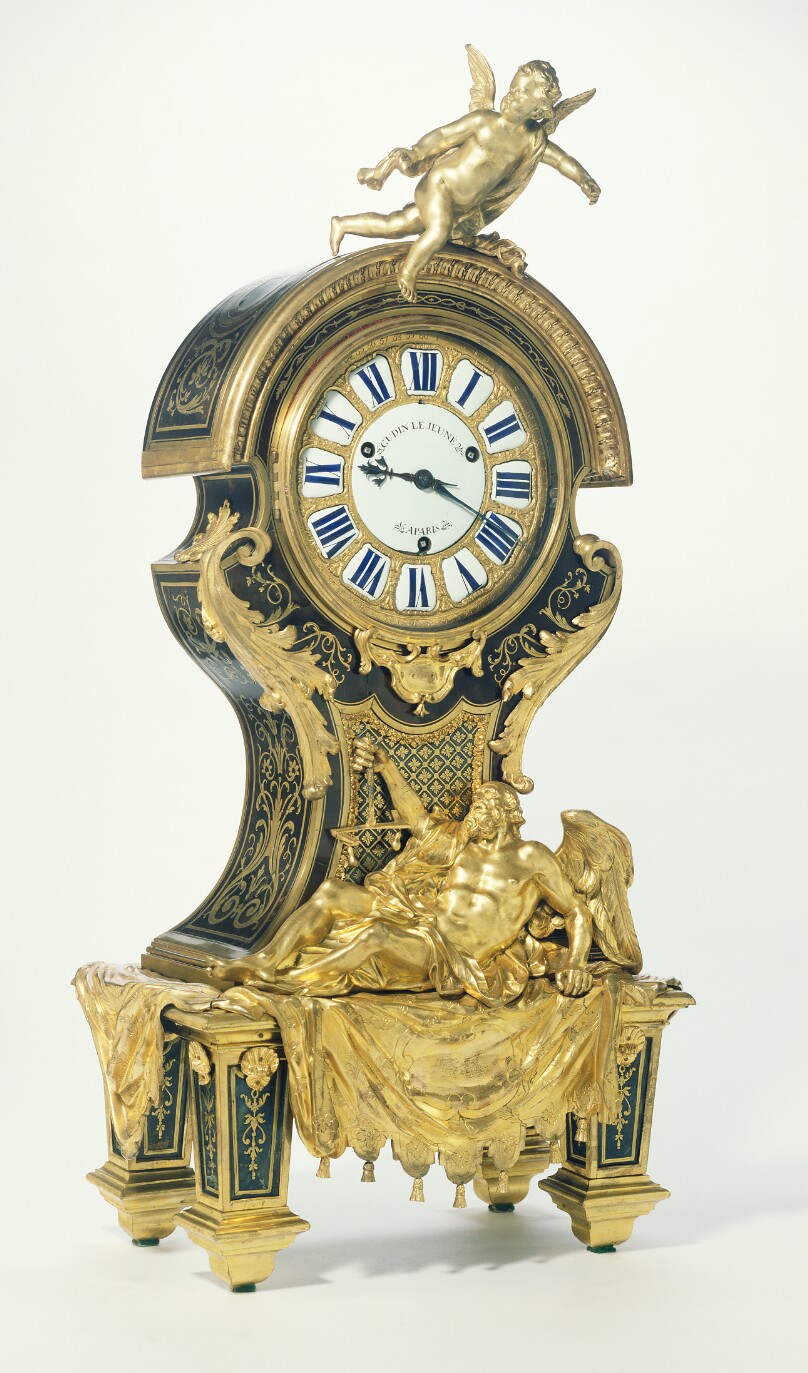
The figures on this clock represent Love conquering Time, a theme often repeated on French clocks of the early 1700s. The cupid balanced on the top originally held a long-handled scythe, an attribute of Father Time, who reclines below and holds his usual scales. The case's front and side surfaces are veneered with tortoiseshell, brass, and ebony. A recessed panel of blue horn, decorated with a brass trellis enclosing rosettes, is set below the dial. The legs are also set with panels of blue horn, which still retains its vibrant color. While the clock's dial appears to be contemporary with the case, the movement is not. The blank gilt-bronze cartouche beneath the face may once have held an enamel plaque inscribed with the name of the original movement maker. Later in the eighteenth-century, Paul Gudin set the present movement in the case and painted his name on the enamel dial.
The authoritative record is held by Getty Museum. LinkedCulture surfaces this object and its connections; it does not alter institutional metadata.
Get printable QR codesHide QR codes
Open QR codes for this object page and the museum record. They stay collapsed until needed.
Part of a LinkedCulture topic
 Decorative Timekeeping Across Cultures
These objects are all ornate clocks from various time periods and regions, showcasing how timekeeping devices served as both functional instruments and decorative art objects across different cultures from the 16th to 19
48 objects from 5 institutions
Related across collections
Semantically similar works from Getty Museum and other institutions.