Getty Museum
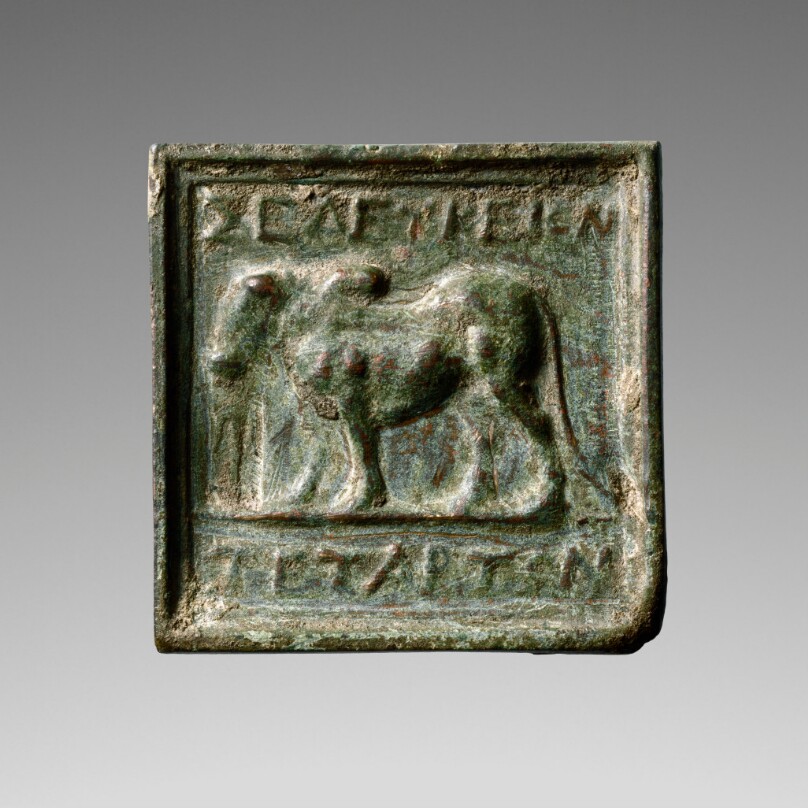
Weight with Zebu
Creator
UnknownAll works by this person →More on Getty ULAN- Date
- first half of 2nd century B.C.
- Medium
- Bronze
- Culture
- Greek (Seleucid)
- Department
- Implements
- Institution
- Getty Museum
- Object ID
- 0f685568-d7ca-47e6-9cf2-7091eecedf2e
From the Getty Museum record
Designed to be used with a simple pan balance, this weight bears an image of a zebu, a type of humped Indian breed, known today as a Brahma bull. The weight comes from Seleucia Pieria the port city of Antioch, the capital of the Seleucid Empire. The inscription "Seleukeion" above the bull gives its place of origin and indicates that this was an official weight, used as a standard against which commercial weights could be checked. The lower inscription gives the weight of the piece as a tetarton, which was a quarter of a mina, the basic unit of weight used in the Seleucid Empire at this time. A net pattern with a narrow raised border covers the back of the weight. Founded by one of Alexander the Great's generals, the Seleucid dynasty often used symbols alluding to Alexander's huge empire as a visual reminder of their origins and right to rule. Images such as the zebu and the elephant represented connections to India, the farthest reach of Alexander's empire. They were used on items produced by the Seleucid government, like coins and official weights.
The authoritative record is held by Getty Museum. LinkedCulture surfaces this object and its connections; it does not alter institutional metadata.
Get printable QR codesHide QR codes
Open QR codes for this object page and the museum record. They stay collapsed until needed.
Related across collections
Semantically similar works from Getty Museum and other institutions.