Getty Museum
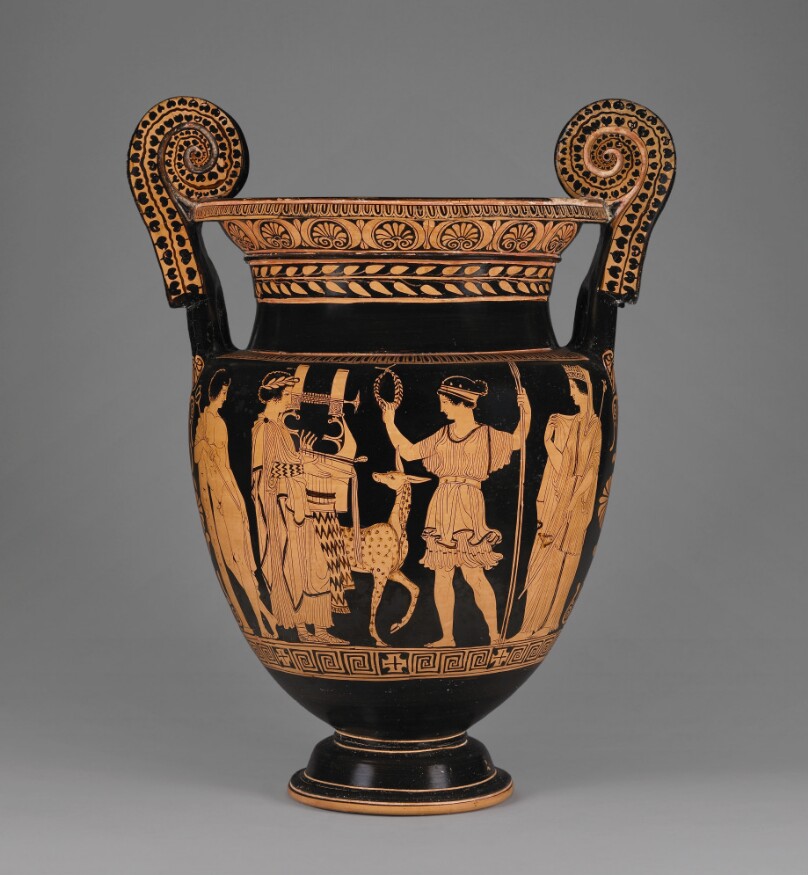
Lucanian Red-Figure Volute Krater
Creator
Palermo PainterPainter
All works by this person →The Palermo Painter decorated vases in the red-figure technique in one of the Greek cities in Lucania in South Italy. He was one of several artists in a group of vase-painters that scholars refer to as the PKP Group. Many vases by this group have been found at the site of Herakleia, and some scholars believe that the workshop was based there. The Palermo Painter decorated large vessels with mythol
More on Getty ULAN- Date
- 415–400 B.C.
- Medium
- Terracotta
- Culture
- Greek (South Italian, Lucanian)
- Department
- Vessels
- Institution
- Getty Museum
- Object ID
- 155f268a-4325-4855-8a48-e7752ae8c4c6
From the Getty Museum record
A gathering of deities decorates the front of this red-figure volute-krater (mixing bowl), made in a Greek colony in the region of Lucania in southern Italy. The twin gods Apollo and Artemis occupy the center of the scene. Apollo holds a kithara, denoting his role as god of music, and Artemis, the goddess of the hunt, is accompanied by her sacred deer. Their mother Leto stands at the right. On the left, the god Hermes leans on a pillar inscribed with his name. Two pairs of youths stand conversing on the back of the vase. The volute-krater was a large serving vessel used to mix wine and water at a symposium or drinking party. Large figure-decorated symposium vessels like this one began to be produced in Southern Italy from the late fifth century B.C.
The authoritative record is held by Getty Museum. LinkedCulture surfaces this object and its connections; it does not alter institutional metadata.
Get printable QR codesHide QR codes
Open QR codes for this object page and the museum record. They stay collapsed until needed.
Related across collections
Semantically similar works from Getty Museum and other institutions.