Getty Museum
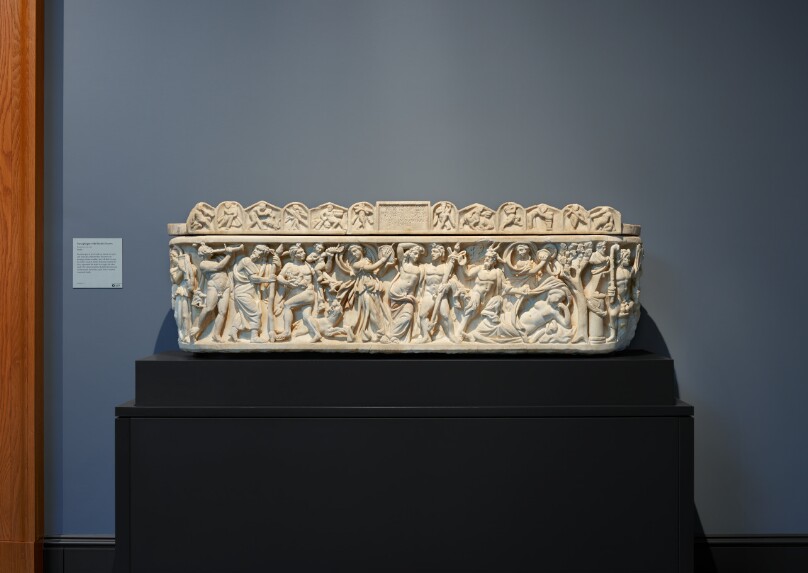
Sarcophagus and Lid; 19th Century Crouching Lion Supports
Creator
UnknownAll works by this person →More on Getty ULAN- Date
- A.D. 210–220
- Medium
- Marble
- Culture
- Roman
- Department
- Sculpture
- Institution
- Getty Museum
- Object ID
- 2347e578-1cb9-4e00-a0ca-dc30d9bac0d3
From the Getty Museum record
The inscription on the lid of this sarcophagus identifies its former occupant, Maconiana Severiana, as being from a senatorial family. "To the soul of the deceased. For Maconiana Severiana, the sweetest daughter, Marcus Sempronius Faustinianus, *vir clarissimus* [holding a senatorial rank], and Praecilia Severiana, *clarissima femina* [from a senatorial family], her parents [had this made]." Given the small size of the sarcophagus, Maconiana must have been a child or adolescent. The front of the sarcophagus shows a Dionysiac revel, culminating in the discovery of the sleeping Ariadne, shown lying down on the right. Abandoned by the Greek hero Theseus, Ariadne awakened to a new life with Dionysos, the god of wine. The goat-legged Pan lifts the veil from her prone figure while satyrs, maenads, and a panther surround the drunken Dionysos. The back of the sarcophagus shows another Dionysiac scene of winemaking carved in a simpler, flatter style. Panels with related figures flank the central inscription on the lid. For the Romans, Dionysos was associated with the hope of a better afterlife; thus many sarcophagi show the god and his followers. Two lions were added to the ensemble in the 19th century to support the sarcophagus. Sculpted stone sarcophagi, which came into use in the 200s A.D., soon became symbols of wealth and status. Since Romans favored certain themes for sarcophagi, they were often bought ready-made and then customized by the addition of a portrait of the deceased. The blank face of Ariadne should have been carved as a portrait of Maconiana Severiana. Why it was left blank in this instance is not clear.
The authoritative record is held by Getty Museum. LinkedCulture surfaces this object and its connections; it does not alter institutional metadata.
Get printable QR codesHide QR codes
Open QR codes for this object page and the museum record. They stay collapsed until needed.
Related across collections
Semantically similar works from Getty Museum and other institutions.
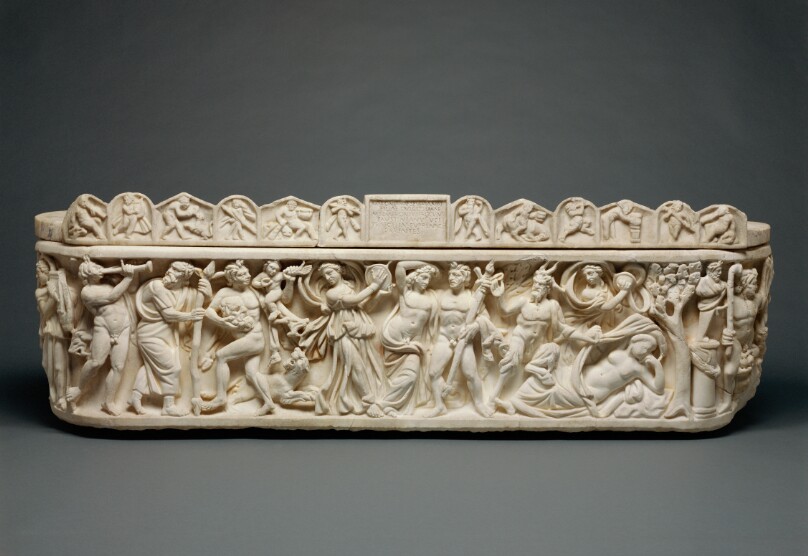
Sarcophagus
Getty Museum
#38df8fa2-8124-4452-86e6-501cdc70d05f
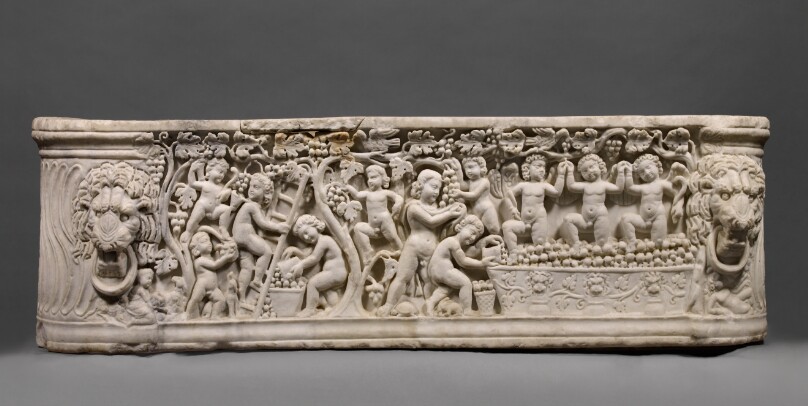
Sarcophagus representing a Dionysiac Vintage Festival
Getty Museum
#68a4af00-fdce-44bc-bbf4-dc8b13f6747a
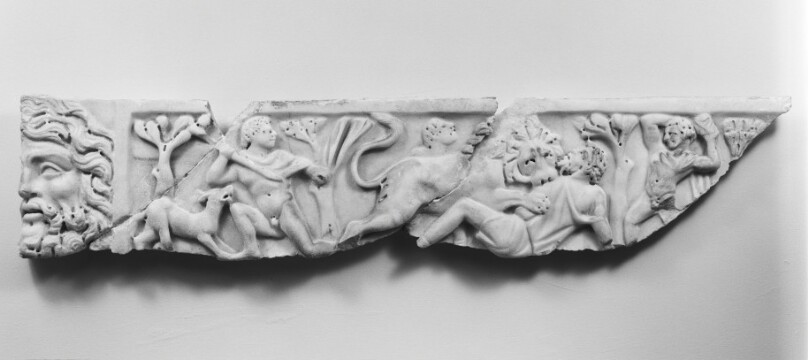
Sarcophagus Lid (2 fragments)
Getty Museum
#751dd778-5b1e-45b6-bc19-e5e5ad39d4b1
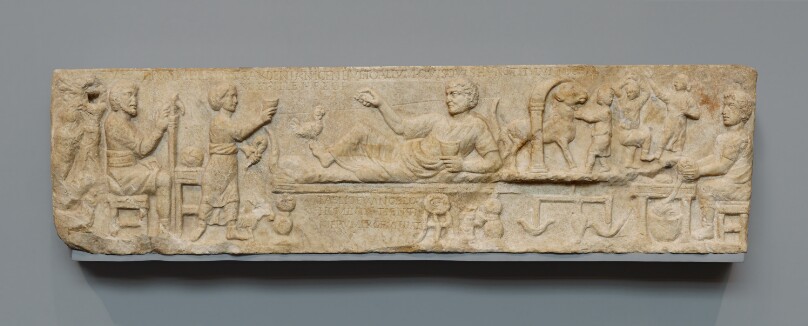
Front Panel from a Sarcophagus
Getty Museum
#06099c2d-6cc5-4548-add3-c7a481bfa7bb
Sarcophagus Lid
Getty Museum
#f7aca78a-122c-4073-9cbd-7dec014253aa
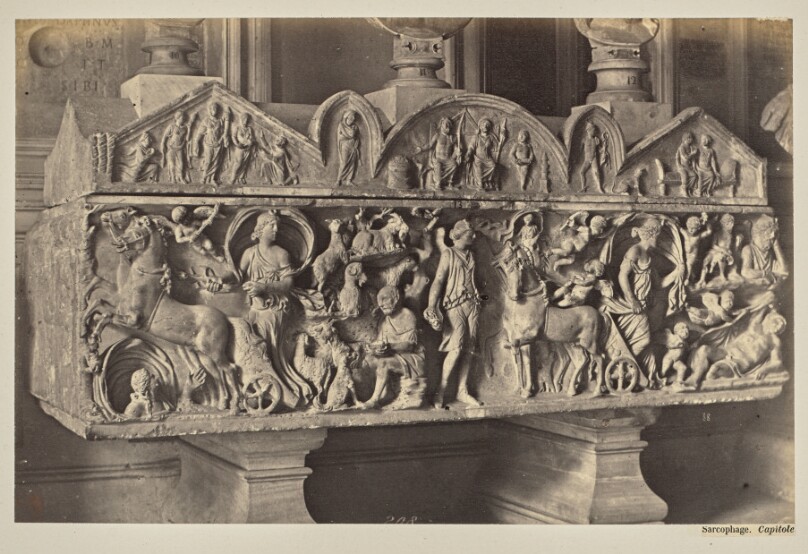
Sarcophage. Capitole
Getty Museum
#fd566e3a-8970-4108-931f-53ec90decc2f
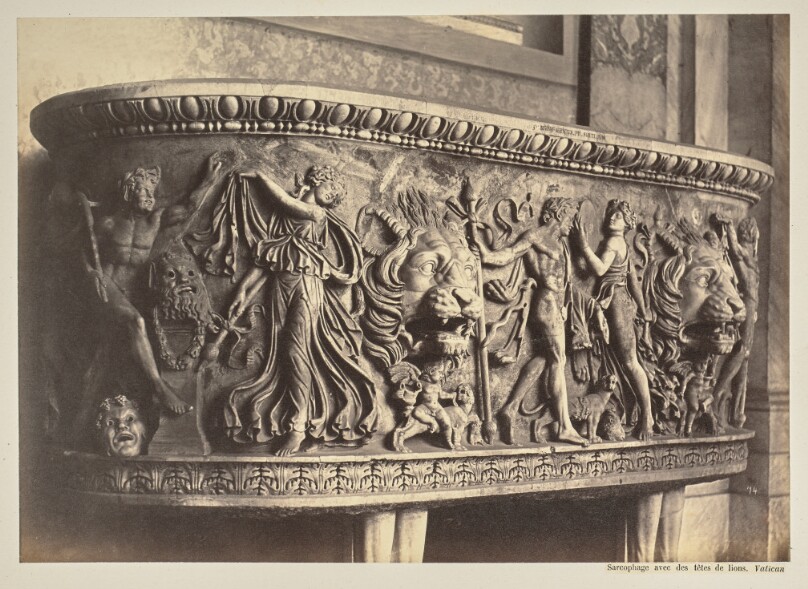
Sarcophage avec des têtes de lions. Vatican
Getty Museum
#e49b1126-7582-40b7-8f64-6caa0a2d552a
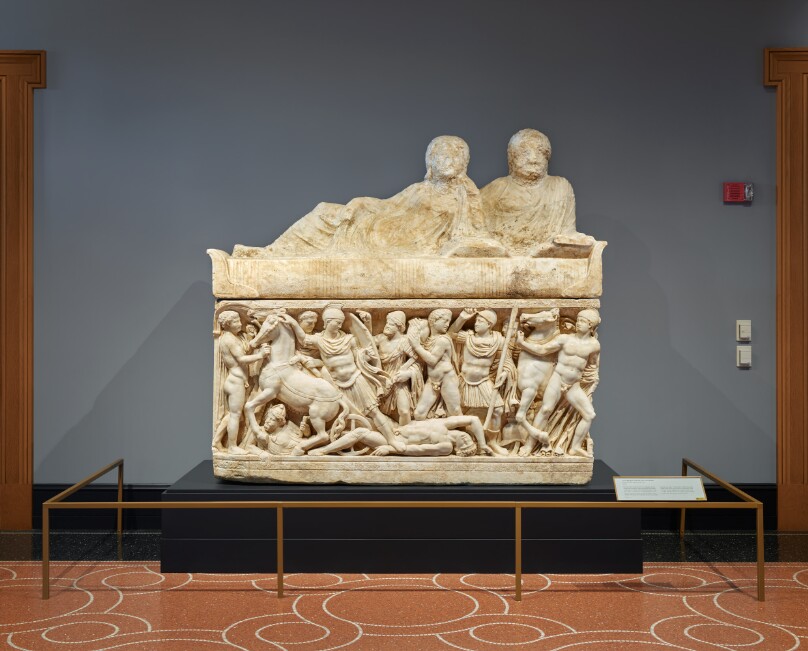
Sarcophagus
Getty Museum
#ee7430b5-b680-4ab9-b713-54607edcb55b

Sarcophagus (lid)
Cleveland Museum of Art
#110234
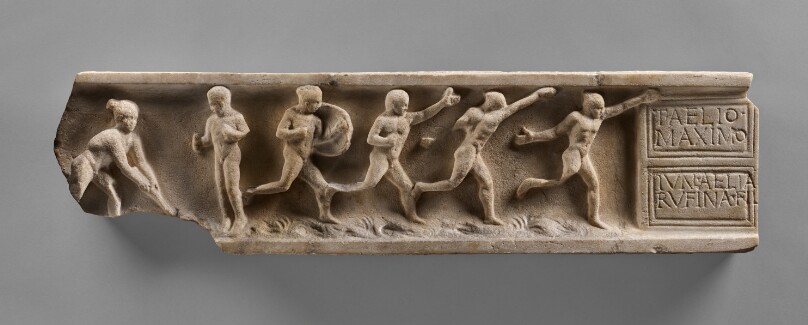
Fragment of a Sarcophagus Lid
Getty Museum
#c425b267-2fab-4296-a103-8b96a1a11409
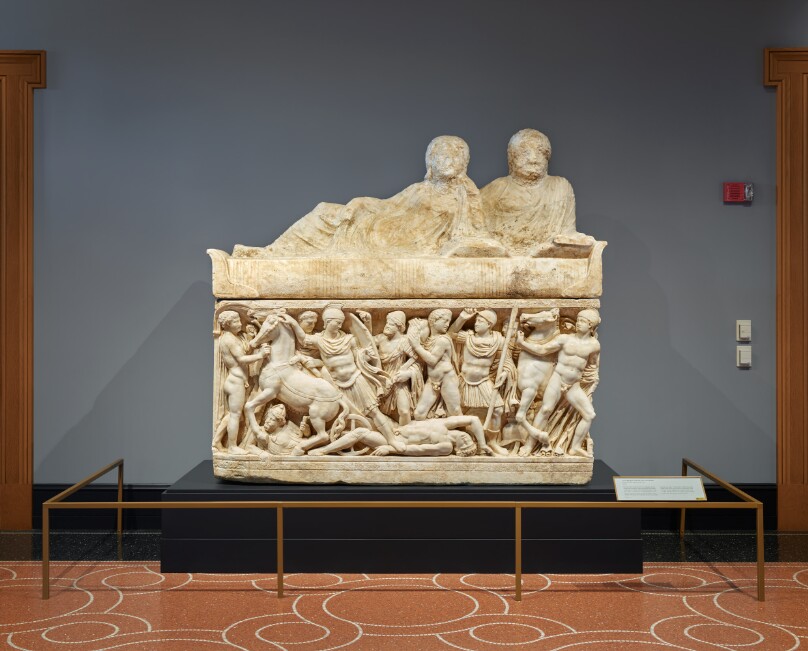
Sarcophagus Lid
Getty Museum
#6514a0fd-e855-4a32-9d6f-ffe13b3716a6
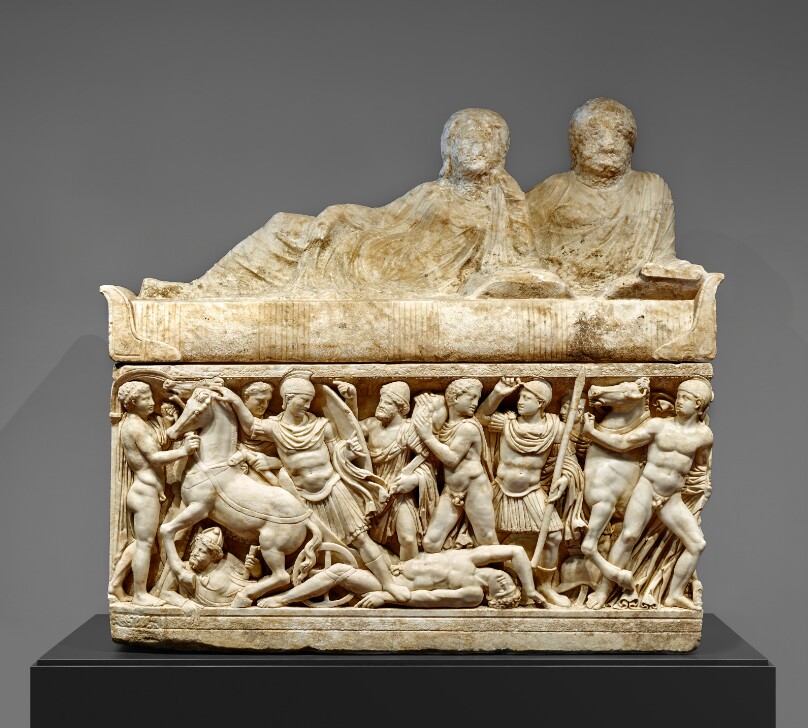
Sarcophagus with lid and 4 unjoined fragments
Getty Museum
#8ebe08c3-04af-44cd-8ac2-bde877173485