Getty Museum
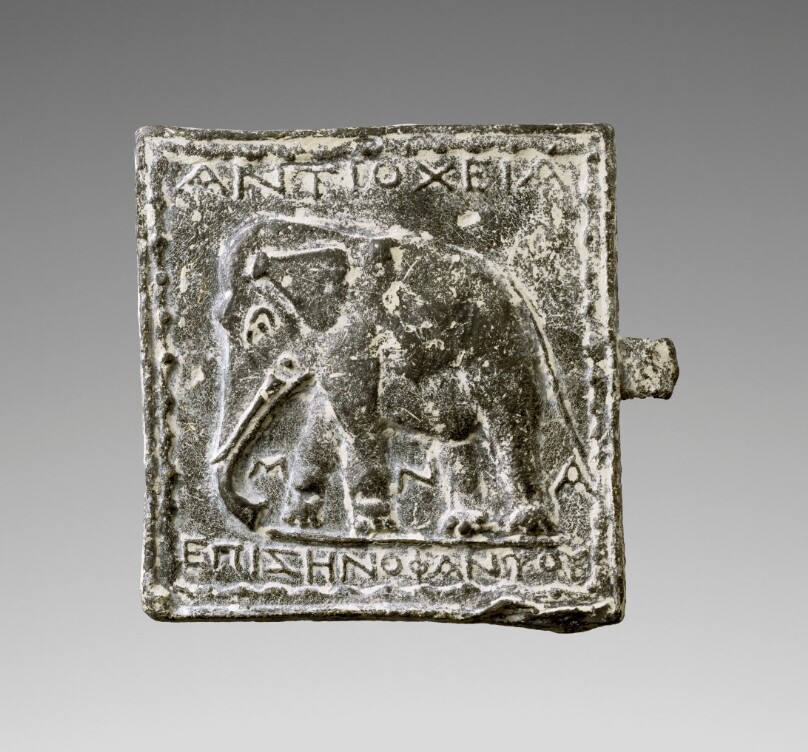
Weight with Elephant
Creator
UnknownAll works by this person →More on Getty ULAN- Date
- 2nd–1st century B.C.
- Medium
- Lead
- Culture
- Greek (Seleucid)
- Department
- Implements
- Institution
- Getty Museum
- Object ID
- 328ba722-dfcb-44a6-b825-f78ac39281ed
From the Getty Museum record
An Indian elephant decorates the front of this lead weight. The Greek inscriptions surrounding the elephant state that the weight comes from Antioch, the capital of the Seleucid Empire; that it is a mina, the basic unit of weight used in the Seleucid Empire at this time; and that it was made under Zenophanes, who must have been an official in charge of weights and measures. The naming of the official, the form of the letters in the inscription, and the use of lead rather than bronze for an official weight suggest that this piece dates to late in the Hellenistic period. Elephants are a recurring symbol on Seleucid coinage and on official weights, both products of the government mint. Originally connected with Alexander the Great's conquest to the east as far as India, the symbol was used to stress the dynasty's role as the legitimate successors of Alexander. Various Seleucid rulers also linked the symbol to victories and treaties of their own in the East. A small tab projects from the right side of the weight. This tab was presumably shaved down to adjust the weight.
The authoritative record is held by Getty Museum. LinkedCulture surfaces this object and its connections; it does not alter institutional metadata.
Get printable QR codesHide QR codes
Open QR codes for this object page and the museum record. They stay collapsed until needed.
Related across collections
Semantically similar works from Getty Museum and other institutions.