Getty Museum
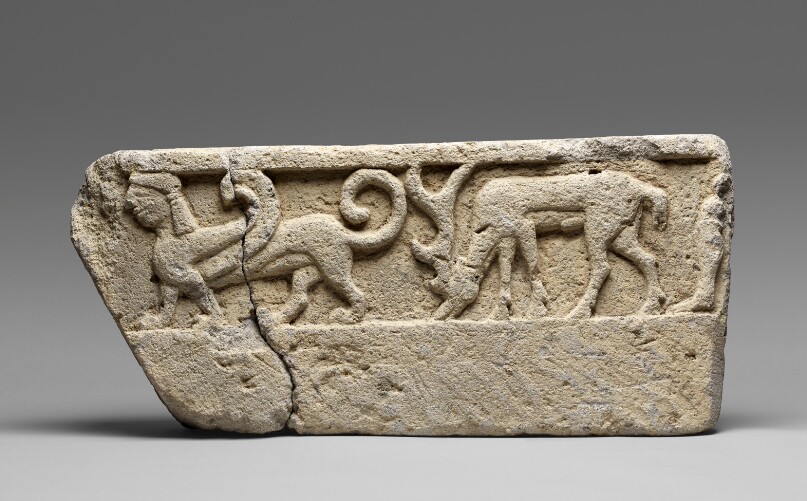
Relief with Sphinx and Stag
Creator
UnknownAll works by this person →More on Getty ULAN- Date
- 575–550 B.C.
- Medium
- Tufa
- Culture
- Etruscan
- Department
- Architecture
- Institution
- Getty Museum
- Object ID
- 5f04efa6-6419-4adc-af1f-d3facf017b66
From the Getty Museum record
A section of a tufa architectural frieze block, consisting of two joined fragments, is decorated in relief with a sphinx and a grazing stag, both moving to the left. Behind the stag is a human leg shown from the knee down, which dangles from the jaws of a carnivore, probably a lion. A second non-joining fragmentary block, which is likely associated with this block, preserves a seated animal (griffin?) and a leopard protome modelled in high relief at the end (see [71.AA.337](http://www.getty.edu/art/collection/objects/6790/unknown-maker-fragmentary-architectonic-relief-etruscan-about-575-bc/)). Images of lions devouring human limbs are distinctively Etruscan and evoke the finality of death in a startling way. The motif is frequent on painted and cylinder-stamped pottery. Many architectural reliefs and freestanding sculptures were cut from beds of volcanic tufa (local porous limestone) near Vulci, a center of stone carving. To judge from the dimensions, style and condition, the frieze belonged to a building or funerary monument.
The authoritative record is held by Getty Museum. LinkedCulture surfaces this object and its connections; it does not alter institutional metadata.
Get printable QR codesHide QR codes
Open QR codes for this object page and the museum record. They stay collapsed until needed.
Related across collections
Semantically similar works from Getty Museum and other institutions.