Getty Museum
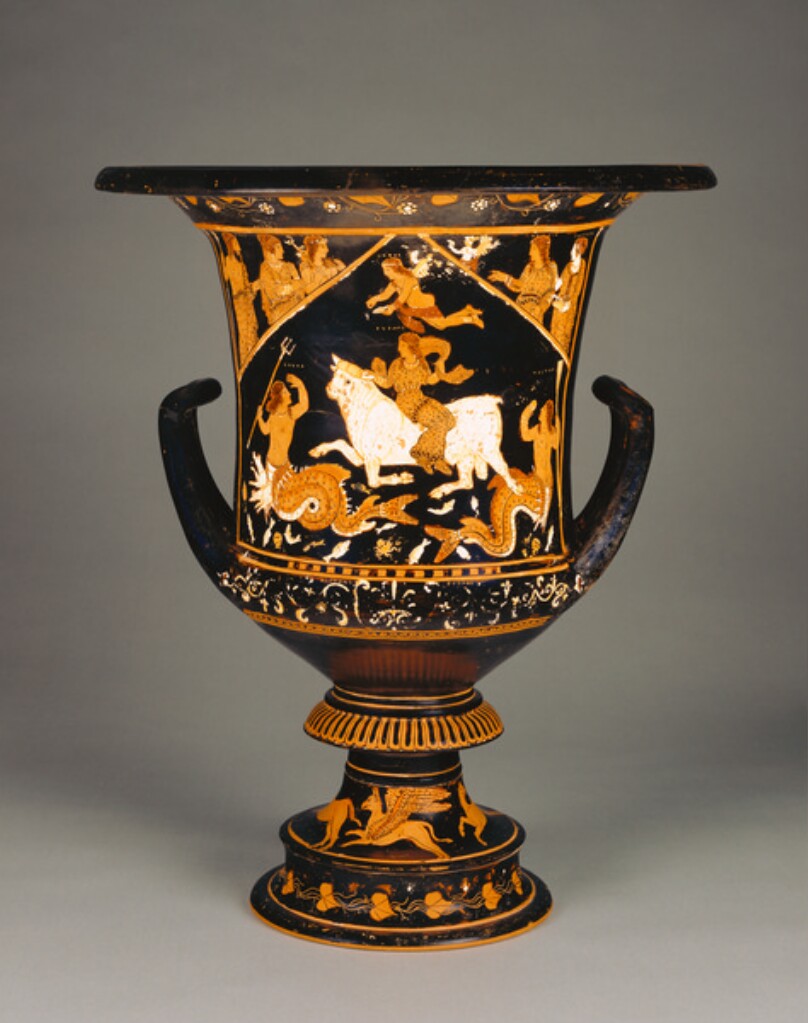
Paestan Red-Figure Calyx Krater
Creator
AsteasPainter
All works by this person →Asteas was the most important of the vase-painters working at Paestum in South Italy. The principal artist of a large workshop, he may have invented the free-standing half-palmettes, used to frame an image, that became characteristic of Paestan vase-painting. Asteas decorated hydriai and kraters, as well as some smaller vases, in the red-figure technique. Asteas was one of only two South Italian v
More on Getty ULAN- Date
- about 340 B.C.
- Medium
- Terracotta
- Culture
- South Italian
- Department
- Vessels
- Institution
- Getty Museum
- Object ID
- 74152720-b7d0-4f42-9c08-ce059458bea8
From the Getty Museum record
A: Europa and the Bull. Europa seated on a white bull as they fly to left across the sea represented by figures of Scylla, Triton and various marine creatures below. Directly over Europa hovers the nude figure of Pothos. Three figures look down on the scene. In the left corner is Zeus, busts of Crete and of Hermes. On the other side is Eros and Adonis and a knee-length figure of Aphrodite. Foot A and B: two griffins pursuing two horses to left. B, Dionysiac scene: Dionysos flanked by a maenad and a bearded satyr. In the panel above are five half-length figures: a Papposilenos flanked on one side by two maenads, and on the other, by a maenad and Pan. Inscriptions indicate several of the deities.
The authoritative record is held by Getty Museum. LinkedCulture surfaces this object and its connections; it does not alter institutional metadata.
Get printable QR codesHide QR codes
Open QR codes for this object page and the museum record. They stay collapsed until needed.
Related across collections
Semantically similar works from Getty Museum and other institutions.