Getty Museum
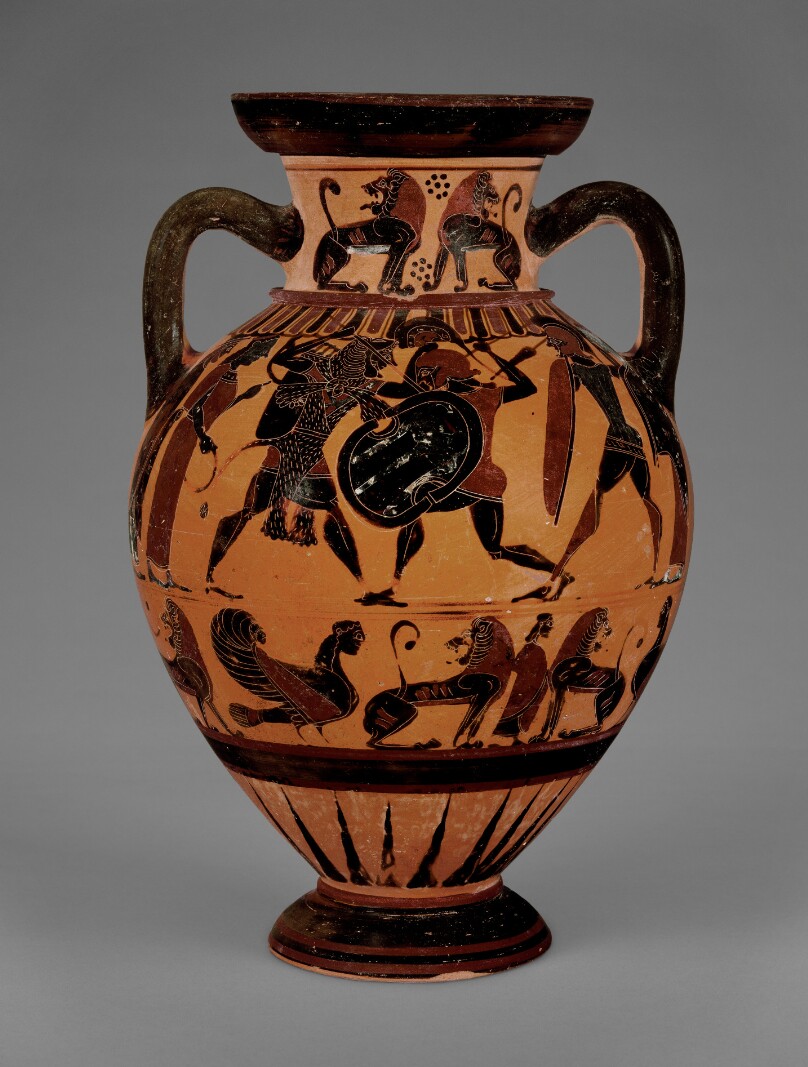
Black-Figure Neck Amphora
Creator
UnknownAll works by this person →More on Getty ULAN- Date
- about 570–560 B.C.
- Medium
- Terracotta
- Culture
- Greek (Euboean)
- Department
- Vessels
- Institution
- Getty Museum
- Object ID
- 7b7c080c-f14c-4f74-9fa6-f35ddffac9ce
From the Getty Museum record
The Greek hero Herakles battles Kyknos on this black-figure neck-amphora. In Greek mythology, the god Apollo urged Herakles to stop Kyknos, who had been waylaying pilgrims on their way to Apollo's sanctuary at Delphi. Here, Herakles, identified by his lionskin, is about to deliver the death blow to Kyknos. In this depiction of the confrontation, each combatant has his supporters. Ares, the god of war, backs up his son Kyknos, accompanied by an unidentified goddess, while Athena and Hermes support Herakles. Real and mythological creatures decorate the vase above and below this main scene. The main decoration on the back of the vase depicts a scene of a man and two women standing between sphinxes, mythological winged creatures that are part human and part lion. Scholars have had difficulty determining the origin of this amphora. This may be due in large part to the fact that the vase was designed to suit Etruscan rather than a local Greek taste. Several features, however, such as the lively figures, the secondary ornament, and the abundance of added red and white color suggest that this vase was made on the island of Euboea.
The authoritative record is held by Getty Museum. LinkedCulture surfaces this object and its connections; it does not alter institutional metadata.
Get printable QR codesHide QR codes
Open QR codes for this object page and the museum record. They stay collapsed until needed.
Related across collections
Semantically similar works from Getty Museum and other institutions.