Getty Museum
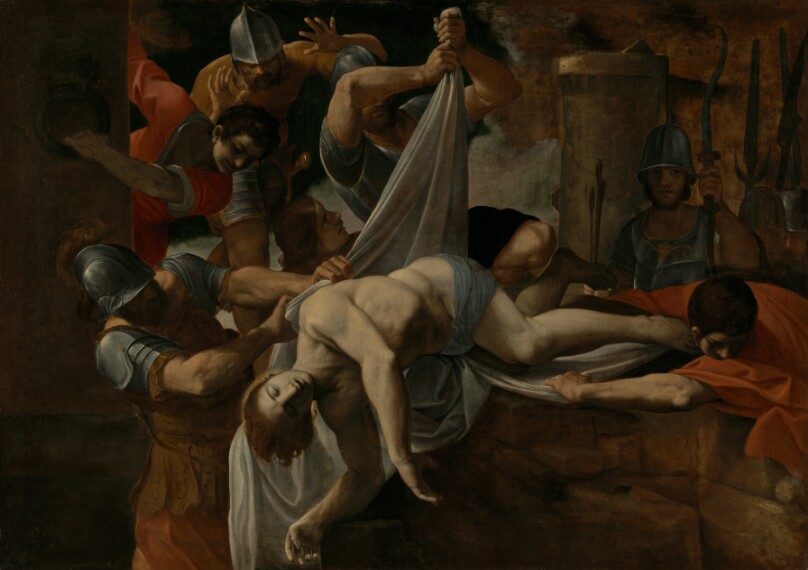
Saint Sebastian Thrown into the Cloaca Maxima
Creator
Ludovico CarracciItalian Artist · 1555–1619
All works by this person →"They studied constantly from nature, not only living bodies but often the dead . . . in order that they could learn the true relaxation that bodies possess. . . . These masters, and their superior manner of painting, were the reason that many youths were . . . dedicating themselves to the same profession," a contemporary wrote about the *Accademia degli Incamminati* (Academy of the Progressives)
More on Getty ULAN- Date
- 1612
- Medium
- Oil on canvas
- Culture
- Italian
- Department
- Paintings
- Institution
- Getty Museum
- Object ID
- 8774ca56-0b48-4aa4-90d7-f0edcaf0f397
From the Getty Museum record
Saint Sebastian is more conventionally depicted bound to a tree or pillar and pierced by arrows, or having his wounds tended to by Irene. Having recovered from the attempted execution by arrows, Roman Emperor Diocletian ordered that he be beaten to death and disposed of in the sewer. The denial of burial demonstrated the utmost contempt for fundamental Christian rites. Ludovico Carracci here chose to represent the moment when Roman soldiers dumped the saint’s limp body into the ancient sewage system, the *Cloaca Maxima*, thereby reducing a heroic martyr to a worthless corpse. In 1612 Cardinal Maffeo Barberini commissioned this painting for a subterranean family chapel in the Church of Sant’Andrea della Valle in Rome. The church stood on the site where Saint Sebastian's body was recovered from a drain, the *Euripus Agrippae*. In a letter to his brother, Cardinal Barberini relayed his concerns that Carracci’s blunt naturalistic portrayal of the saint’s corpse was improper for its intended setting fearing that it would “not inspire much devotion”. Nevertheless, he appreciated the painting as a “good representation of brute force”, and opted not to display it in the chapel, but to keep it for his own private collection. Sebastian is the patron saint of the plague-stricken, and was therefore a popular subject both in the artist’s hometown of Bologna, as well as in Rome, since both cities suffered devastating outbreaks of disease during the century previous. The relentless naturalism displayed in this painting, though shocking to Carracci’s patron, became a definitive feature of the newly-emerging *seicento* art.
The authoritative record is held by Getty Museum. LinkedCulture surfaces this object and its connections; it does not alter institutional metadata.
Get printable QR codesHide QR codes
Open QR codes for this object page and the museum record. They stay collapsed until needed.
Related across collections
Semantically similar works from Getty Museum and other institutions.