Getty Museum
Gospel Book
Creator
UnknownAll works by this person →More on Getty ULAN- Date
- early–late 13th century
- Medium
- Tempera colors and gold leaf
- Culture
- Byzantine
- Department
- Manuscripts
- Institution
- Getty Museum
- Object ID
- 8c6116d5-09f6-4416-8d15-1804c9337c65
From the Getty Museum record
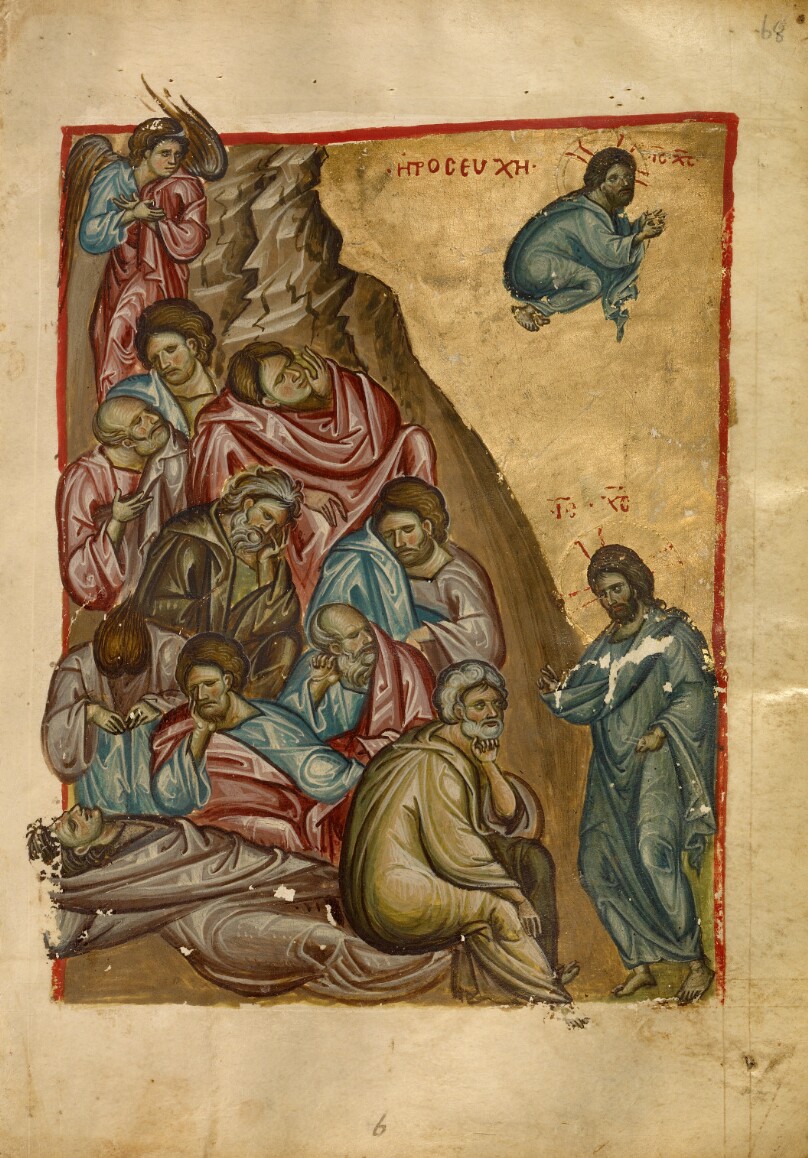
Gospel books are the most common type of manuscript to survive from the Byzantine Empire, which was the eastern Roman Empire, centered in Constantinople (modern Istanbul), that existed from 330-1453 CE. Objects of personal and communal devotion, they served as rich gifts and were used in services. The Byzantines read different passages of scripture, called lections, each day in church, and many Gospel books, like this one, have those passages specially marked in their margins for ease of use. In addition to containing the gospels of Matthew, Mark, Luke and John, this dramatically-illustrated volume begins with eight decorated charts called canon tables, a kind of index that helps readers to connect stories appearing in more than one gospel. Before each gospel account, there is an author portrait of the appropriate Evangelist facing an elaborately ornamented headpiece, which is a large floral and geometric decoration that introduce major parts of the text. Fifteen full-page scenes from the life of Christ and the Virgin Mary are scattered through the text. The paintings in this manuscript were made in at least two phases. The Evangelist portraits and two of the narrative scenes (fols. 76 and 190v) were probably painted in the early thirteenth century. The remaining thirteen full-page scenes were likely added to the book at some point later in the same century. Since the two earliest narrative scenes have suffered a serious loss of pigment, it may be that the later narrative cycle replaced images that were already severely damaged in the thirteenth century. Compared with the weightier, more monumental forms of the four Evangelists, these later additions are marked by the elongated figures, energetic gestures, and heightened emotionalism that are characteristic of late-thirteenth century Byzantine illustration. The manuscript and its images have been variously associated with the cities of Nicaea, Nicomedia, and Thessaloniki. Its place of origin is particularly intriguing because from 1204-1261, when at least part of the book was probably made, the Byzantines had been exiled from Constantinople by invading forces from Venice, in the culmination and aftermath of the Fourth Crusade (1202-1204).
The authoritative record is held by Getty Museum. LinkedCulture surfaces this object and its connections; it does not alter institutional metadata.
Get printable QR codesHide QR codes
Open QR codes for this object page and the museum record. They stay collapsed until needed.
Related across collections
Semantically similar works from Getty Museum and other institutions.