Getty Museum
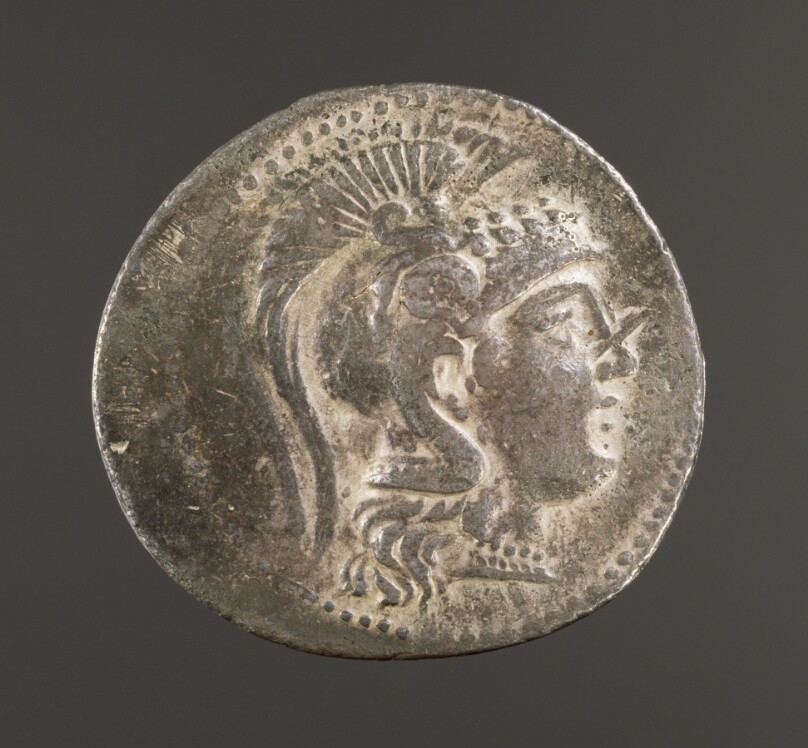
Tetradrachm
Creator
UnknownAll works by this person →More on Getty ULAN- Date
- 182–181 B.C.
- Medium
- Silver
- Culture
- Greek
- Department
- Coins
- Institution
- Getty Museum
- Object ID
- 8e2a3ccc-ea10-4771-b916-8ff162c6dd54
From the Getty Museum record
This four-drachma coin (also known as a tetradrachm) features the helmeted head of the Greek goddess Athena on one side and her symbolic bird, the owl, on the other. Beginning from about 520-510 B.C., Athena and her owl were depicted on Athenian coins because she was the patron goddess of the city. As a result, these coins have been nicknamed "owls." The olive wreath surrounding the owl and the small sideways amphora (storage vessel) on which the bird stands identify this coin as belonging to a series that began to be minted in 196-195 B.C. The olive wreath and the amphora are emblems of the principal agricultural products of Athens, olives and olive oil. Two Greek words appear on the back. "Athe," which stands for Athens, is on the same level as the owl's eyes. Written below that is the name of an Athenian magistrate, "Ammodio," whose service in government dates to 182-181 B.C. A tiny image of a container appears to the owl's left; its precise significance is unknown.
The authoritative record is held by Getty Museum. LinkedCulture surfaces this object and its connections; it does not alter institutional metadata.
Get printable QR codesHide QR codes
Open QR codes for this object page and the museum record. They stay collapsed until needed.
Related across collections
Semantically similar works from Getty Museum and other institutions.