Getty Museum
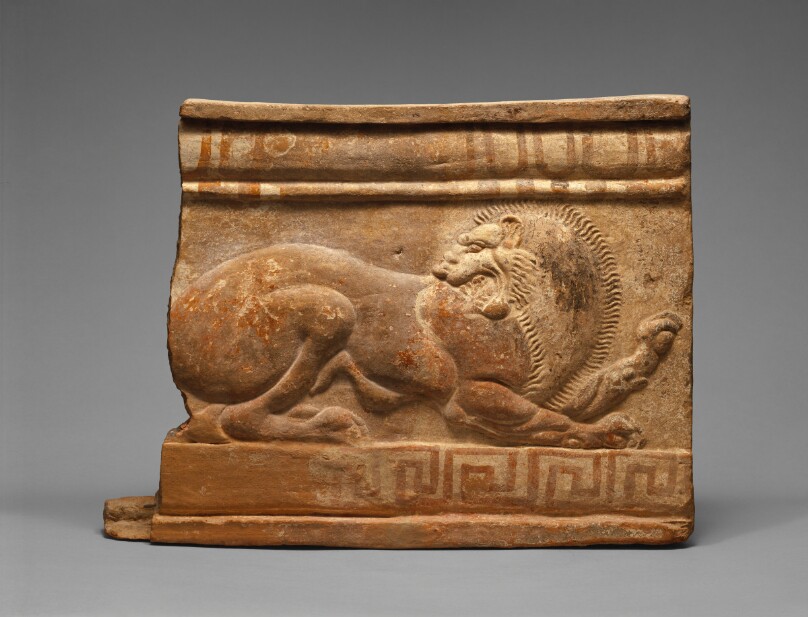
Architectural Plaque with Lioness
Creator
UnknownAll works by this person →More on Getty ULAN- Date
- third quarter of 6th century B.C.
- Medium
- Terracotta
- Culture
- East Greek
- Department
- Architecture
- Institution
- Getty Museum
- Object ID
- 9132a592-1677-4b73-8864-32161ca1307e
From the Getty Museum record
A snarling lioness with her head turned back and one paw raised crouches on this fragment of a sima, an architectural element that ran along the edge of a roof to protect the exposed ends of the wooden roof beams. Patterns painted in red decorate the upper and lower moldings of the plaque. The lioness, her body painted red with a black mane, stands out against the white background. Despite the mane, the feline is clearly female, as indicated by the row of teats along her belly. Never having seen a real lion, Greek artists did not understand that only male lions have manes. This plaque was found with another from the same sima showing a panther, similarly posed but facing in the opposite direction. The ferocious animals would have served an apotropaic function, symbolically protecting the structure and its occupants. In the construction of temples in the Mediterranean world, the use of terracotta revetments to protect exposed timber surfaces from the elements was practiced widely during the Archaic period of Greek art (about 700–480 B.C.). Architectural plaques such as this one were mass-produced from molds and then brightly painted. The scale and style of this sima indicate that it came from a small building, probably in an East Greek city on the coast of present-day Turkey.
The authoritative record is held by Getty Museum. LinkedCulture surfaces this object and its connections; it does not alter institutional metadata.
Get printable QR codesHide QR codes
Open QR codes for this object page and the museum record. They stay collapsed until needed.
Related across collections
Semantically similar works from Getty Museum and other institutions.