Getty Museum
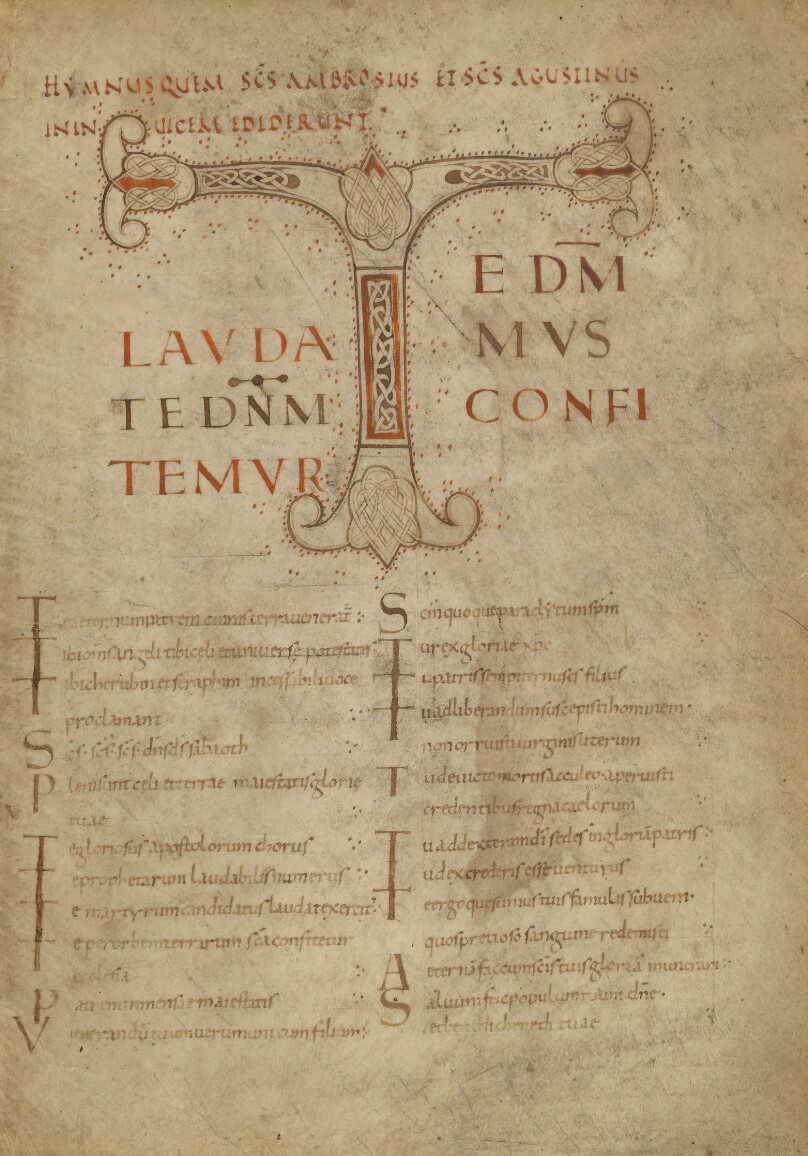
Leaf from a Psalter
Creator
UnknownAll works by this person →More on Getty ULAN- Date
- third quarter of 9th century
- Medium
- Iron gall and red lead (minimum) inks applied with pen and brush
- Culture
- Carolingian
- Department
- Manuscripts
- Institution
- Getty Museum
- Object ID
- 91fbe836-28ba-4547-83d6-9bc4b25c6903
From the Getty Museum record
A psalter was one of the most important books for the daily round of monastic devotions and were arranged for use in churches and monasteries. This particular leaf is from a Carolingian (a Frankish dynasty that ruled western Europe from 750-987 CE) psalter made in the third quarter of the ninth century. The leaf’s decoration and script are visually striking. Common in Carolingian manuscripts, both the illuminated T and Q are embellished with interlace patterns and dot-work, giving the letters a sense of importance and lavishness. Decorating the initials in such a way allowed users to recognize the beginning of important passages more easily. In addition to the large, illuminated initials, the beginning of each phrase or verse is indicated by a letter that is larger than the rest of the script. This method of using different sized letters to organize a text is called a hierarchy of scripts. The Carolingians used this organizing principle to make their texts clear and easy to understand. The intricately interlaced _T_ on the front side of the leaf begins a hymn attributed to Saint Ambrose and Saint Augustine: “Te Deum laudamus” (We praise you, O Lord) and the illuminated Q on the back of the leaf begins the Athanasian Creed: “Quicumque uult saluus esse, ante omnia opus est, ut teneat catholicam fidem” (Whoever wishes to be saved must, above all, keep the Catholic faith). Both the hymn and the creed (which is a statement that expresses the equality of the three persons of the Trinity) would make sense to include in a psalter, which were often used for more public forms of worship (liturgy).
The authoritative record is held by Getty Museum. LinkedCulture surfaces this object and its connections; it does not alter institutional metadata.
Get printable QR codesHide QR codes
Open QR codes for this object page and the museum record. They stay collapsed until needed.
Related across collections
Semantically similar works from Getty Museum and other institutions.