Getty Museum
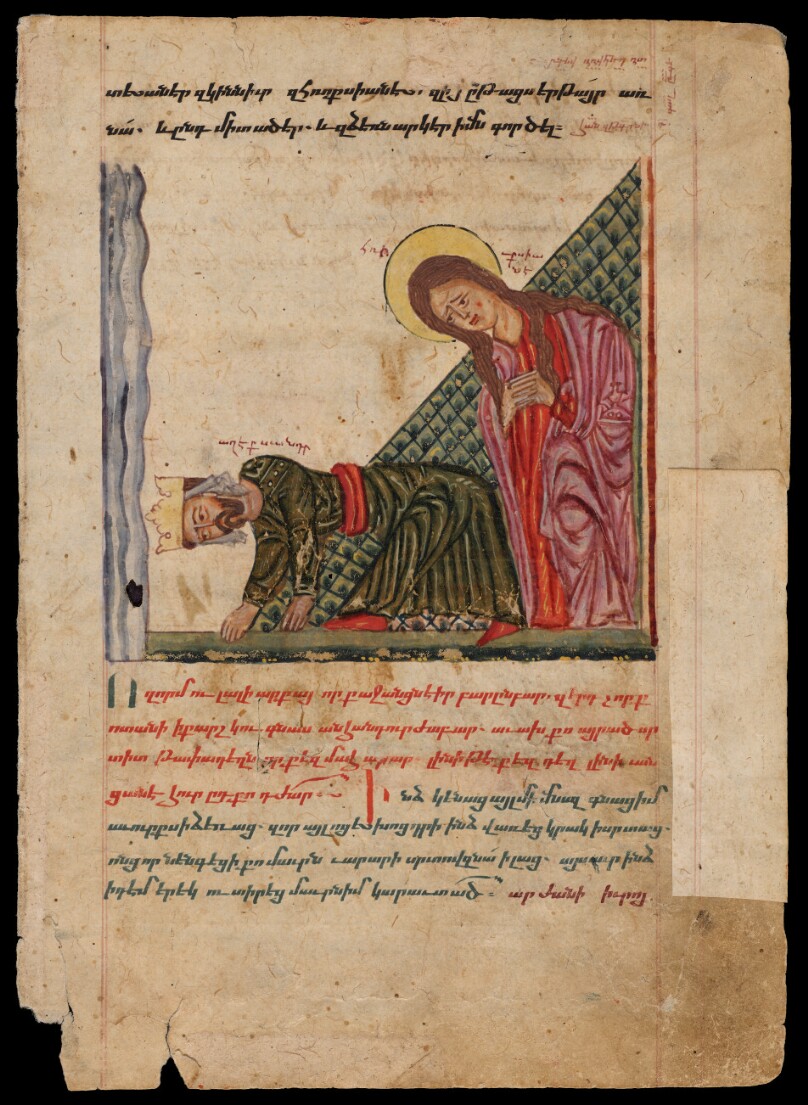
Leaf from the Alexander Romance (History of the Great Conqueror Alexander of Macedon: His Life and Valorous Deeds and the Omen concerning his Death / Պատմութիւն մեծի աշխարհակալին Աղէքսանրու Մակեդոնացւոյ կեանք վարուց քաջութեան եւ գործք արիականք նաեւ վախճան նշանաւք)
- Date
- 1526
- Medium
- Tempera colors and ink
- Culture
- Armenian
- Department
- Manuscripts
- Institution
- Getty Museum
- Object ID
- b27253f7-b1e9-435c-81fd-dd4396fdee84
From the Getty Museum record
This leaf once formed part of a generously decorated Armenian manuscript containing the *Alexander Romance*, a text that details the life, exploits, and conquests of Alexander the Great (356–323 BCE). Though known as a “romance”, here the term reflects the Old French definition, which refers to its origin as a fictionalized narrative that often emphasizes storytelling over strict historical accuracy and features historical events combined with fantastical tales of miracles and mythical creatures. This leaf captures two pivotal moments from Alexander’s life: his poisoning and the tender embrace by his wife, Roxane (c. 340–310 BCE), daughter of Oxyartes of Bactria, as he lay dying. Illuminated by Grigoris, Catholicos of Aght‘amar (1512–1545), the 16th century manuscript from which this leaf originally came is a rare example of secular illumination within the Armenian manuscript tradition, as most Armenian manuscripts are religious in origin. This leaf, along with its parent manuscript, which is housed in Venice at the Biblioteca dei Padri Mekhitaristi, San Lazzaro degli Armeni, represents the third earliest known Armenian example of the *Alexander Romance* to feature an image cycle, demonstrating a historically significant genre of Armenian secular illumination. In addition to Grigoris’s imagery, captions were included to guide the viewer, that when combined with the Christian iconography, served to moralize the legend from Antiquity, portraying Alexander as a prefiguration of Christ. The Venice manuscript, from which this leaf originates, embodies the most complete expression of Grigoris’s artistic vision.
The authoritative record is held by Getty Museum. LinkedCulture surfaces this object and its connections; it does not alter institutional metadata.
Get printable QR codesHide QR codes
Open QR codes for this object page and the museum record. They stay collapsed until needed.
Related across collections
Semantically similar works from Getty Museum and other institutions.