![[The Road West / Highway to the West, U.S. 54 in Southern New Mexico]](/api/proxy-image?url=https%3A%2F%2Fmedia.getty.edu%2Fiiif%2Fimage%2F842bf5c5-9743-4765-b72d-0011548b092e%2Ffull%2F808%2C%2F0%2Fdefault.jpg)
Getty Museum
[The Road West / Highway to the West, U.S. 54 in Southern New Mexico]
Creator
Dorothea LangeAmerican Photographer · 1895–1965
All works by this person →Born Dorothea Nutzhorn in Hoboken, New Jersey, to first-generation German Americans, Dorothea Lange was stricken at age seven with polio, which left her right leg and foot disfigured. Her father abandoned the family when she was twelve. After high school, she apprenticed with portrait photographer Arnold Genthe in Manhattan and studied with Clarence H. White at Columbia University’s Teacher’s Coll
More on Getty ULAN- Date
- negative 1938; print 1965
- Medium
- Gelatin silver print
- Culture
- American
- Department
- Photographs
- Institution
- Getty Museum
- Object ID
- c598783c-2eb0-4b46-8811-32c24e014f91
From the Getty Museum record
> The real migrants pictured in Dorothea Lange and Paul Schuster Taylor's documentary photo essay *An American Exodus* (1939) and the fictional ones portrayed in John Steinbeck's *The Grapes of Wrath* (1939) were all part of the road culture that developed in 1930s America. The era's most talented balladeer, the Oklahoman Woody Guthrie, wrote song after song about this "hard traveling," including "Going Down the Road," "I Ain't Got No Home," "Lonesome Soul Blues," and his ode to Route 66, "Will Rogers Highway." John Ford's 1940 film version of *The Grapes of Wrath* opened with a view of an empty highway, setting the scene for an epic story that takes place almost entirely on the road or just off of it in a temporary migrant camp. Steinbeck devotes chapter 12 of his novel to what he called "the main migrant road" and manages to contain its immense significance in one sentence: "66 is the path of a people in flight, refugees from dust and shrinking land, from the thunder of tractors and shrinking ownership, from the desert's slow northward invasion, from the twisting winds that hole up out of Texas, from the floods that bring no richness to the land and steal what little richness is there." > > Lange's *Highway to the West* was the closing image for the third section in *An American Exodus—*Midcontinent—which is specifically about rural conditions in Oklahoma and includes six pictures of families on the road. When the book was revised in 1969 under Taylor's direction, this simple composition of lines indicating pavement, prairie, and sky served as the signature image, appearing at the beginning and end of the volume. Lange's skill in treating the subject of a vast Western landscape may have come in part from exposure to canvases of the early 1930s by her first husband, Maynard Dixon. Such paintings as *The Plains* (1931) and *Approach to Zion* (1933) show his ability to express an enormous horizontal expanse of land and sky while subtly connecting foreground and background with the lines of a road. However, Lange's subject in 1938 was the road itself, and it, appropriately, dominates her vision of the landscape. Judith Keller, *Dorothea Lange,* In Focus: Photographs from the J. Paul Getty Museum (Los Angeles: J. Paul Getty Museum, 2002), 42. © 2002 J. Paul Getty Trust.
The authoritative record is held by Getty Museum. LinkedCulture surfaces this object and its connections; it does not alter institutional metadata.
Get printable QR codesHide QR codes
Open QR codes for this object page and the museum record. They stay collapsed until needed.
Related across collections
Semantically similar works from Getty Museum and other institutions.
Abandoned Farm in Mechanized Wheat Fields, Oklahoma
Getty Museum
#d79296b5-2cc3-4a14-9a73-f87d9e085588
Pea Pickers in California / Members of a Roving Army of Fruit Pickers
Getty Museum
#53b3555a-7e3d-462a-903b-f000bccdbe90
Stoop Labor in Cotton Field, San Joaquin Valley, California
Getty Museum
#60f2f5df-ebec-4b53-8e27-98e1a91c1dde
Juniper Post Fence, New Mexico
Getty Museum
#307c4614-8bcd-43c4-a1aa-977a0ea7564c

Migrant Mother, Nipomo, California
Minneapolis Institute of Art
#4383
![[Gesturing Farm Worker, Probably Imperial Valley, California]](/api/proxy-image?url=https%3A%2F%2Fmedia.getty.edu%2Fiiif%2Fimage%2F3f5191ed-2e4e-443f-8d82-bb2245159c80%2Ffull%2F808%2C%2F0%2Fdefault.jpg)
[Gesturing Farm Worker, Probably Imperial Valley, California]
Getty Museum
#d5155eec-fe13-4da9-9df6-af020ea54205
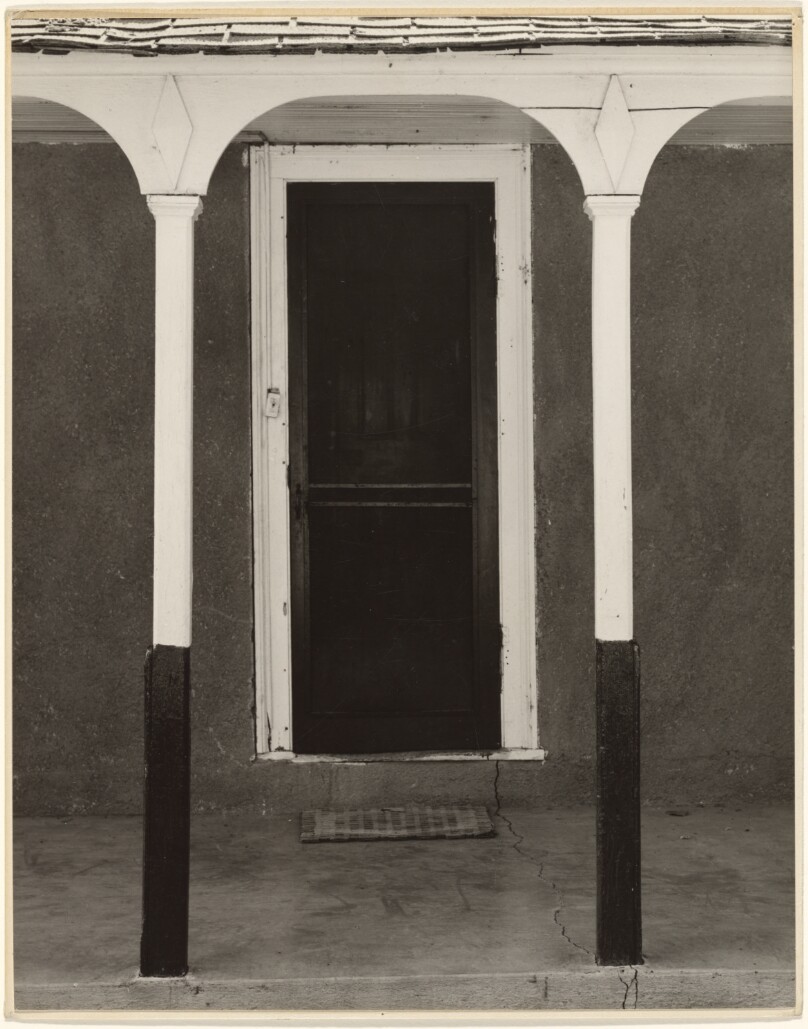
Doorway, Toquerville, Utah
Getty Museum
#7123eec4-4336-422d-8bc6-20fb9e6e66f2
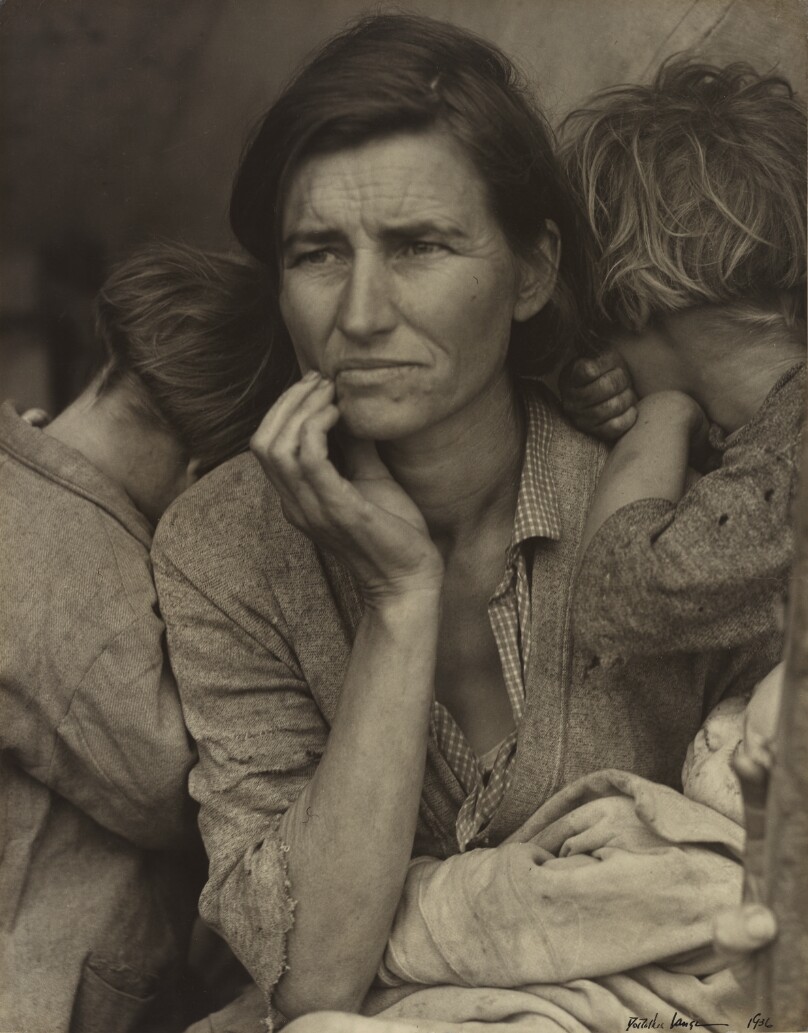
Human Erosion in California (Migrant Mother)
Getty Museum
#5e3e8ca9-7c83-42f5-9739-078d4a0e1266
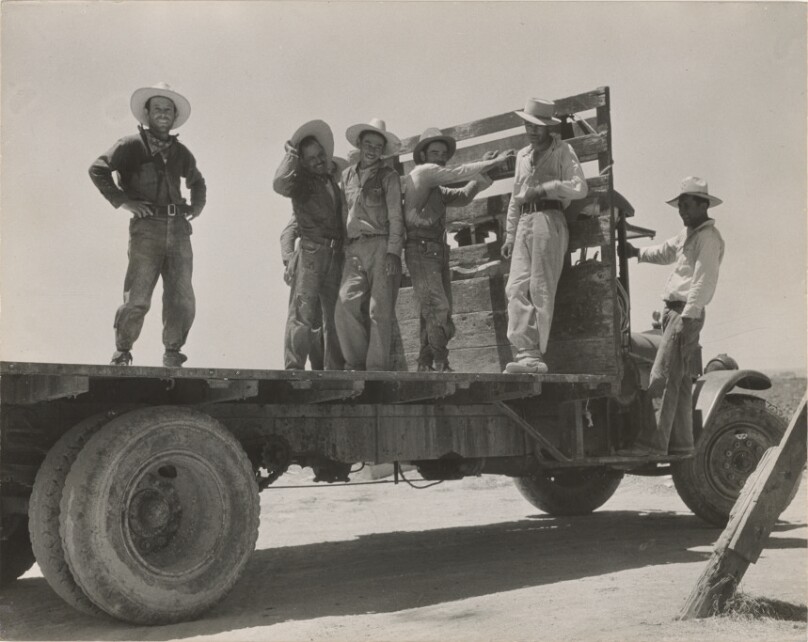
Cantaloupe Pickers, Mexicans, at End of Day in California Melon Fields / Mexican Labor Off for the Melon Fields in the Imperial Valley, California
Getty Museum
#61f8edf7-3c5b-46a1-8fef-a4f12256865c

The Steerage
Minneapolis Institute of Art
#24413
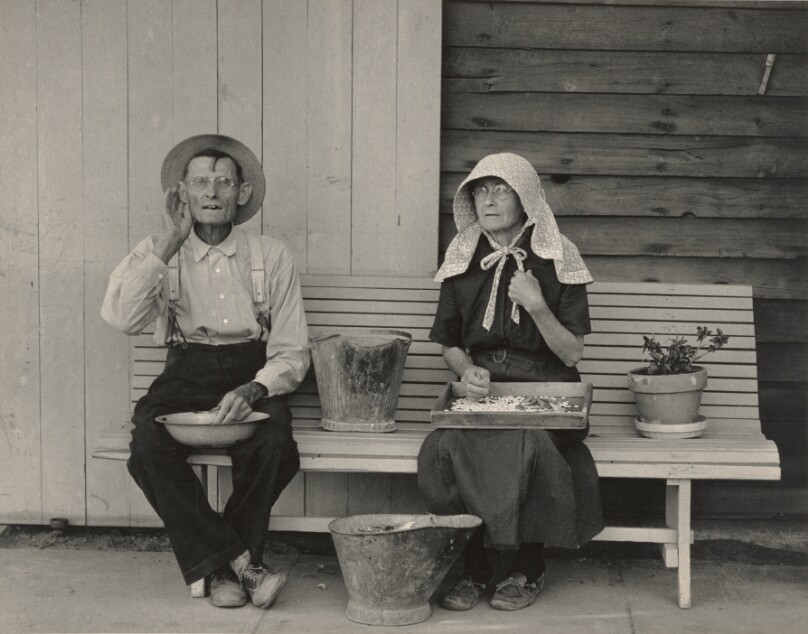
Amana Society Village, Iowa
Getty Museum
#9a06388d-7072-413f-afc5-3a4558451f27
Village, Mekong River Delta, South Vietnam / A Saigon Street
Getty Museum
#3dc07f67-8ead-4bc0-9a86-81d17cc3e77e