Getty Museum
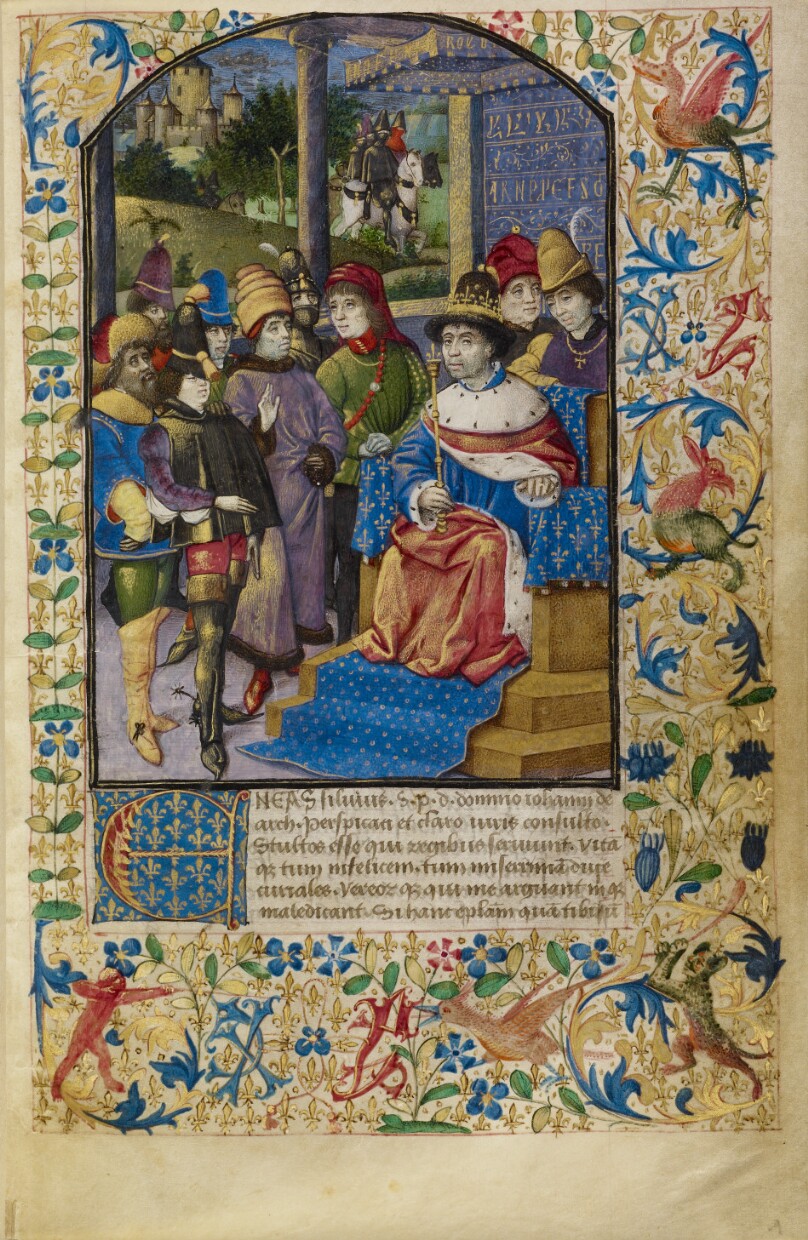
Letter to Johann von Eich and Historia de duobus amantibus
- Date
- about 1460–1470
- Medium
- Tempera colors, gold leaf, gold paint, and ink
- Culture
- French
- Department
- Manuscripts
- Institution
- Getty Museum
- Object ID
- cf5e0b7c-c6a1-40f6-bc1e-05a4e64a2c10
From the Getty Museum record
This manuscript is part of a long tradition of medieval romance literature and the Renaissance passion for letter writing. It contains two texts written in Latin by Eneas Silvius Piccolomini (1405-1464) before he became pope, while he was working in Vienna at the court of the Holy Roman Emperor. The first of his texts is a long letter to a friend describing life at court in frank terms. The illustrations to this text include two that may depict contemporary rulers. The second text (in Latin titled *Historia duobus amantibus*) is the story of an adulterous passion between Euryalus, a member of the court of the Holy Roman Emperor, and Lucretia, an Italian noblewoman. The story is based on a real relationship and is illustrated with narrative miniatures of events described in the text. The six spaces left for events following the consummation of the relationship remain blank, having never been painted. Although the artist of the manuscript is unknown, the miniatures are characterized by a psychological sophistication and spatial complexity. Each figure is given a distinctive face, creating the sense of a series of portraits, and the characters react to each other and their surroundings in ways that contribute to the flow of the narrative. The figures are rather heavy and solid, yet painted in jewel-like tones and with a light touch, giving the miniatures an unusual luminosity.
The authoritative record is held by Getty Museum. LinkedCulture surfaces this object and its connections; it does not alter institutional metadata.
Get printable QR codesHide QR codes
Open QR codes for this object page and the museum record. They stay collapsed until needed.
Related across collections
Semantically similar works from Getty Museum and other institutions.