Getty Museum
Attic Red-Figure Footed Dinos
Creator
Syleus PainterPainter
All works by this person →The Syleus Painter was a vase-painter who decorated pottery using the red-figure technique in Athens during the early 400s B.C. As with most vase-painters, his real name is unknown and he is identified only by the stylistic traits of his work. He is called the Syleus Painter because one of his vases, now in Copenhagen, shows the Greek hero Herakles fighting the villain Syleus. The Syleus Painter m
More on Getty ULAN- Date
- about 470 B.C.
- Medium
- Terracotta
- Culture
- Greek (Attic)
- Department
- Vessels
- Institution
- Getty Museum
- Object ID
- d07e3a50-d7e5-47f5-a564-5be2c00dc394
From the Getty Museum record
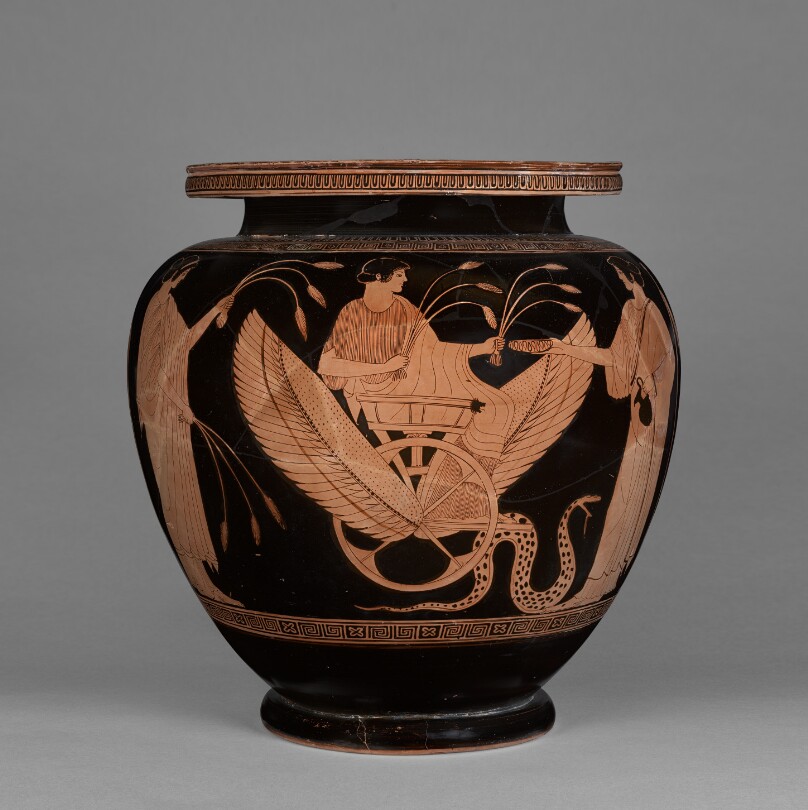
Made in Athens in the red-figure technique, this vase depicts the departure of Triptolemos, who sits in his winged chariot ready to fly away to teach the secrets of agriculture to mortals. Triptolemos, a mortal himself, was connected with the cult of Demeter, the goddess of fertility, and with the Eleusinian Mysteries, which promised a rewarding afterlife to initiates in the goddess's cult. On this vase gods, goddesses, and personifications connected with the cult, including Demeter, Kore (also known as Persephone and here named as Pherephata), and Hades (here named as ‘Theos’, ‘the god’) surround Triptolemos. Depictions of Triptolemos's mission were very popular in the early 400s B.C., presumably owing to the popularity of the cult. This type of vase is called a dinos or mixing bowl. The Greeks drank their wine mixed with water, and a mixing vessel would be used at a symposium or drinking party to prepare and serve the diluted wine. The foot or base of this dinos is unusual; dinoi usually had rounded bottoms and were set into a separately formed stand.
The authoritative record is held by Getty Museum. LinkedCulture surfaces this object and its connections; it does not alter institutional metadata.
Get printable QR codesHide QR codes
Open QR codes for this object page and the museum record. They stay collapsed until needed.
Related across collections
Semantically similar works from Getty Museum and other institutions.