Getty Museum
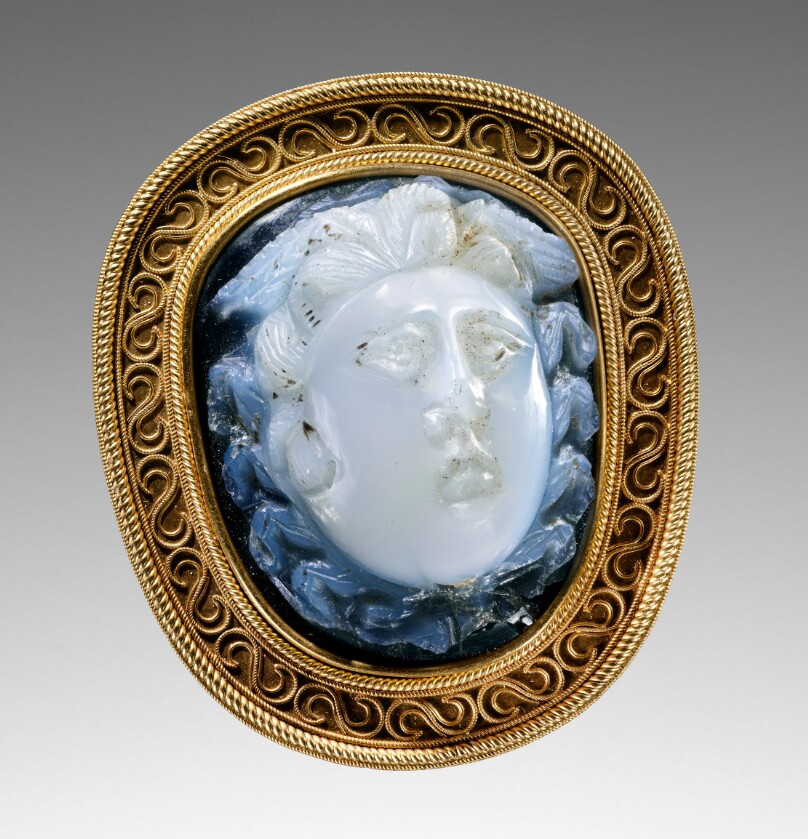
Cameo set in a 19th century mount
- Date
- 2nd–3rd century A.D.
- Medium
- Sardonyx set in a nineteenth-century gold mount by Alessandro Castellani
- Culture
- Roman
- Department
- Jewelry
- Institution
- Getty Museum
- Object ID
- d159028d-7231-4555-b4b3-19311599f950
From the Getty Museum record
The head on this cameo is the mythical Medusa, one of the three Gorgons, sisters whose appearance was so horrifying that anyone who looked at them turned to stone. Invariably, Medusa is depicted with snakes growing from her head; this Medusa also has a pair of wings on her forehead. The Greek hero Perseus beheaded Medusa as she slept, and her decapitated head, called the gorgoneion, is very commonly represented in art. The head was believed to have the power to deflect evil, and cameos like this were thought to protect the wearers from harm. Over time, Medusa began to be represented with a beautiful face, and the particular type of Medusa seen on this cameo is well-known in Roman sculpture. This cameo is set in an elegant filigree gold mount created by the Castellani brothers, goldsmiths and jewelers working in Rome in the 1800s, who specialized in classical designs. Originally, the mount was made with a loop attached for suspension; later, the loop was removed and a clasp-pin attached to the back.
The authoritative record is held by Getty Museum. LinkedCulture surfaces this object and its connections; it does not alter institutional metadata.
Get printable QR codesHide QR codes
Open QR codes for this object page and the museum record. They stay collapsed until needed.
Related across collections
Semantically similar works from Getty Museum and other institutions.