Getty Museum
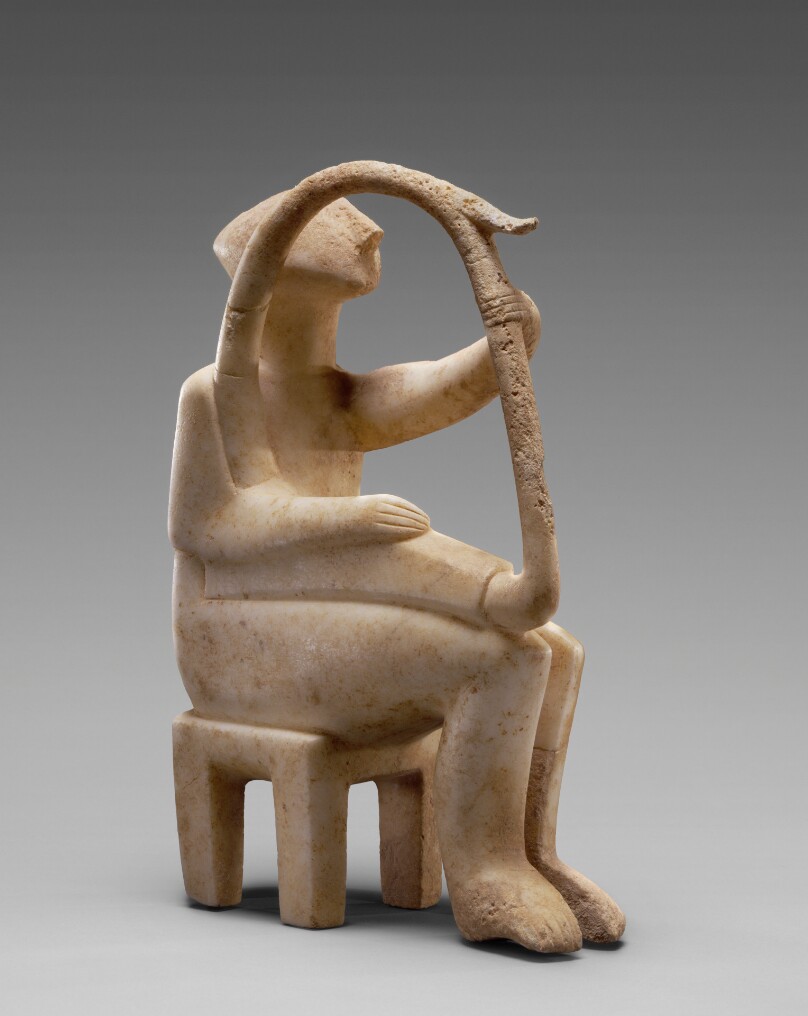
Male Harp Player of the Early Spedos Type
Creator
UnknownAll works by this person →More on Getty ULAN- Date
- 2700–2300 B.C.
- Medium
- Marble
- Culture
- Cycladic
- Department
- Sculpture
- Institution
- Getty Museum
- Object ID
- d4ec32ec-58c2-445b-8562-a4eb0bf900c0
From the Getty Museum record
Illustrations of musical performances are scarce in Cycladic art, and this harpist is one of the few known examples. Sitting erect on a simple four-legged stool with his face lifted in song, he plays a frame harp—a stringed instrument that originated in the Near East—while resting his right hand on its sound box. The extension at the top, a common feature on ancient stringed instruments, facilitated the projection of the sound. Originally the figure’s eyes and hair were added in paint. This challenging composition of a seated player, stool, and delicate frame was shaped from a block of solid marble and then patiently ground down with pumice and emery, locally available abrasives. The resulting three-dimensional design is a masterpiece of Bronze Age sculpture.The vast majority of Cycladic sculptures represent standing or reclining female figures. Only five percent of the figures are males, and unlike the females most are depicted in an active role, frequently playing a musical instrument. Cycladic statuettes of harpists may represent humans rather than deities. Musicians were important figures in such preliterate societies. They not only provided entertainment, but also transmitted common history, mythology, and folklore through their stories and singing.
The authoritative record is held by Getty Museum. LinkedCulture surfaces this object and its connections; it does not alter institutional metadata.
Get printable QR codesHide QR codes
Open QR codes for this object page and the museum record. They stay collapsed until needed.
Related across collections
Semantically similar works from Getty Museum and other institutions.