Getty Museum
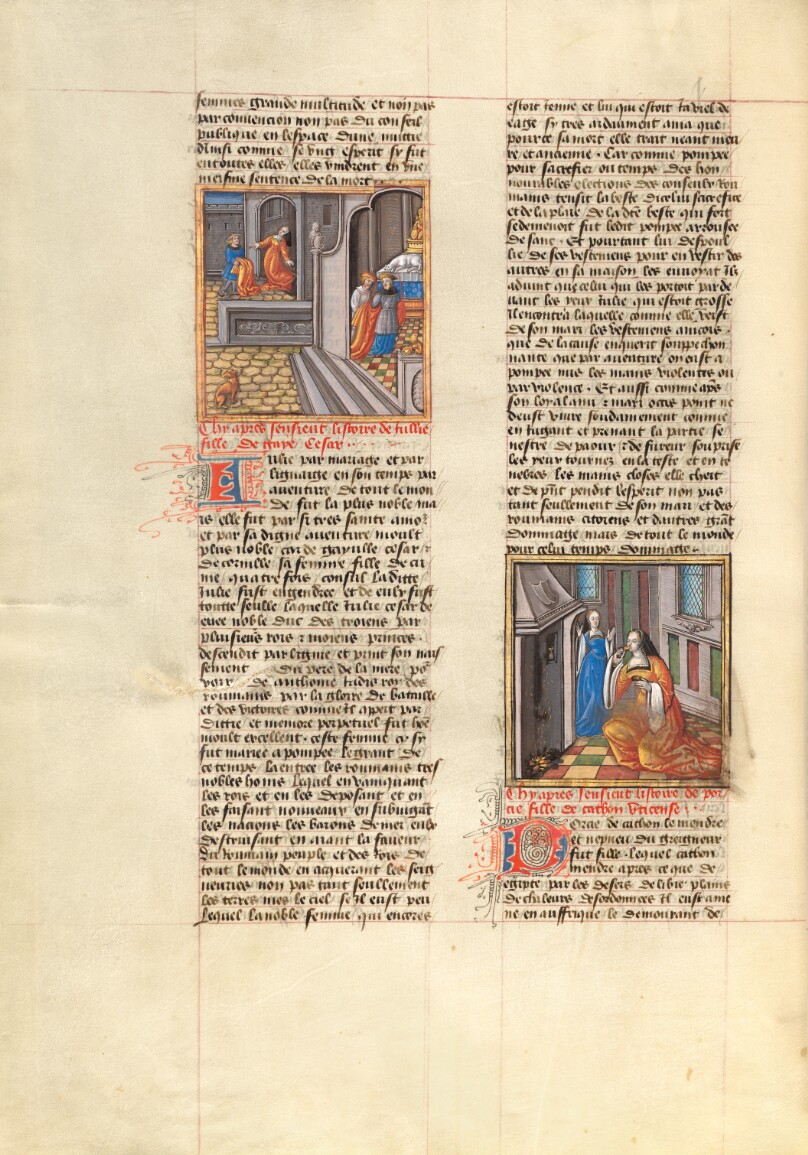
The Death of Julia, the Wife of Pompey the Great; Portia, the Wife of Decius Brutus, Dying by Suicide
- Date
- about 1450–1475, illumination added about 1515–1520
- Medium
- Tempera colors, gold, and ink
- Culture
- French
- Department
- Manuscripts
- Institution
- Getty Museum
- Object ID
- d6657ac1-b603-4b61-b6e5-b6e362328a98
From the Getty Museum record
This page features two images, which feature narratives about two Roman women. The pregnant Julia collapsed when she saw the bloodied cloak of her husband, Pompey the Great, in the hands of a servant. In reality, Pompey had been performing a sacrifice at the temple when the animal he was holding jerked after being cut and sprayed his garments with its blood. Sending a courier home to retrieve new clothes for him, Pompey could not have predicted that the sight of his bloodied mantle would startle his wife to death. In the image, the artist uses a method called “continuous narrative” to show different moments in the same story—at right, the viewer sees Pompey in the temple, removing his cloak, with the animal sacrifice on the altar. On the left, Julia faints before the courier, holding the discarded robe. A maidservant raises her hands in alarm as Portia, the wife of Decius Brutus, the man who conspired to assassinate Julius Caesar, swallows hot coals after learning about the death of her husband and his co-conspirators. Set within a lavish sixteenth-century styled interior, the scene would have felt more modern for viewers. Unfortunately, part of this painting was smudged before being acquired by the Getty.
The authoritative record is held by Getty Museum. LinkedCulture surfaces this object and its connections; it does not alter institutional metadata.
Get printable QR codesHide QR codes
Open QR codes for this object page and the museum record. They stay collapsed until needed.
Related across collections
Semantically similar works from Getty Museum and other institutions.